

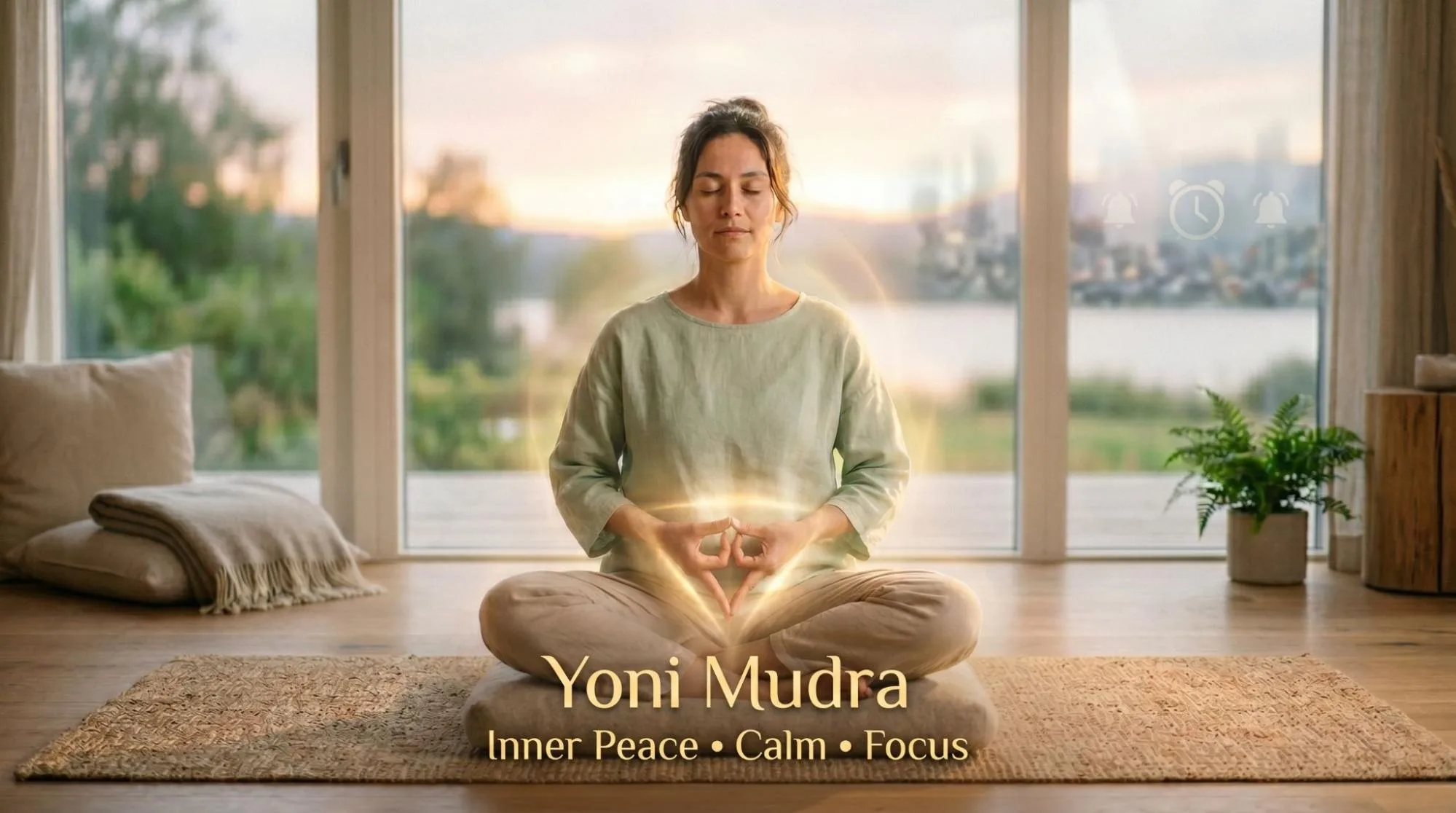
Yoni Mudra is a gentle yoga hand gesture used to quiet the mind, soften emotional tension, and bring attention inward. It is often practiced during meditation, breathing exercises, or slow yoga sessions when you want to feel more centered.
This mudra does not require flexibility, strength, or long yoga experience. You simply use your hands, breath, and awareness. For many beginners, that makes yoni mudra one of the easiest ways to start building a calmer inner practice.
What Is Yoni Mudra?
Yoni Mudra is a traditional yogic gesture made with the hands. It is used to support stillness, self-awareness, and inner calm. The shape of the hands represents the womb, which is why this mudra is often connected with rest, renewal, and creative energy.
Unlike active yoga poses, yoni mudra is usually practiced while sitting still. You may use it during meditation, after yoga asana, before sleep, or whenever your mind feels scattered.
Yoni Mudra Meaning and Definition
The word yoni comes from Sanskrit and is commonly linked with the womb, source, origin, or sacred place of creation. In yoga philosophy, it can represent the beginning of life, inner stillness, and the natural power of creation.
Yoni Mudra, therefore, means a gesture that guides your awareness back to your inner source. It helps you pause, breathe, and listen to what is happening inside rather than being pulled constantly by outside noise.
Symbolism and Inner Meaning
The deeper meaning of yoni mudra is not limited to the physical hand shape. It symbolizes returning to a quiet, protected inner space. Just as the womb is associated with nourishment and growth, this mudra encourages emotional rest and mental steadiness.
Many people also connect yoni mudra with feminine energy, creative energy, and grounding. This does not mean it is only for women. Anyone can practice yoni mudra to feel more settled and aware.
Yoni Mudra Hand Position
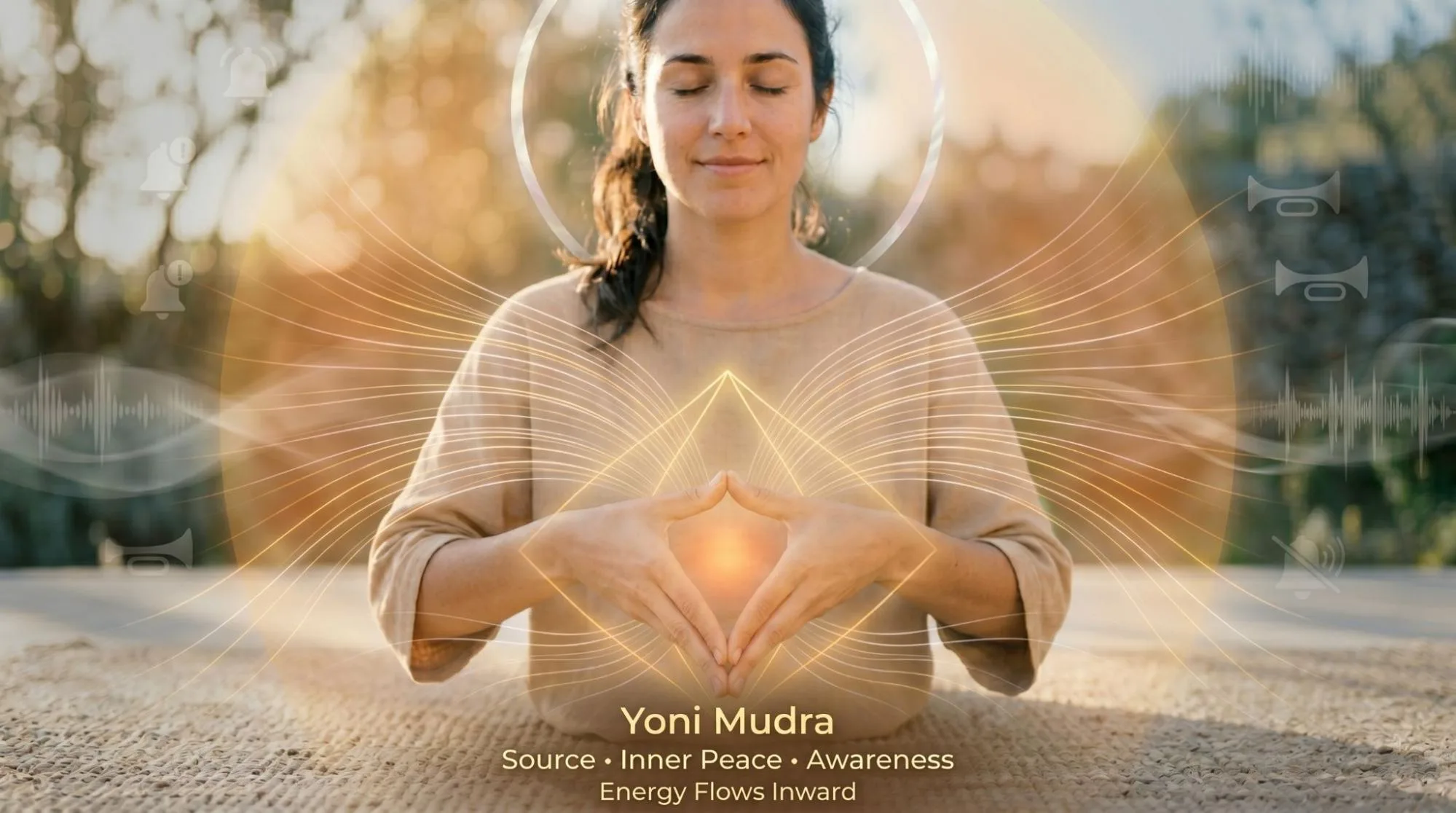
The yoni mudra hand position is made by joining the thumbs and index fingers in a specific shape. The index fingers usually point downward and touch each other, while the thumbs touch to form a triangle-like space.
The remaining fingers are gently folded or interlaced. The hands are often placed near the lower abdomen, around the area below the navel. This position supports a feeling of grounding and inward focus.
Role in Mind and Awareness
Yoni mudra helps reduce mental noise by giving your mind one simple point of attention. When your hands are still and your breath slows down, your nervous system often begins to settle.
This mudra can also support awareness of apana vayu, the downward-moving energy in yoga. Apana vayu is linked with grounding, release, and stability. That is why yoni mudra is often practiced when you want to feel calm, rooted, and emotionally steady.
Learn More : Hand Mudras: Meaning, Benefits, Types, and How to Practice Them
Why People Practice Yoni Mudra
People practice yoni mudra for many reasons. Some use it for meditation. Some use it after a tiring day. Others include it in gentle yoga routines to feel more connected with their body and breath.
It is especially helpful for people who struggle to sit quietly because the hand gesture gives the mind something soft and steady to focus on.
Mental Relaxation and Clarity
Yoni mudra may help the mind slow down. When you sit quietly with this gesture and take deep breaths, your thoughts may feel less scattered.
This does not mean every thought disappears. A more realistic goal is to notice your thoughts without chasing each one. Over time, this can make meditation feel less frustrating and more natural.
Emotional Balance
Emotions often feel heavier when the body is tense and the breath is shallow. Yoni mudra encourages slower breathing and a more grounded posture, which may help you feel more emotionally balanced.
It can be useful during moments of overwhelm, sadness, irritation, or mental fatigue. The practice gives you a small pause before reacting.
Yoni Mudra for Inner Peace
Many people use yoni mudra for inner peace because it turns attention away from outside pressure. The gesture creates a quiet reminder: come back to yourself.
Even a few minutes can feel refreshing when done with patience. The key is not to force peace. Let the body settle first, then allow the mind to follow.
Spiritual and Inner Connection
In spiritual yoga practice, yoni mudra is often seen as a gesture of inner connection. It supports self-reflection, silence, and awareness of subtle energy.
Some practitioners combine it with mantra, meditation, or gentle seated breathing. Others use it after poses like goddess pose, where the body is already connected with strength, grounding, and feminine energy.
How to Do Yoni Mudra Step by Step
You can practice yoni mudra almost anywhere quiet. Choose a place where you can sit without rushing. A calm room, yoga mat, meditation cushion, or even a chair can work well.
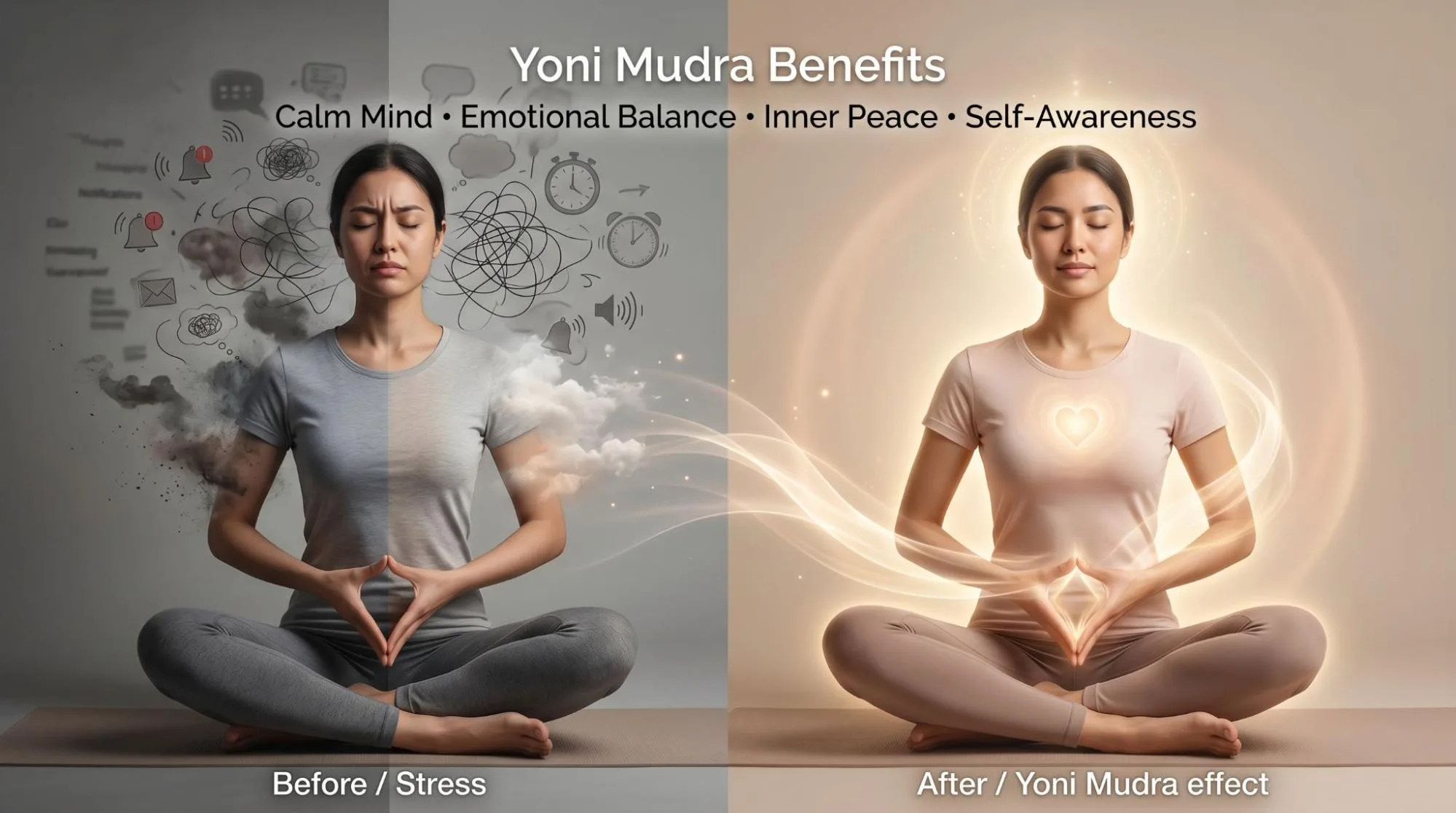
Step 1: Sit in a Comfortable Position
Sit with your spine upright but not stiff. You can sit cross-legged on the floor, on a cushion, or on a chair with both feet touching the ground.
Relax your shoulders. Keep your face soft. Let your jaw loosen slightly. The body should feel steady, not forced.
Step 2: Form the Yoni Mudra Hand Position
Bring your hands in front of your lower abdomen.
Touch the tips of your thumbs together. Then touch the tips of your index fingers together, pointing them downward. Interlace or gently fold the remaining fingers.
Your hands should form a downward triangle shape. Keep the grip soft. There is no need to press hard.
Step 3: Relax Your Body
Once your hands are in position, scan your body from head to toe. Notice where you are holding tension.
Relax your forehead, eyes, shoulders, stomach, and legs. Let the elbows rest naturally. If your arms feel tired, place your hands lightly against your body for support.
Step 4: Focus on Breathing
Begin taking slow, deep breaths. Inhale through the nose. Exhale gently through the nose or mouth.
Try not to control the breath too aggressively. Let it become smooth on its own. A simple rhythm can help:
- Inhale slowly for 4 counts
- Pause softly for 1 count
- Exhale slowly for 5 or 6 counts
The longer exhale can help the body feel more relaxed.
Step 5: Stay Aware and Calm
Keep your attention on your breath, hands, and lower abdomen. If thoughts come, notice them and return to breathing.
Stay here for a few minutes. When you finish, release your hands slowly. Sit quietly for a moment before opening your eyes or moving back into your day.
Benefits of Yoni Mudra
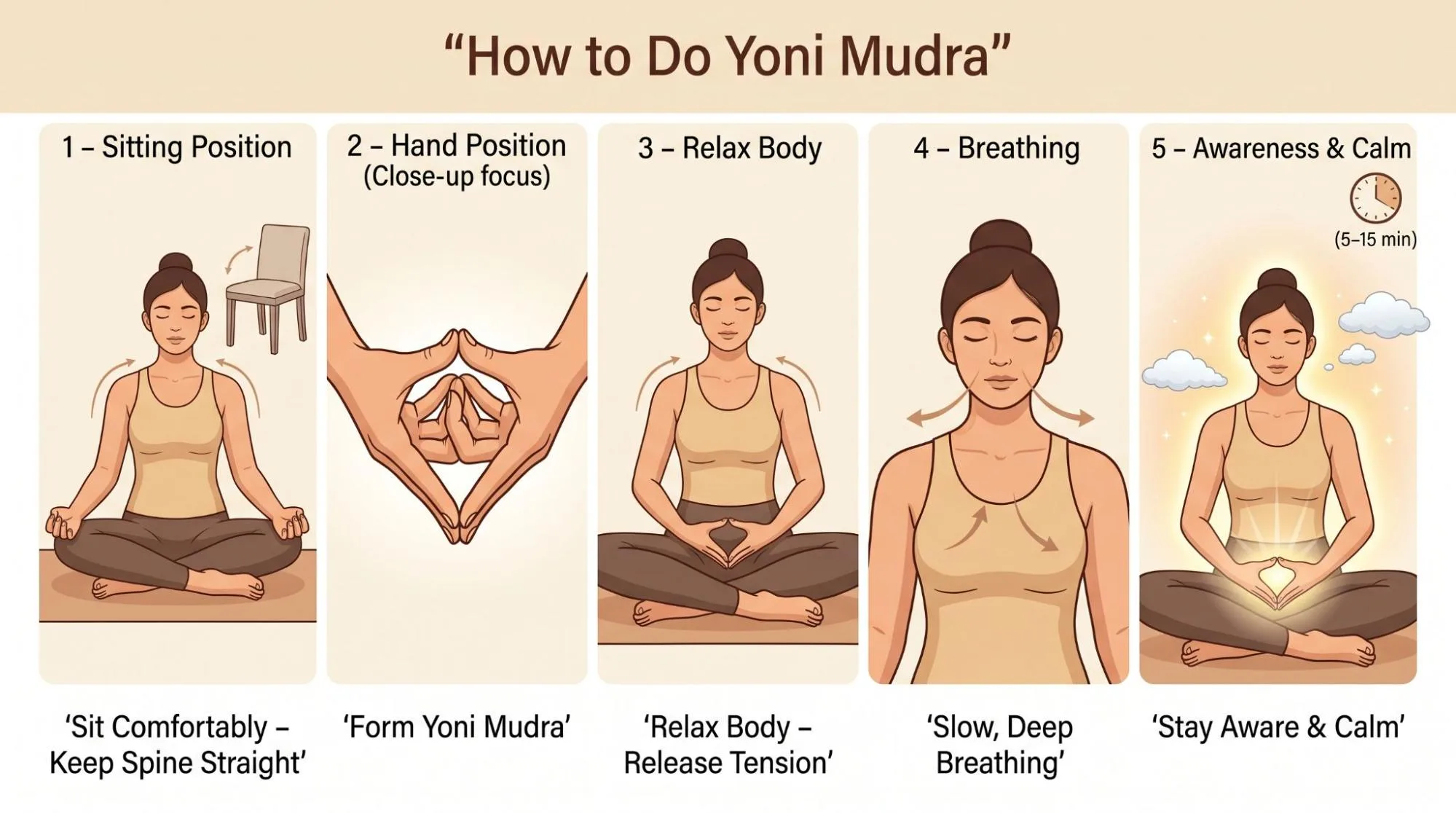
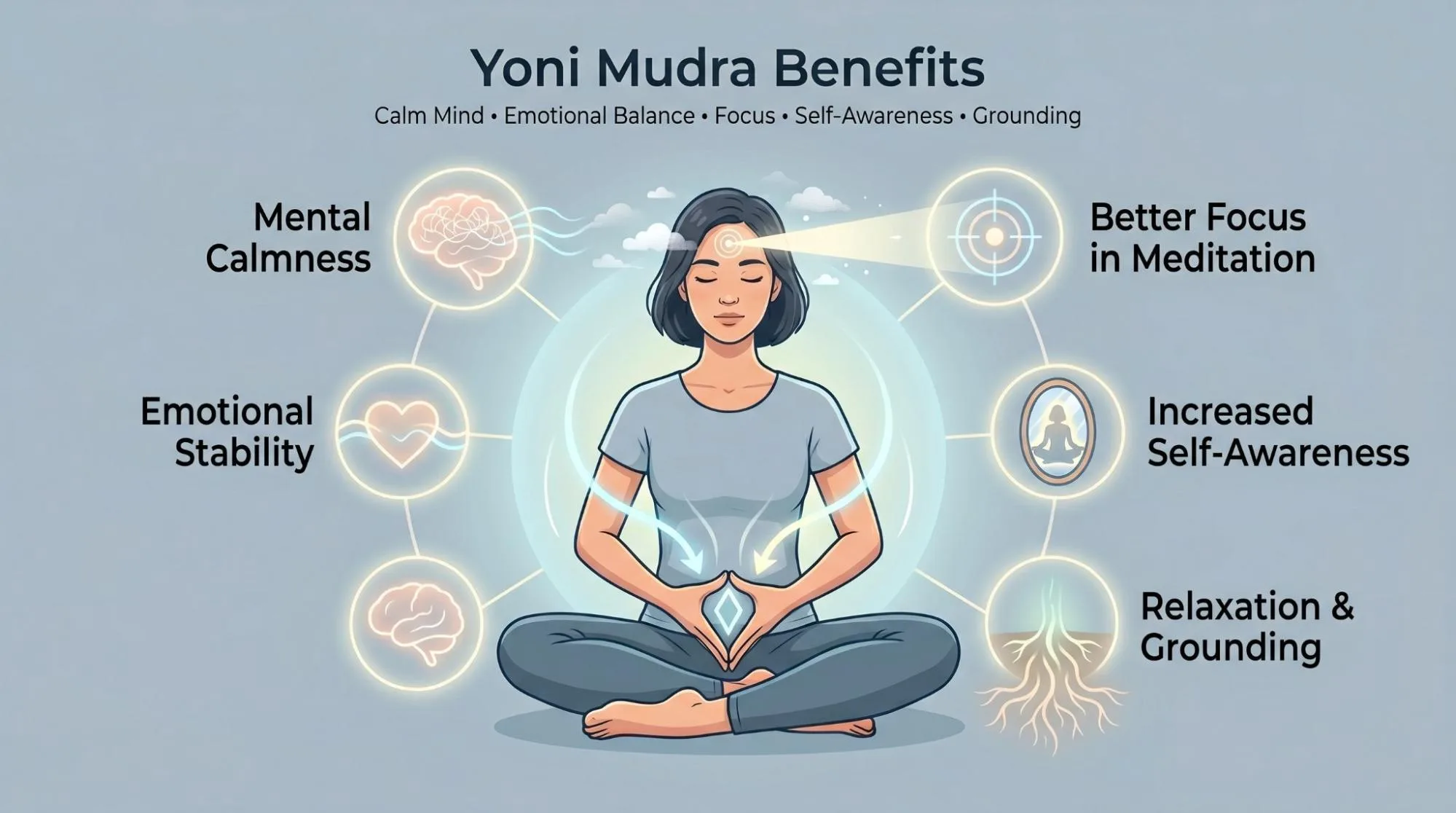
The benefits of yoni mudra are mostly connected with calmness, awareness, and emotional grounding. Like many yoga practices, it works best when practiced regularly rather than only once in a while.
Yoni mudra should not be treated as a medical treatment. Still, as a gentle mindfulness tool, it can support a healthier relationship with your breath, body, and emotions.
Mental Calmness
Yoni mudra gives the busy mind a clear place to rest. The hand position, steady posture, and slow breathing work together to create a quieter mental state.
This can be helpful before meditation, before sleep, or after a stressful conversation.
Emotional Stability
When emotions feel strong, the body often becomes tense. Practicing yoni mudra with deep breaths can help you slow down and feel more stable.
It may not remove every difficult feeling, but it can help you respond with more awareness instead of reacting immediately.
Better Focus in Meditation
Beginners often struggle with meditation because the mind keeps wandering. Yoni mudra can make sitting practice easier by adding a physical anchor.
The hands remind you to stay present. Each time your mind drifts, you can return to the feeling of the mudra and the rhythm of your breath.
Increased Self-Awareness
Yoni mudra encourages you to listen inward. You may start noticing small things: tight shoulders, shallow breathing, emotional heaviness, or mental restlessness.
This kind of awareness is valuable. Once you notice what is happening inside, you can care for yourself more wisely.
Relaxation and Grounding
Because yoni mudra is often connected with apana vayu, it is considered grounding in yoga practice. It may help you feel less “in your head” and more connected to your body.
This makes it a helpful choice after a long screen-heavy day, emotional stress, or overstimulation.
Learn More : Svadhyaya: The Yoga Practice of Self-Study and Inner Reflection
Best Time to Practice Yoni Mudra
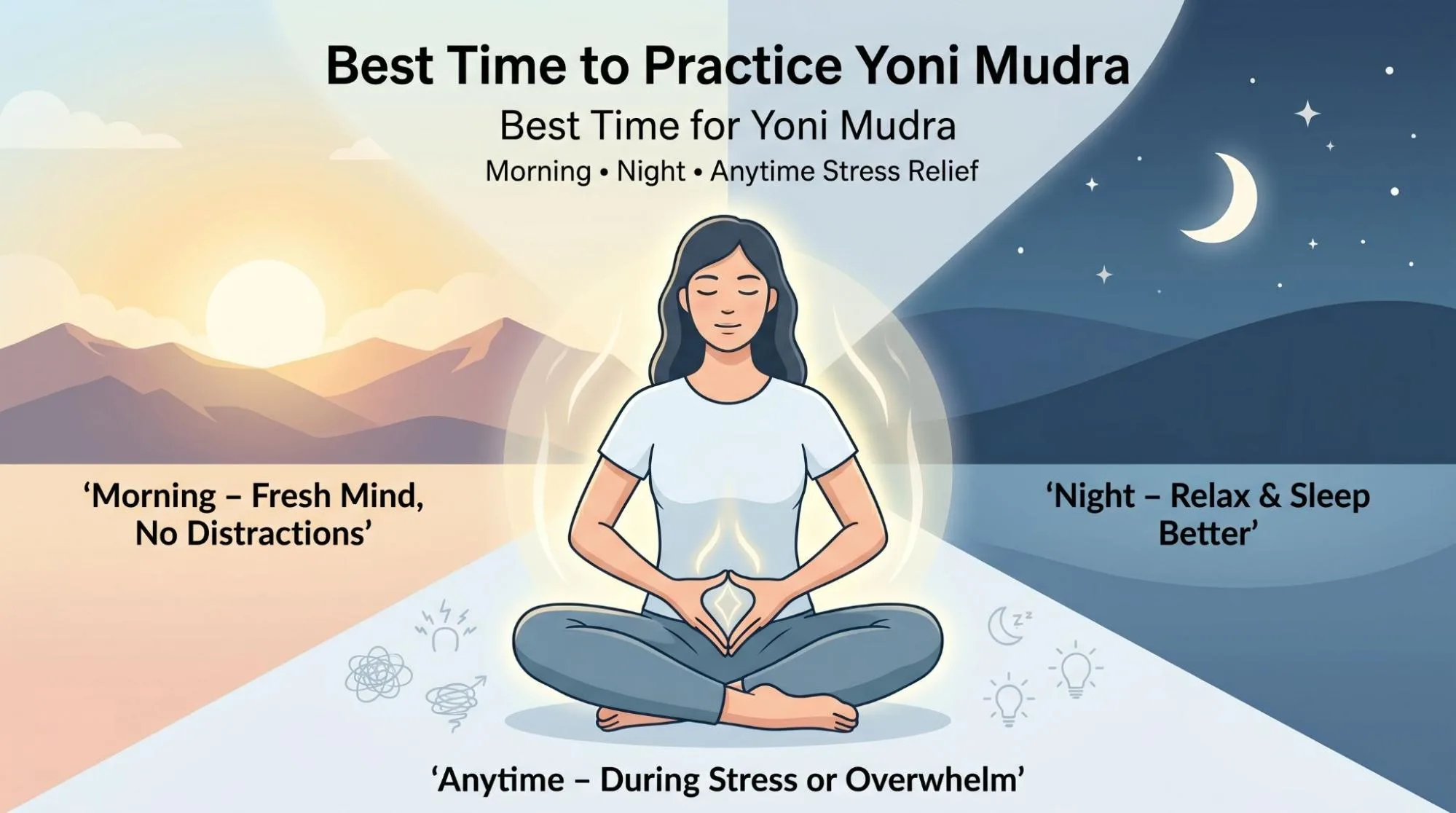
The best time to practice yoni mudra depends on your routine. Many people prefer early morning because the mind is usually quieter. Others like evening practice because it helps them release the stress of the day.
You can practice yoni mudra:
- In the morning before starting work
- Before or after meditation
- After gentle yoga practice
- Before sleep
- During a stressful pause in the day
- After goddess pose or other grounding yoga postures
Try not to practice right after a heavy meal, especially if sitting still feels uncomfortable.
How Long Should You Practice Yoni Mudra?
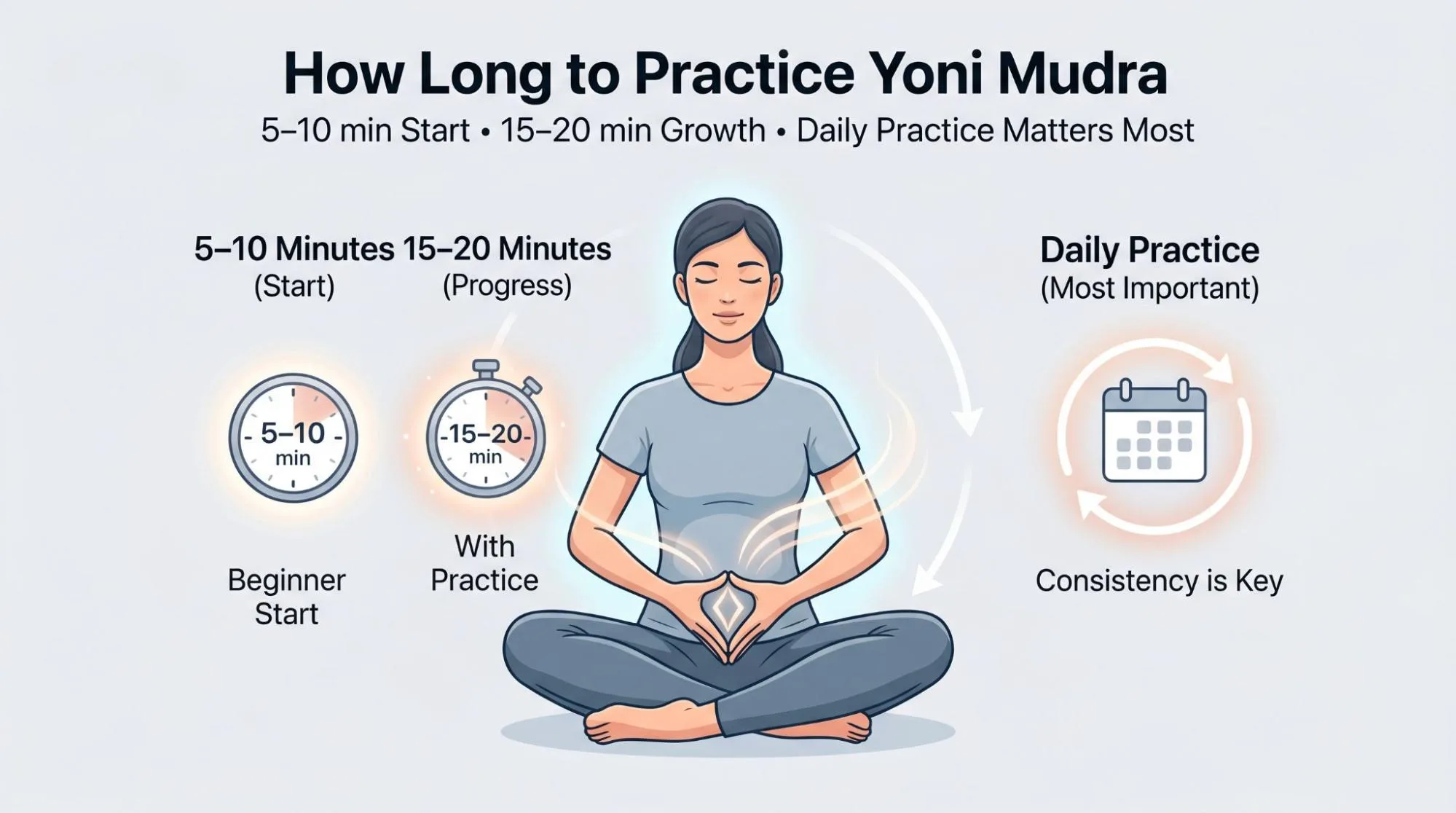
If you are new, start with 3 to 5 minutes. That is enough to understand the hand position and breathing rhythm without feeling restless.
With practice, you can slowly increase the time to 10 or 15 minutes. More time is not always better. A short, focused practice is more useful than a long session done with strain.
A simple beginner routine could be:
- 1 minute settling into posture
- 3 minutes holding yoni mudra with deep breaths
- 1 minute sitting quietly after releasing the hands
This keeps the practice easy and realistic.
Who Can Practice Yoni Mudra?
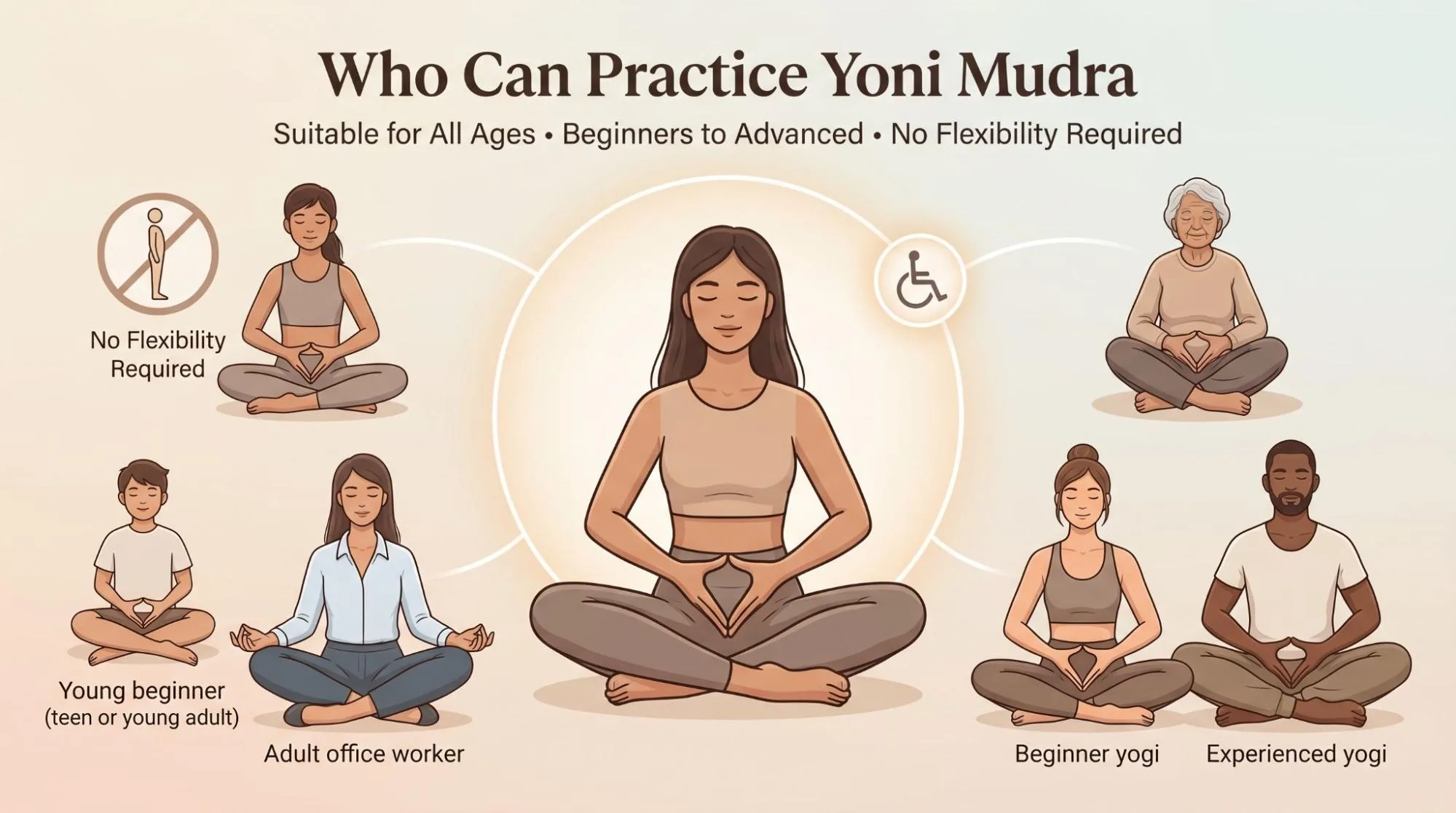
Most people can practice yoni mudra because it is gentle and does not require strong physical movement. It is suitable for beginners, meditation students, yoga practitioners, and people who want a simple calming practice.
You may find it helpful if you:
- Feel mentally scattered
- Want to improve meditation focus
- Need emotional grounding
- Prefer gentle yoga practices
- Want to connect with creative energy
- Enjoy breath-based relaxation
If you have hand pain, wrist discomfort, or stiffness in the fingers, adjust the position. The mudra should feel comfortable, not painful.
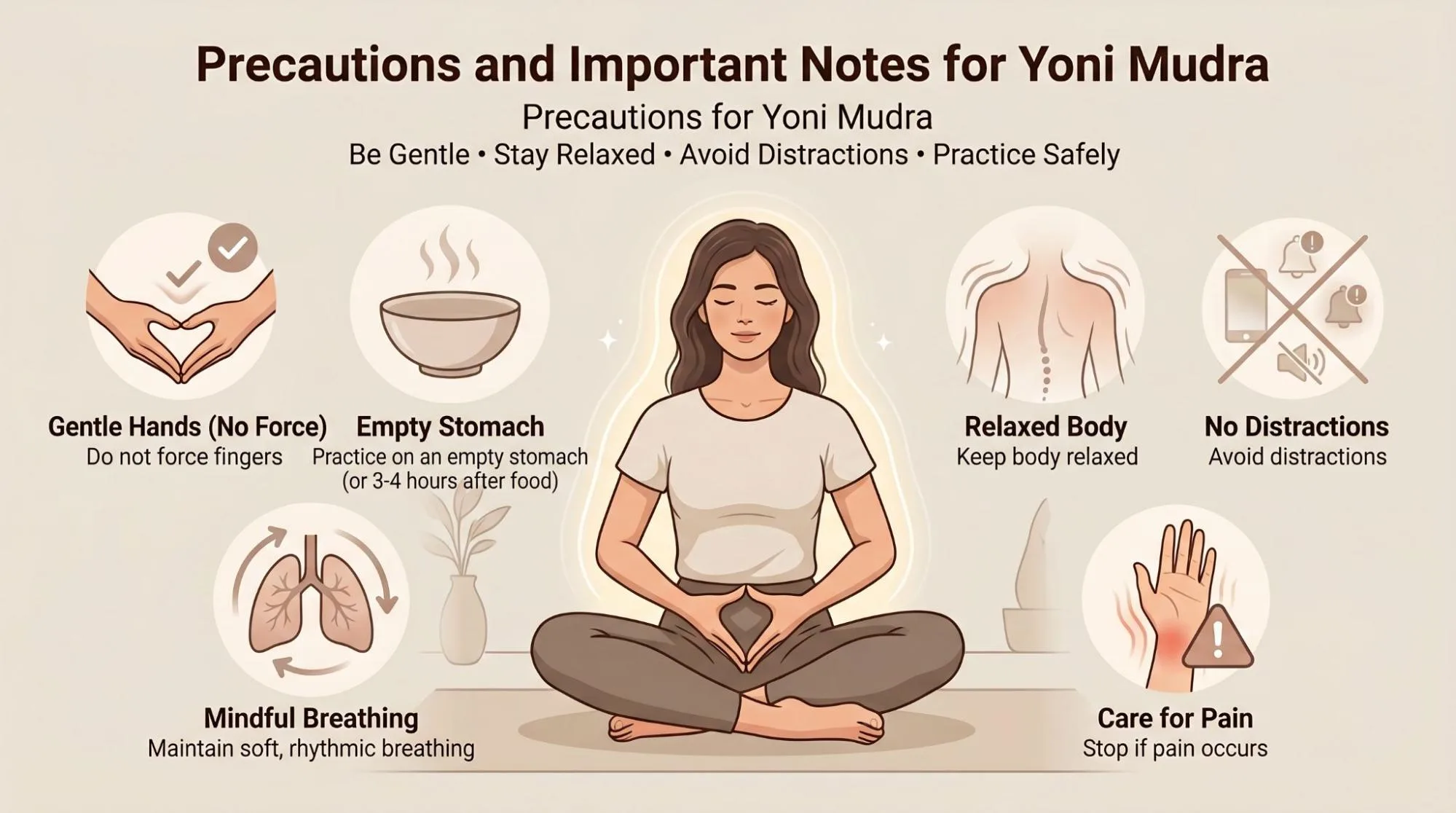
Precautions and Important Notes
Yoni mudra is generally safe when practiced gently, but a few notes matter.
Do not force the fingers into position. If your hands feel strained, loosen the gesture. If sitting on the floor hurts your knees or back, use a chair.
If deep breathing makes you dizzy, return to normal breathing. People with serious anxiety, trauma history, breathing issues, or medical conditions should practice carefully and seek guidance from a qualified teacher or healthcare professional when needed.
Also, avoid using yoni mudra as a replacement for medical or mental health care. It can support calmness, but it is not a cure for health conditions.
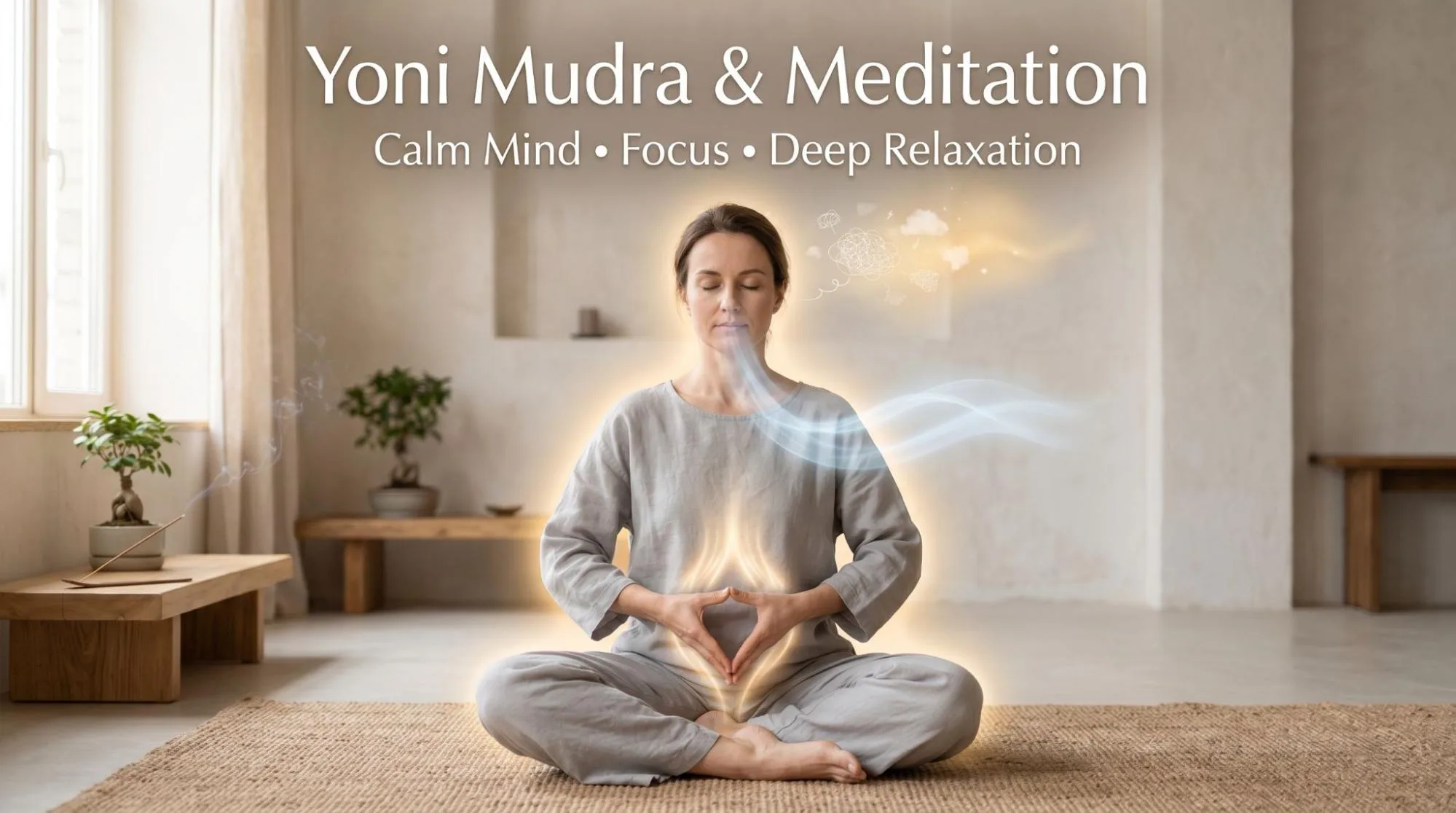
Yoni Mudra and Meditation
Yoni mudra works beautifully with meditation because it naturally supports inward attention. The hand gesture acts like a quiet signal to the mind: slow down, soften, and return.
You can use this simple meditation method:
- Sit comfortably and form yoni mudra.
- Close your eyes or lower your gaze.
- Take slow, deep breaths.
- Notice the shape of your hands.
- Feel the breath moving in your lower belly.
- Stay with this awareness for a few minutes.
If thoughts come, do not fight them. Just return to the breath and the feeling of your hands.
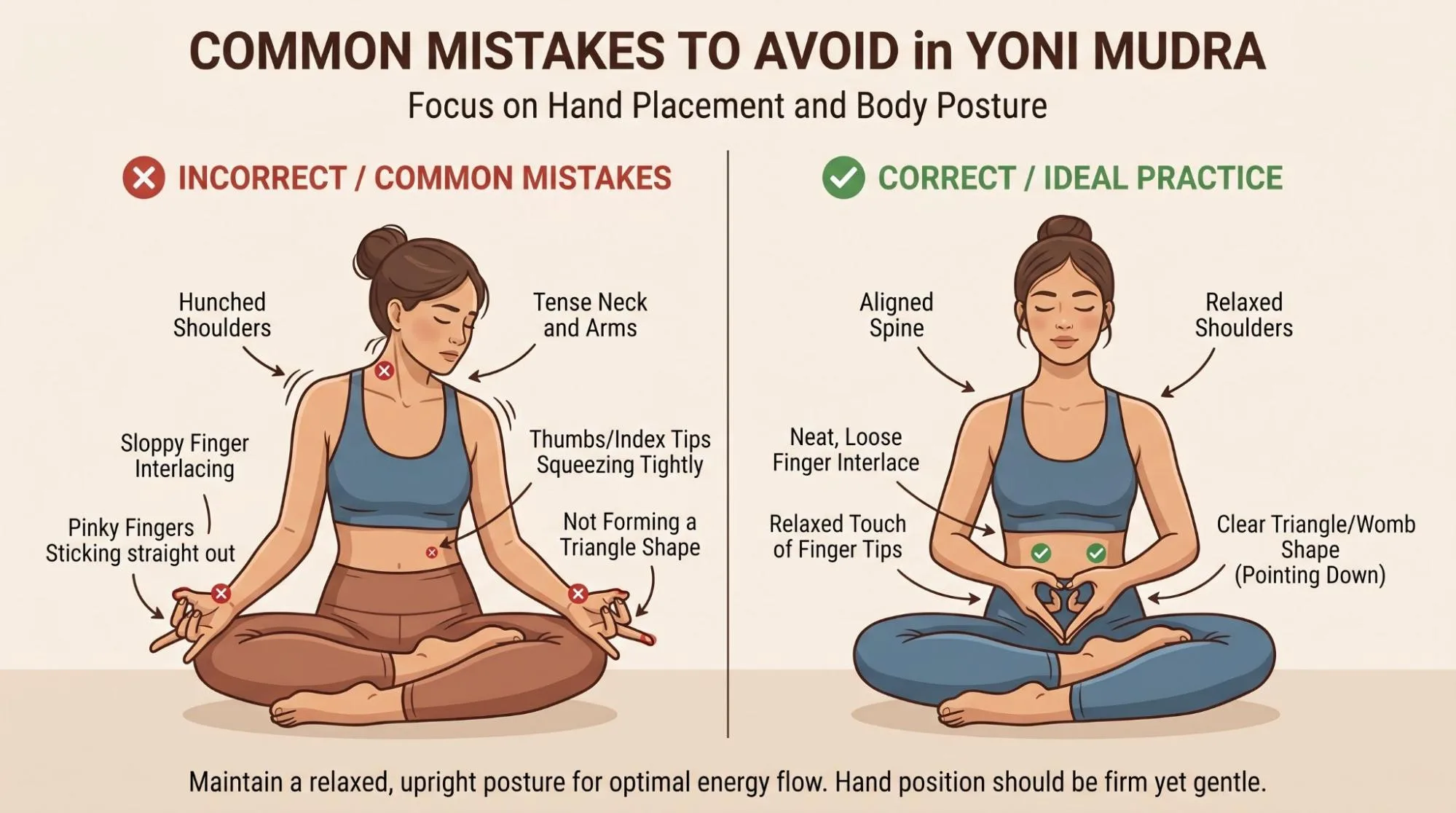
Common Mistakes to Avoid
Yoni mudra is simple, but small mistakes can make the practice feel tense or ineffective.
Avoid these common mistakes:
- Pressing the fingers too hard
- Holding the shoulders tightly
- Forcing deep breaths
- Sitting in a painful position
- Expecting instant results
- Practicing while rushing
- Treating the mudra like a performance
The real value comes from softness. Keep the body relaxed, the breath steady, and the mind patient.
Learn More : Yoga Svadhisthana: Sacral Chakra Healing Through Yoga