
Quick answer: Fish Pose, or Matsyasana, is a backbend that opens the chest while the body is supported by the floor or forearms. Use a gentle variation and avoid putting pressure on the crown of the head or the neck.
Important Safety Note
Stop for neck pain, headache, dizziness, numbness, or lower-back compression. Use a folded blanket or keep the head lightly supported rather than forcing the full shape. Seek qualified guidance for neck or spinal conditions, recent surgery, osteoporosis, or pregnancy-related limitations.
Fish pose is one of those yoga poses that looks small from the outside but feels surprisingly powerful when you practice it correctly. Also known as Matsyasana, fish pose gently opens the chest, supports better breathing, and helps release stiffness around the shoulders, upper back, and neck. It is often used as a counterpose after forward bends or long periods of sitting because it encourages the body to move out of a rounded posture and into a more open, lifted position. For beginners, the key is not to force the backbend, but to lift your chest slowly, keep the neck comfortable, and let the breath guide the pose.
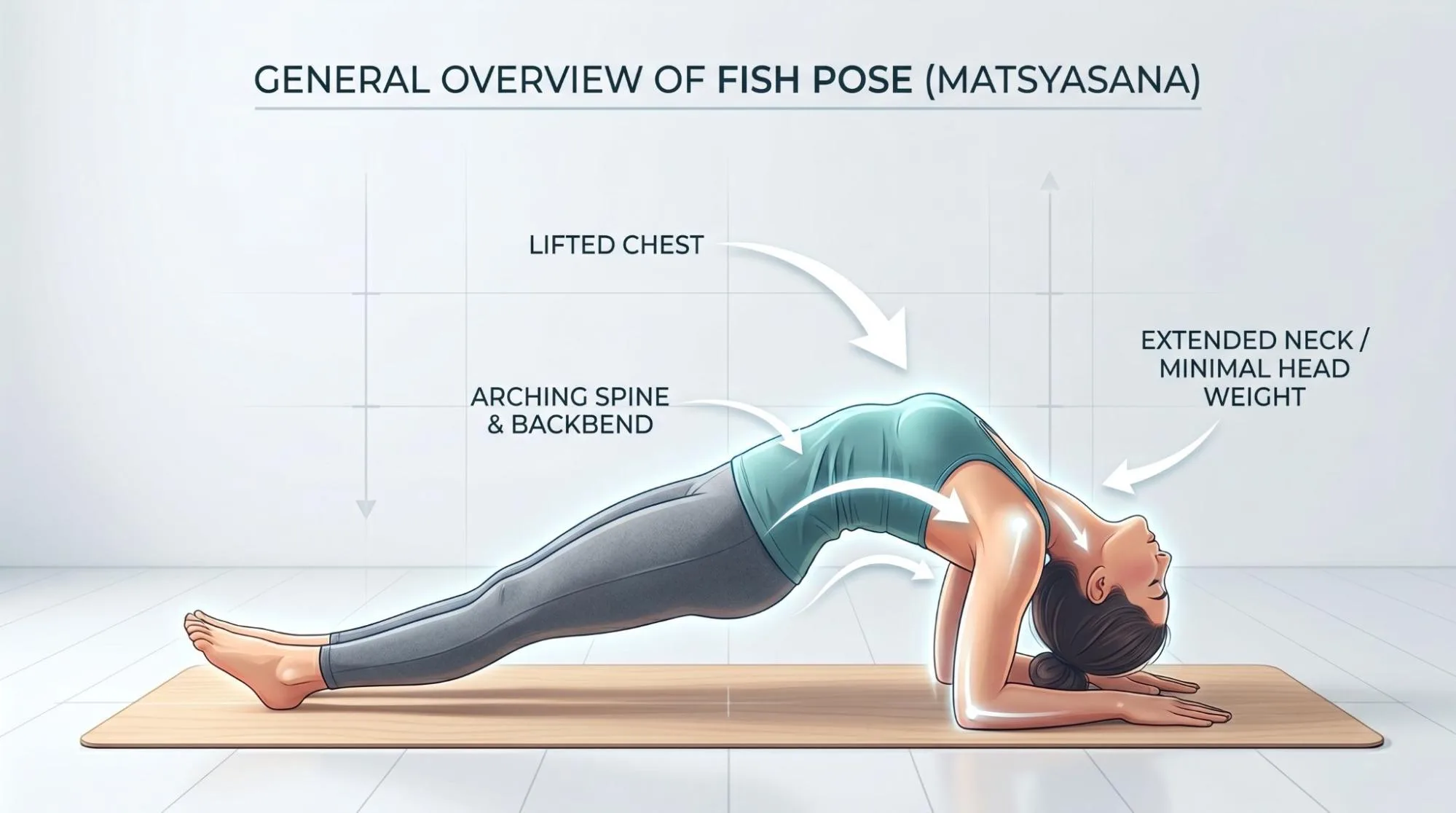 alt=”Fish Pose with chest lifted and neck relaxed” title=”Fish Pose with chest lifted and neck relaxed”
What Is Fish Pose (Matsyasana)?
Fish pose is a yoga backbend that opens the chest, stretches the front of the body, and supports deeper breathing. In Sanskrit, it is called Matsyasana, so you may also see it written as fish pose matsyasana.
At first glance, supported backbend looks simple. You lie on your back, lift your chest, and lightly place the crown of your head toward the floor. But when practiced with care, this pose can create a strong feeling of space across the chest, shoulders, throat, ribs, and upper back.
Many yoga teachers use supported backbend after forward bends or shoulder-focused poses because it helps bring the body back into balance.
Meaning of Matsyasana in Yoga
The word Matsya means “fish,” and asana means “pose.” Traditionally, the shape of the body in this posture is said to look like a fish floating in water.
In yoga practice, supported backbend is often described as a heart opening posture. This means it encourages the chest to open, the ribs to expand, and the upper body to move out of a rounded position.
It is not only about flexibility. It is also about learning how to lift the chest without forcing the neck or lower back.
How supported backbend Works on the Body
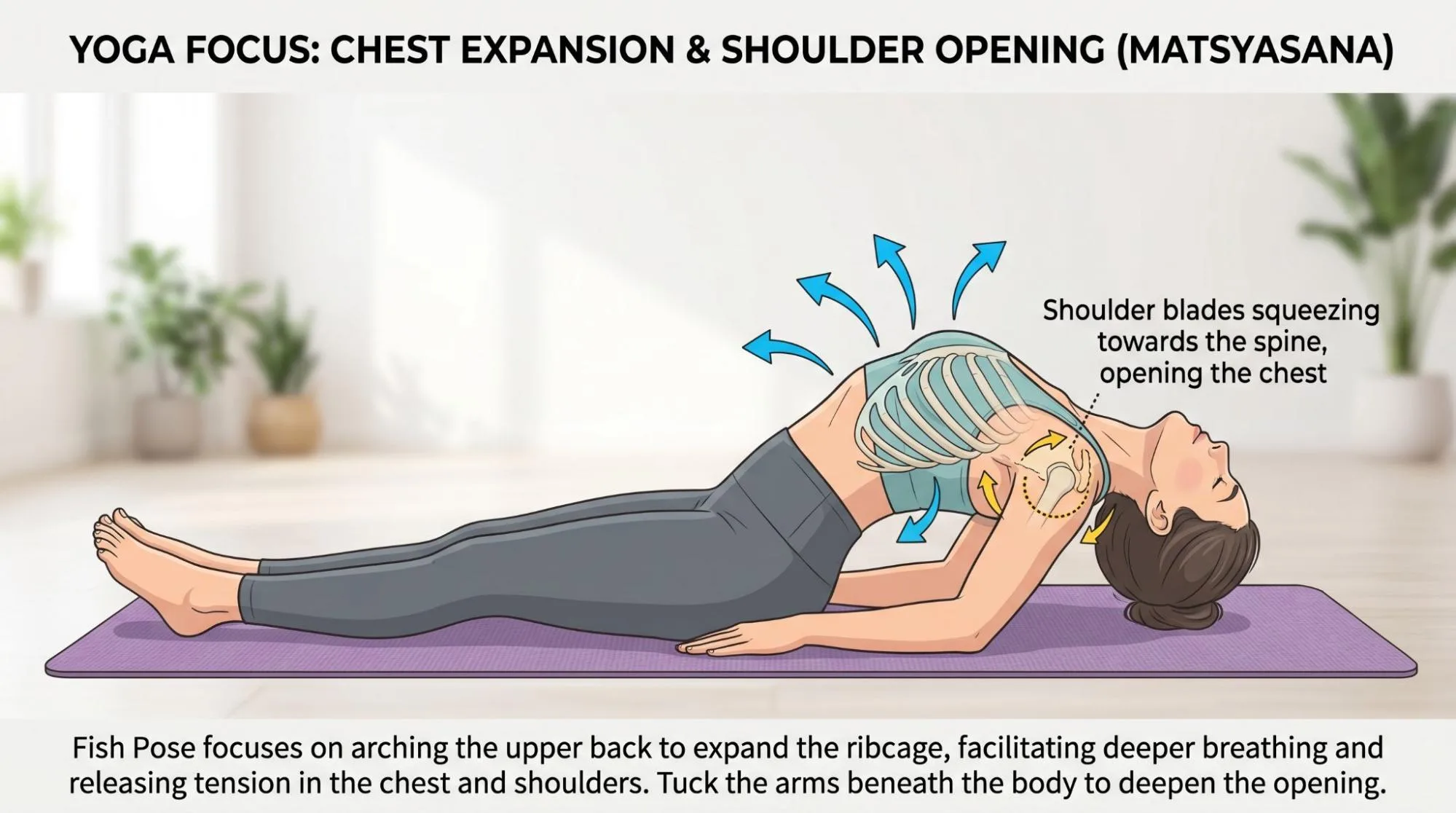
supported backbend mainly works through the chest, upper back, shoulders, neck, and front body. When you lift your chest, your upper spine moves into a gentle backbend. The shoulder blades draw slightly toward each other, which helps the front shoulders open.
If you practice the pose with legs extended, you may also feel a stretch through the abdomen and hip flexors. If that feels too strong, bending the knees and keeping the feet on the floor is a good option.
The pose also supports breathing. Because supported backbend opens the chest, the ribs have more space to move, and the breath may feel fuller.
Why Is supported backbend Important in Yoga?
supported backbend is important because many daily habits close the front body. Sitting at a desk, looking down at a phone, driving, or working on a laptop can round the shoulders and tighten the chest.
supported backbend gently moves the body in the opposite direction. It encourages better posture, chest expansion, and more awareness of the upper back.
supported backbend as a Counterpose
A counterpose helps balance the effect of another yoga posture. supported backbend is often used after poses that round the spine or close the chest.
For example, after forward folds, seated poses, or shoulder stand practice, supported backbend can help reopen the front body. It can also be a softer alternative to deeper backbends like camel pose, especially for beginners.
The key is not to push too far. A small, steady chest lift is usually more helpful than a forced backbend.
Role of supported backbend in Posture and Breathing
supported backbend can be useful for posture because it teaches the body to move the chest upward without shrugging the shoulders. The shoulder blades support the lift, and the ribs expand with the breath.
For people who sit for long hours, this can feel refreshing. The pose reminds the upper body that it does not have to stay rounded forward all day.
With slow breathing, supported backbend can also feel calming. The supported version is especially useful when you want a gentle chest opener without too much effort.
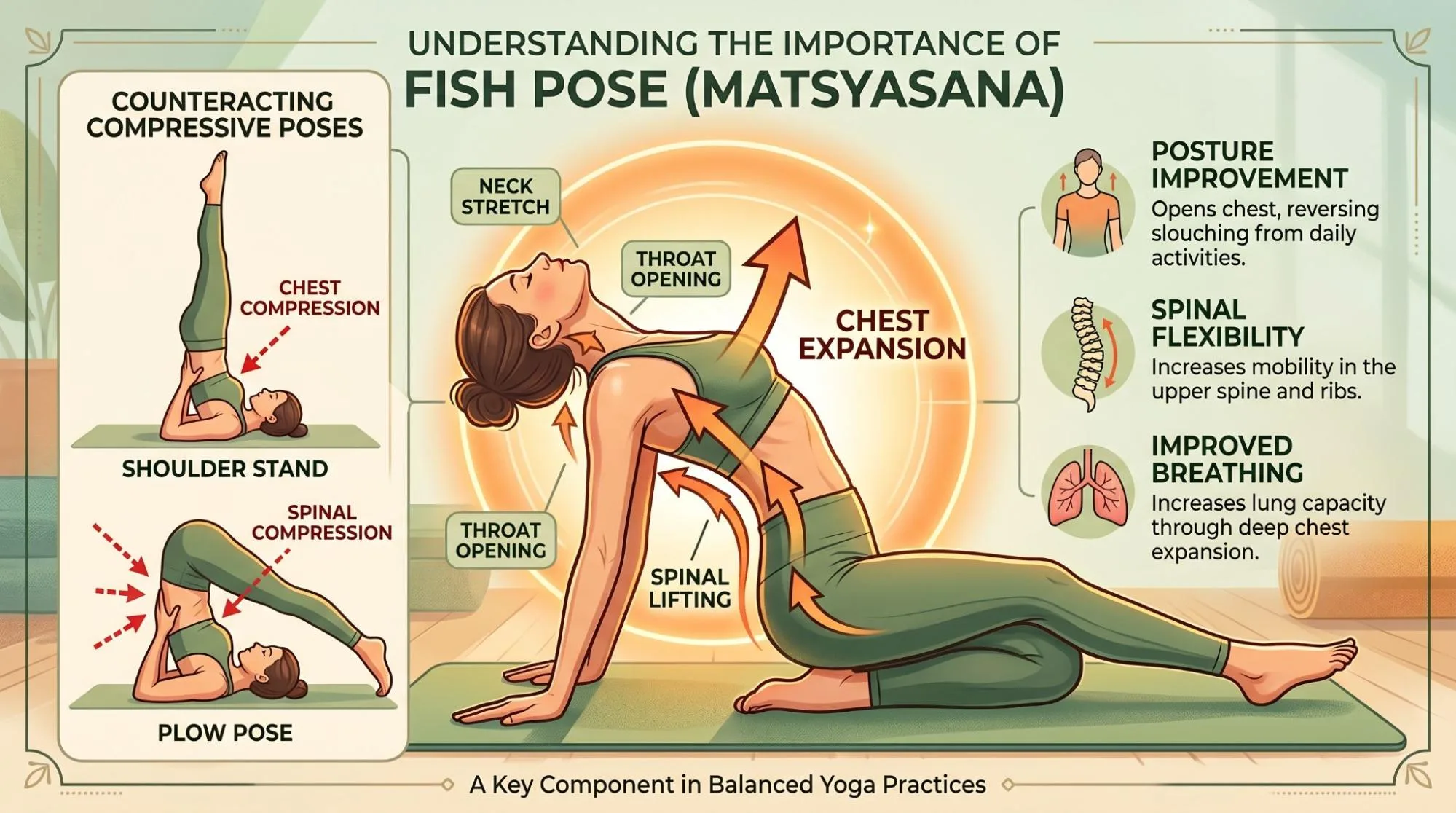 alt=”Matsyasana supported by forearms” title=”Matsyasana supported by forearms”
Learn More : Supported Bridge Pose Block Benefits
The Physical and Mental Benefits of supported backbend: Exploring the Transformation It Brings to Your Body and Mind
supported backbend is more than just the stretching. These advantages include enhancing spinal flexibility up to facilitating relaxation and mental clarity.
 alt=”Fish Pose using a folded blanket” title=”Fish Pose using a folded blanket”
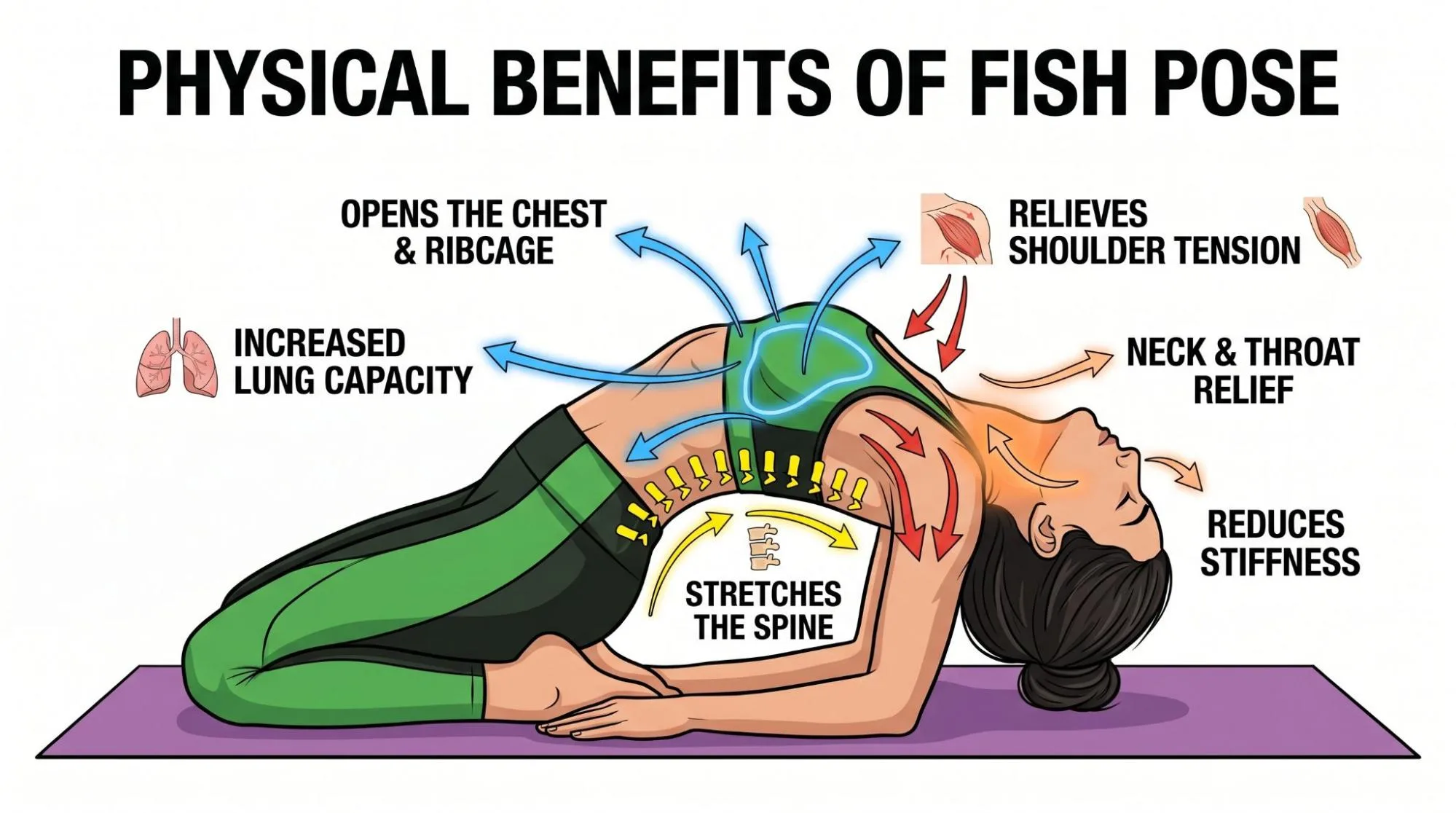
Physical Benefits of supported backbend: How Matsyasana Improves Spinal Health, Lung Capacity, and More
Spinal Flexibility and Health
supported backbend gives a gentle stretch to the spine, especially the thoracic spine, which includes the upper and middle back. This area often becomes stiff because of long sitting hours, poor posture, or tight muscles.
Practicing supported backbend can help improve spinal flexibility and support better mobility in the back. When done correctly, it encourages the spine to move in the opposite direction of slouching, which may help reduce stiffness and discomfort caused by rounded posture.
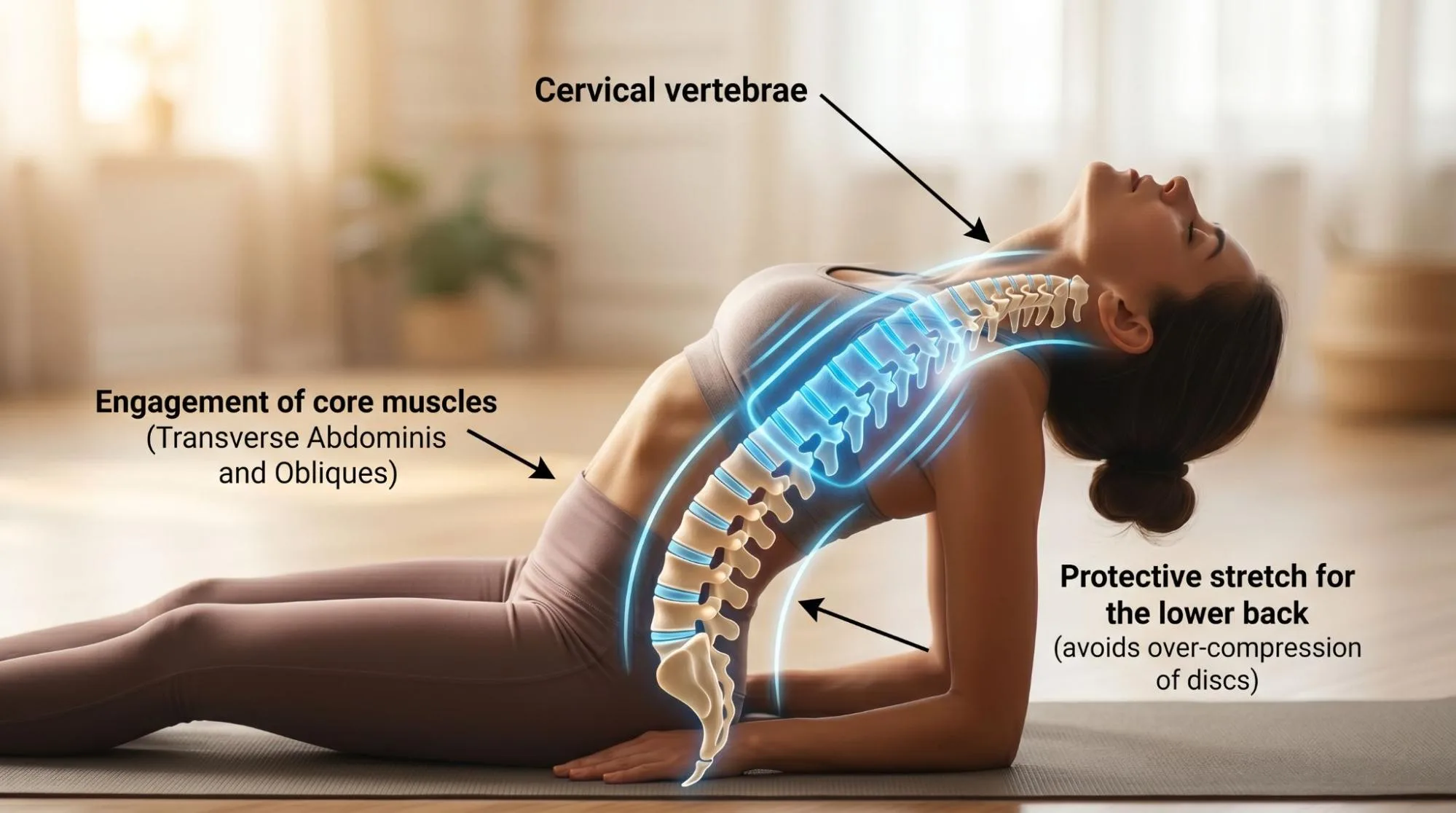 alt=”Gentle supported backbend for beginners” title=”Gentle supported backbend for beginners”
Chest Expansion and Shoulder Opening
One of the main benefits of supported backbend is that it opens the chest and stretches the shoulders. This is especially helpful for people who sit at a desk, use a phone for long periods, or often lean forward during the day.
As you lift your chest upward, the ribcage gets more space to expand. This can make breathing feel easier and more natural. The gentle stretch across the shoulders also helps release tension and may improve the range of motion around the upper body.
Increased Lung Capacity
supported backbend supports deeper breathing by opening the chest and creating more space around the ribs. This allows the lungs to expand more fully during each breath.
The pose also encourages better use of the diaphragm, which plays an important role in efficient breathing. With regular practice, supported backbend may help improve breath awareness, oxygen intake, and overall respiratory comfort.
Neck and Throat Stretch
supported backbend gently stretches the front of the neck and throat. These areas can become tight because of stress, poor posture, or constantly looking down at screens.
This stretch may help ease tension around the neck and upper chest. It can also support better flexibility in the throat area, which may be useful for people who use their voice often, such as teachers, speakers, or singers.
However, the neck should never feel compressed in supported backbend. The head should rest lightly, and most of the support should come from the forearms, elbows, and lifted chest.
Improved Posture
Regular practice of supported backbend can support better posture by opening the chest, drawing the shoulder blades gently back, and helping the spine return to a more natural position.
This is especially useful for people who spend many hours sitting or working at a desk. supported backbend helps reverse the forward-slumping position that many people fall into during the day.
Over time, this can create better awareness of body alignment, a more open chest, and a more relaxed, confident posture.
 alt=”Fish Pose leg and foot alignment” title=”Fish Pose leg and foot alignment”
Learn More : Yoga Wheel Benefits for Back Pain Relief: A Beginner’s Guide
Mental and Emotional Benefits of supported backbend
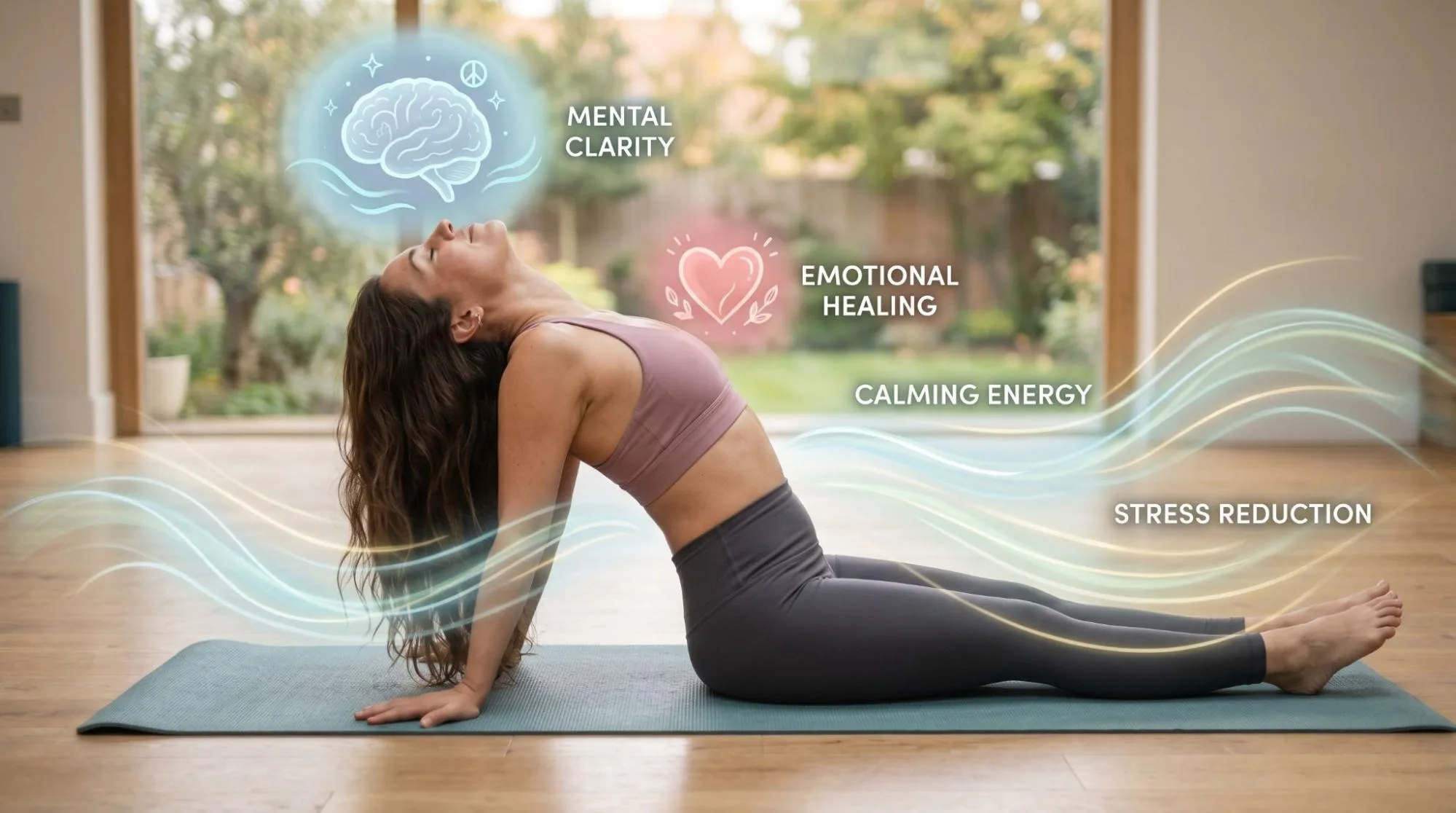
Because supported backbend opens the chest and supports deeper breathing, many people find it emotionally refreshing. It can help release the closed, tired feeling that often comes from stress or poor posture.
The pose may also feel uplifting because the front body opens and the breath becomes more spacious. In slower yoga classes, supported supported backbend is sometimes used to help the body relax.
It is not a cure for stress or anxiety, but it can be a helpful part of a calming yoga routine.
 alt=”Neck-safe variation of Matsyasana” title=”Neck-safe variation of Matsyasana”
How to Do supported backbend Step by Step
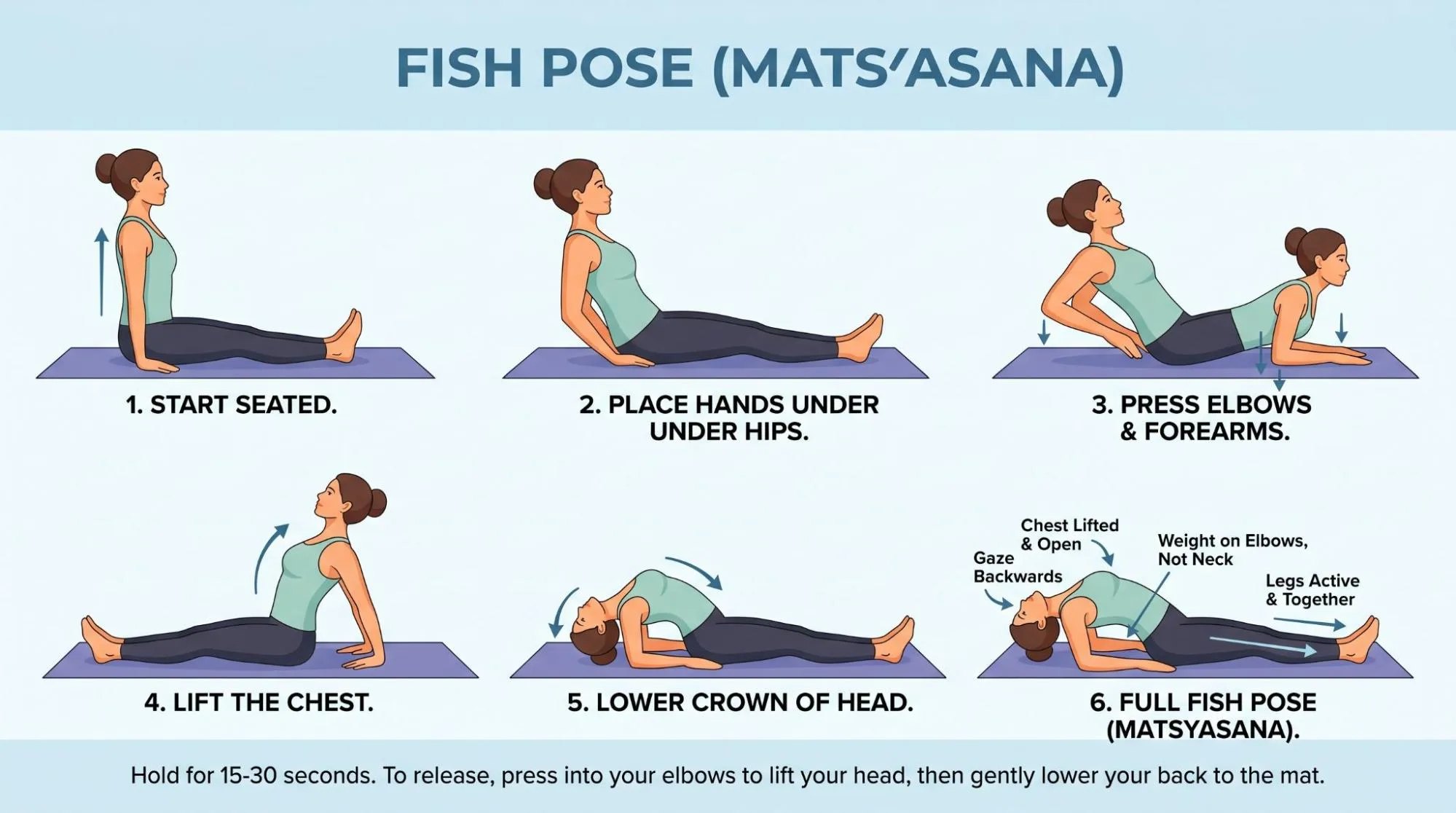
Here is a simple step by step method for practicing supported backbend safely.
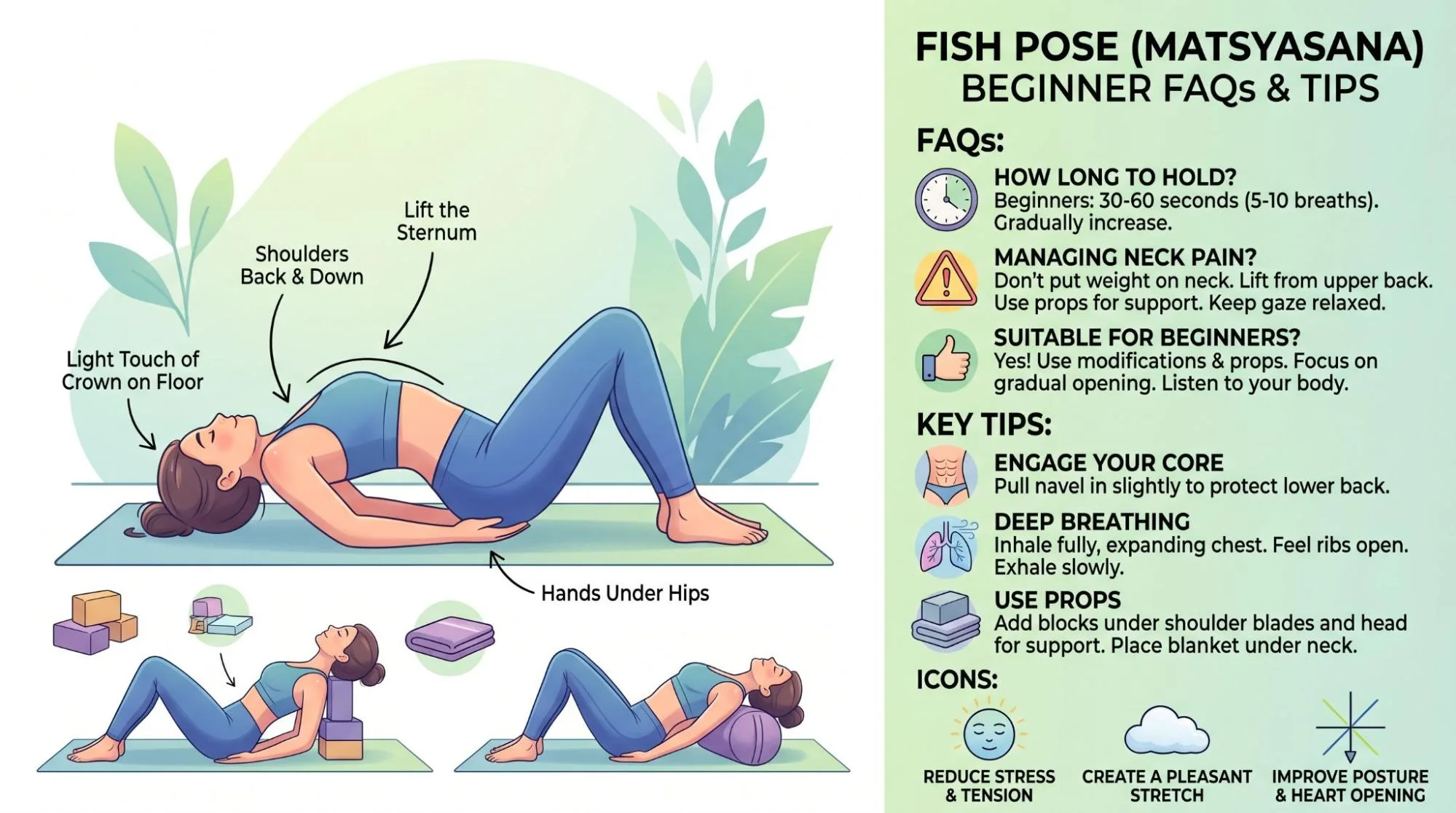
Step 1: Begin in a Seated Position
Sit on your yoga mat with your legs extended in front of you. Keep your spine tall and your shoulders relaxed.
Slowly lower yourself onto your back. If your lower back feels tight, bend your knees and place your feet on the floor.
Step 2: Place Your Hands Beneath Your Hips
Slide your hands underneath your hips, palms facing down. Keep your elbows close to your body.
Your arms should feel firm and supportive, almost like you are keeping your arms alongside your body. This position helps protect the lower back and gives you a base to lift from.
Step 3: Press Into Your Elbows and Lift Your Chest
Gently press your forearms and elbows into the mat. Use that pressure to lift your upper chest.
Think of the chest rising upward first. Do not throw your head back quickly. Your shoulder blades should move slightly toward each other to support the opening.
Step 4: Lower Your Head to the Floor
Once the chest is lifted, slowly bring the crown of your head to the floor.
The head should rest lightly. Most of your weight should stay in your elbows, forearms, and hips. If the neck feels compressed, come out of the pose and try a supported version.
Step 5: Engage Your Core
Lightly engage your core muscles. This keeps the lower back from collapsing.
You do not need to tighten your whole body. Just create enough support so the pose feels stable and controlled.
Step 6: Hold the Pose
Hold supported backbend for 3 to 5 slow breaths if you are new to it. More experienced students may stay longer, but breathing should remain smooth.
Feel the chest open with each inhale. Keep the face soft and the jaw relaxed.
Step 7: Exit the Pose Slowly
To come out, press into your forearms again. Lift your head slightly, lower your chest, and release your arms.
Rest on your back for a few breaths. You can bend your knees or hug them toward your chest if your lower back needs a gentle release.
 alt=”Fish Pose breathing with chest open” title=”Fish Pose breathing with chest open”
Common Mistakes to Avoid
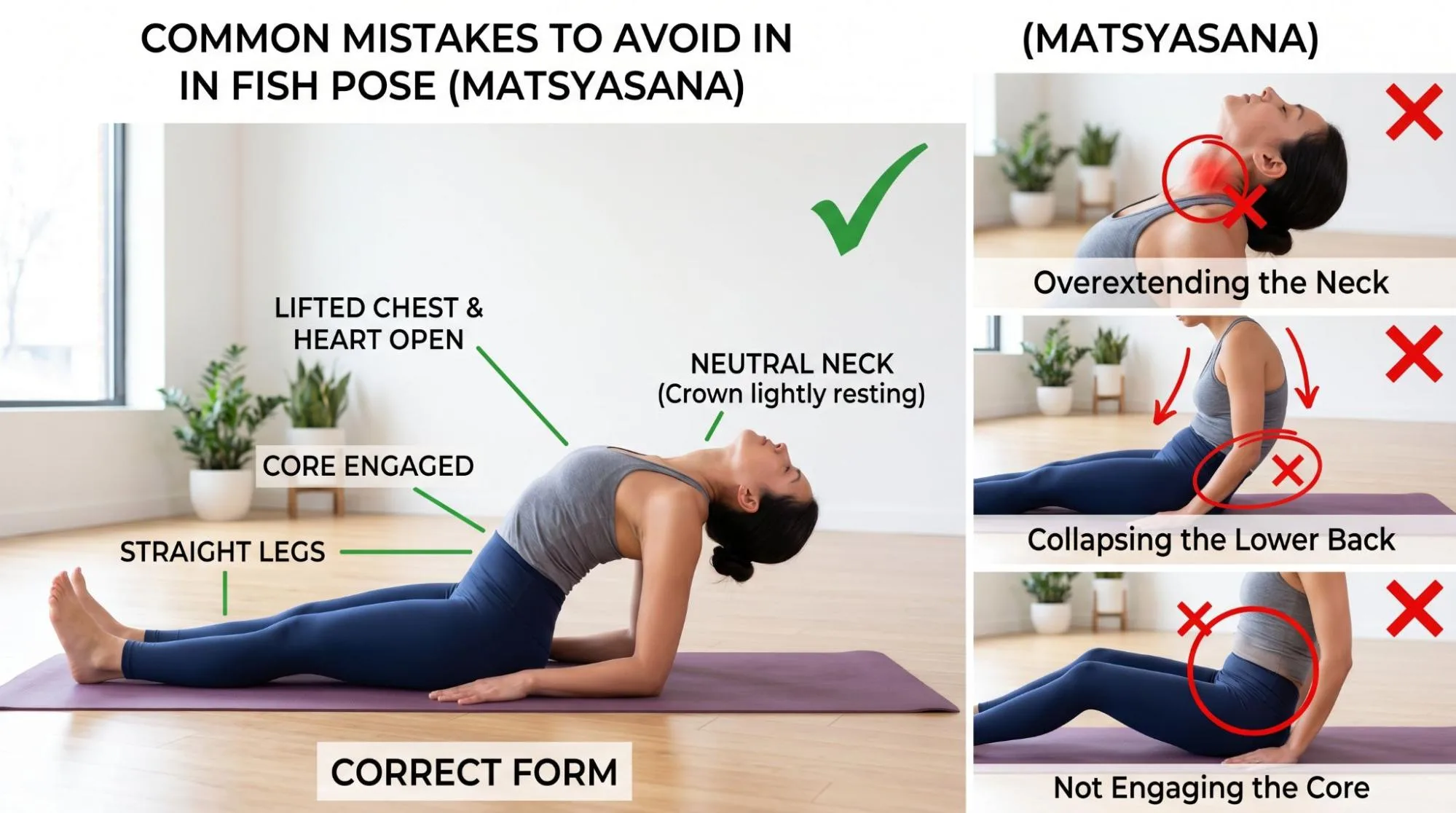
supported backbend is helpful, but only when practiced with good alignment. These are the mistakes to watch for.
Overextending the Neck
The most common mistake is placing too much weight on the head or neck. supported backbend should not feel like a neck stretch.
Keep the lift in your chest strong enough so your head touches the floor lightly. If your neck feels pinched, stop and adjust.
Not Engaging the Core
Without core support, the lower back may take too much pressure. A gentle core engagement helps keep the pose safe.
Think of drawing the lower belly slightly inward while keeping the breath relaxed.
Collapsing the Lower Back
supported backbend should mainly open the upper back and chest. If all the bend goes into the lower back, the pose can feel uncomfortable.
Bend your knees and keep your feet on the floor if you feel strain. This usually makes the pose easier to manage.
Not Using Props When Needed
Props can make supported backbend much more comfortable. A yoga block, bolster, or folded blanket can support the upper back and reduce pressure on the neck.
Using props does not make the pose less effective. For many people, it makes the pose better.
Holding the Breath
supported backbend should support breathing, not restrict it. If you notice yourself holding your breath, reduce the depth of the pose.
Smooth breathing is a sign that your body is working within a safe range.
Beginner-Friendly Variations
Different bodies need different versions of supported backbend. Choose the variation that feels steady and useful.
Supported supported backbend
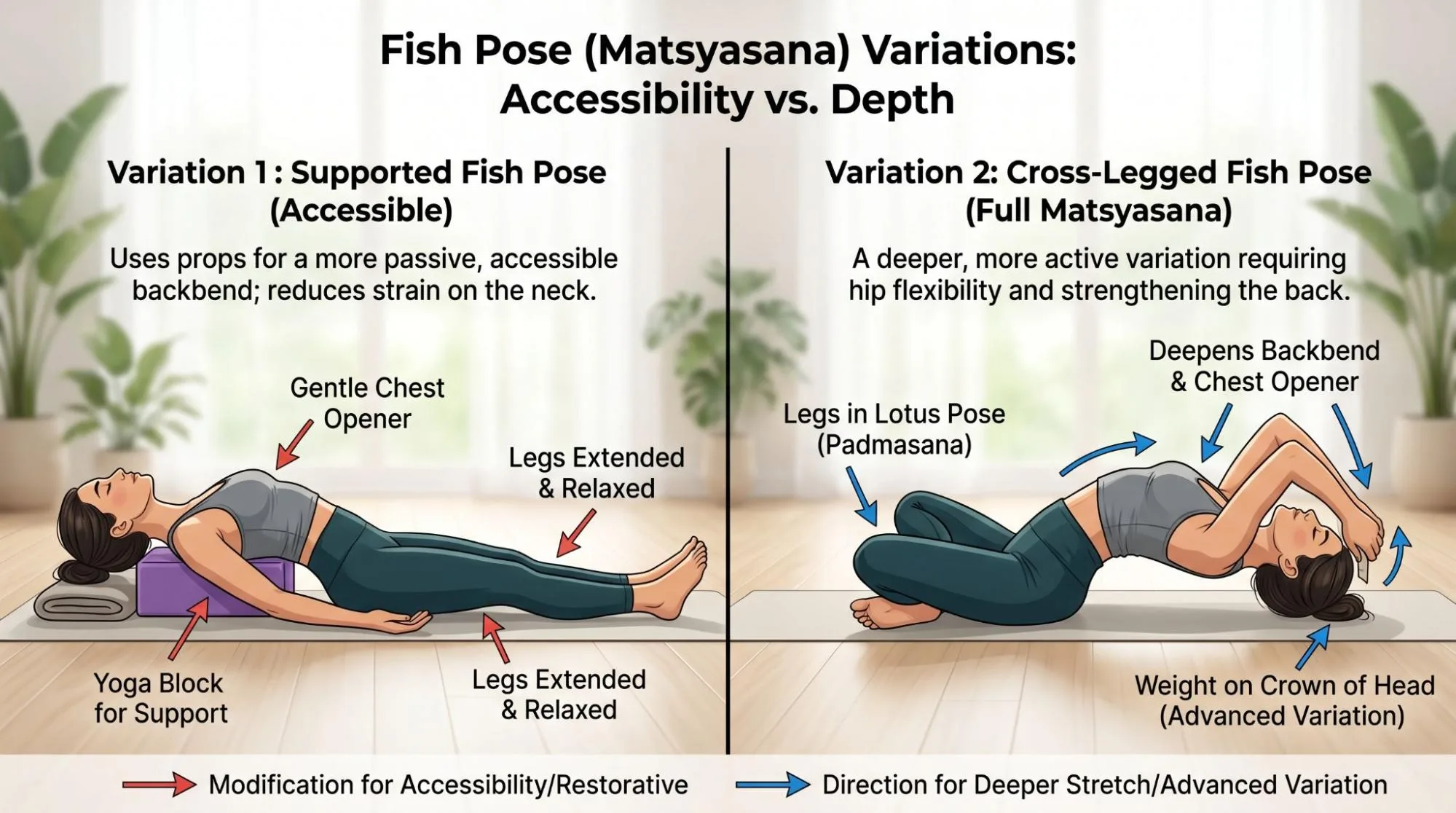
Supported supported backbend is one of the best versions for beginners. Place a yoga block, bolster, or folded blanket under your upper back. Let your chest open naturally.
You can keep your knees bent with feet on the floor, or extend your legs if that feels comfortable.
This variation is helpful for tight shoulders, stiff upper back muscles, or anyone who wants a gentle heart opening posture.
supported backbend With Legs Crossed
In this variation, the legs are crossed while the upper body moves into supported backbend. It can create a more traditional shape, but it may not suit everyone.
Only practice this version if your hips and knees feel comfortable. Never force the legs into position.
Deep Backbend supported backbend
A deeper supported backbend includes a stronger chest lift and a larger arch through the upper back. Advanced practitioners may also combine it with lotus legs.
This version is not necessary for most students. A simple, well-supported supported backbend can still provide strong benefits.
 alt=”Supported Fish Pose on a yoga mat” title=”Supported Fish Pose on a yoga mat”
FAQs About Matsyasana
How Long Should I Hold supported backbend?
Beginners can hold supported backbend for 3 to 5 slow breaths. With practice, you may hold it for 30 seconds or a little longer.
Comfort matters more than time. If your breathing becomes tight, come out sooner.
Can supported backbend Help With Back Pain?
supported backbend may help some people by opening the chest and improving posture awareness. However, it is not suitable for every type of back pain.
If you have lower back discomfort, try supported supported backbend first. Keep your knees bent and feet on the floor. Stop if you feel sharp pain.
Is supported backbend Suitable for Beginners?
Yes, supported backbend can be suitable for beginners when practiced gently. The supported version is usually the safest place to start.
A yoga block under the upper back can help you feel the chest opening without straining the neck.
Can supported backbend Help With Anxiety?
supported backbend is not a medical treatment for anxiety, but it may support relaxation when paired with slow breathing.
Many people find that chest-opening poses help them breathe more freely. Supported supported backbend can feel especially calming in a quiet evening practice.
What Should I Do If I Feel Neck Pain in supported backbend?
Come out of the pose slowly. Neck pain means your alignment needs to change.
Try these adjustments:
- Use a yoga block or folded blanket
- Keep more weight in your forearms
- Do not drop the head back too far
- Bend your knees and place your feet on the floor
- Practice supported supported backbend instead
If neck pain continues, skip the pose and work with a qualified yoga teacher.
 alt=”Fish Pose preparation from a reclined position” title=”Fish Pose preparation from a reclined position”
Learn More : Plow Pose Halasana Step by Step Guide
Conclusion
supported backbend is a simple but valuable yoga posture for opening the chest, supporting better breathing, and improving posture awareness. It can feel energizing in an active practice and calming when done with props.
You do not need to force a deep backbend to receive the benefits of supported backbend. A steady chest lift, relaxed breathing, and careful neck position are enough.
Practice slowly, use support when needed, and let the pose feel spacious rather than intense. That is where supported backbend becomes both safe and genuinely helpful.
 alt=”Resting after a gentle backbend” title=”Resting after a gentle backbend”
Frequently Asked Questions
Is supported backbend suitable for beginners?
Beginners can start with a supported version using a folded blanket and a small chest lift. The full pose is not required.
Should the head carry weight in supported backbend?
No. Keep the neck long and avoid pressing into the crown of the head. If there is pressure or discomfort, come out and use more support.
What should I do if my neck hurts?
Stop, lower the chest, and rest in a neutral position. Persistent or severe neck pain should be assessed by a qualified professional.
Further reading: For general yoga safety information, see NCCIH: Yoga—What You Need To Know.
