
The Yoga Sutras of Patanjali can feel a little mysterious when you first hear about them. The language is ancient, the ideas are deep, and many explanations sound more complicated than they need to be.
But at the heart of it, the Yoga Sutras are a practical guide to understanding the mind.
They do not only talk about yoga poses. In fact, physical posture is just one small part of the system. The Yoga Sutras explain how to calm mental noise, live with more awareness, build self-discipline, and move toward inner peace.
For anyone looking for Patanjali Yoga Sutras for beginners, this guide will give you a clear and simple starting point.
What Are the Yoga Sutras of Patanjali?
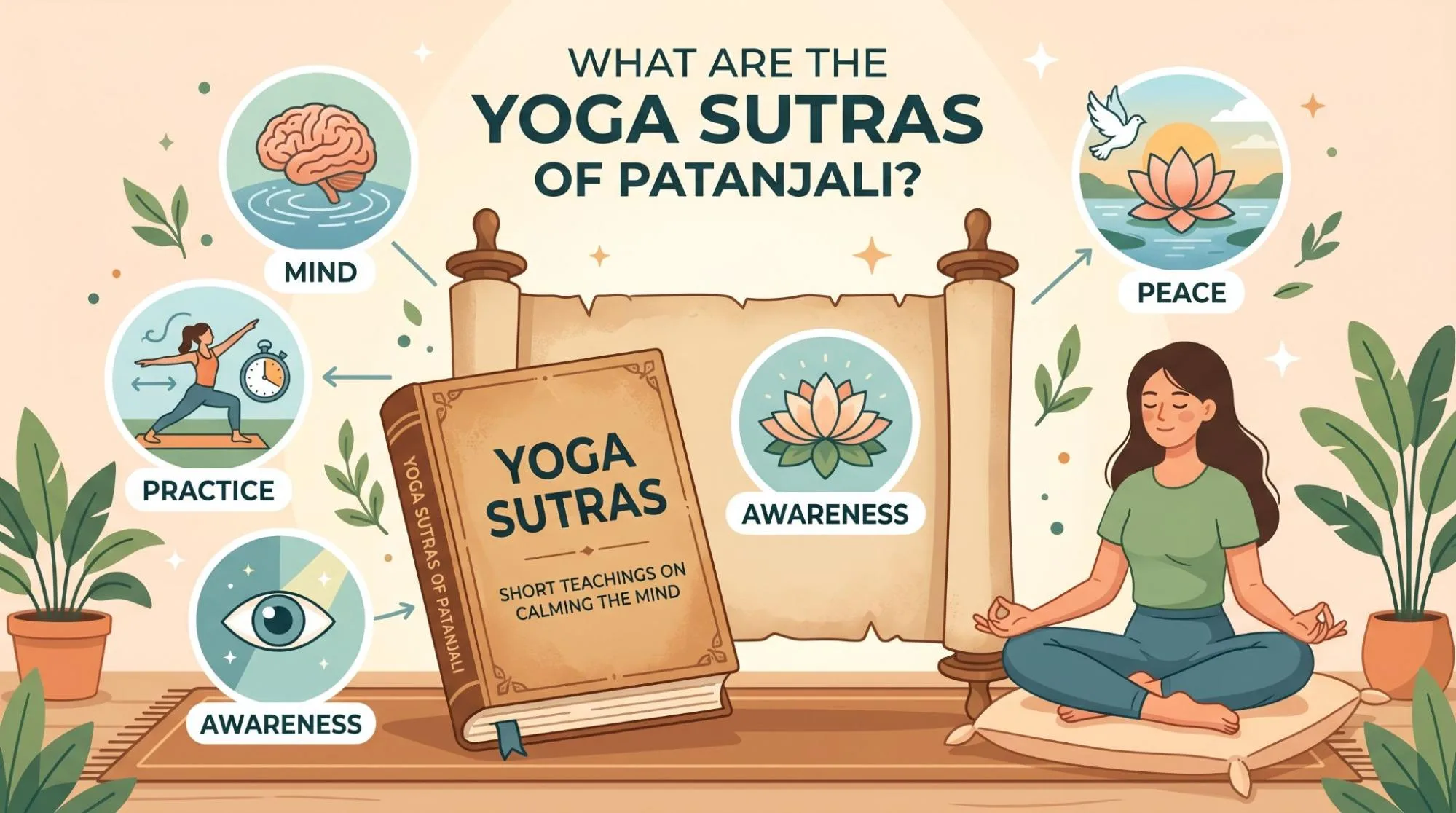
The Yoga Sutras of Patanjali are a collection of short teachings, traditionally attributed to the sage Patanjali. These teachings are written in the form of “sutras,” which means short, thread-like statements.
Each sutra is brief, but it carries a lot of meaning. That is why people often study them with a teacher, commentary, or guidebook.
The Yoga Sutras are not a fitness manual. They are more like a map for the mind. They explain why the mind becomes restless, how suffering begins, and how steady practice can lead to clarity and freedom.
The Main Purpose of the Yoga Sutras
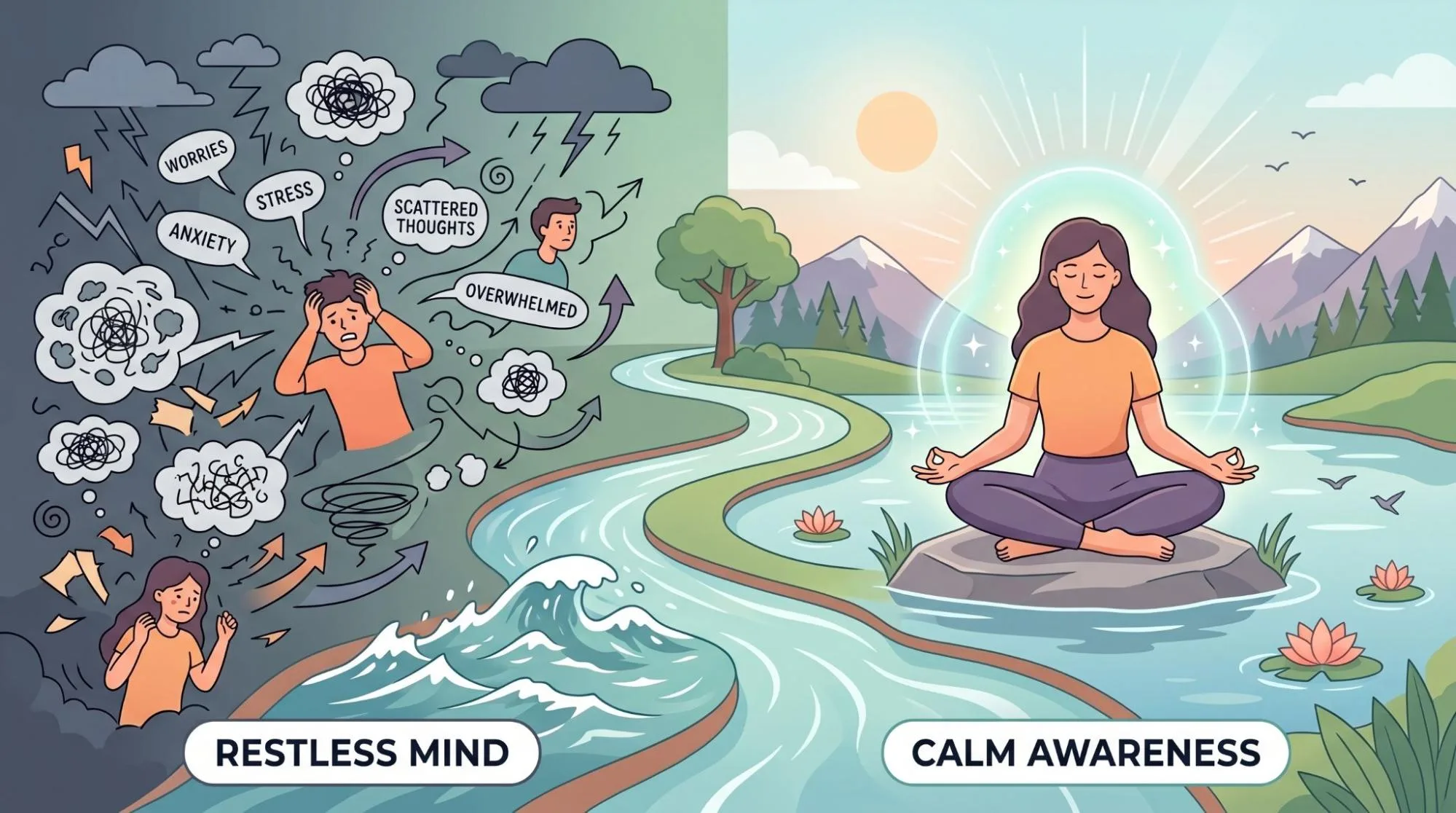
The main purpose of the Yoga Sutras is to help us understand and quiet the mind.
Most people live with constant thoughts, worries, reactions, memories, and desires. Patanjali teaches that when the mind becomes still, we begin to see ourselves and life more clearly.
This does not mean becoming emotionless or detached from real life. It means learning how to respond with awareness instead of being controlled by every thought or feeling.
In simple words, the Yoga Sutras teach:
- How to calm the mind
- How to reduce suffering
- How to live with discipline and kindness
- How to build concentration
- How to move toward inner freedom
Learn More : Body Scan Meditation Benefits: A Simple Guide to Relaxing the Mind and Body
The Four Chapters of the Yoga Sutras
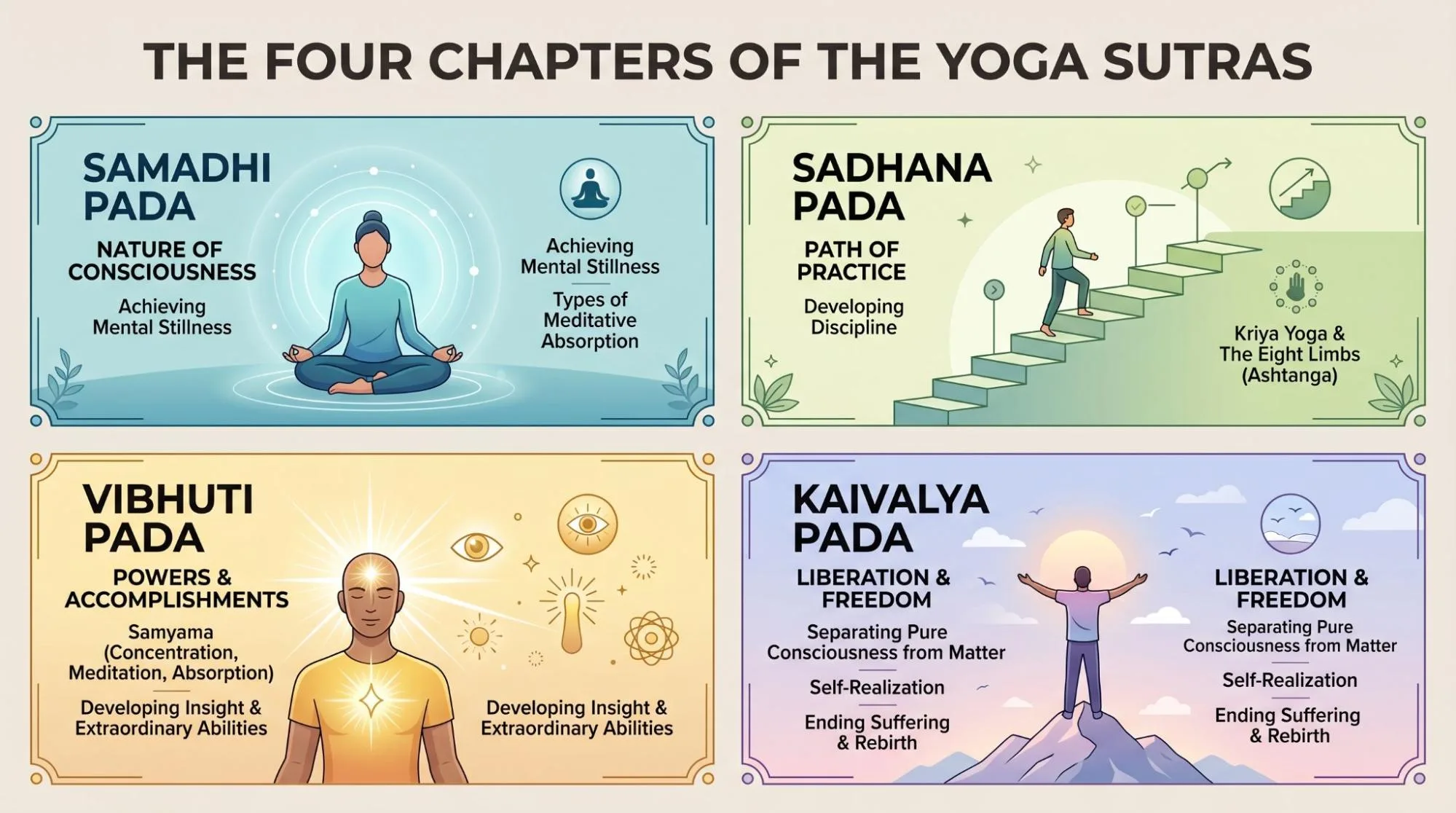
The Yoga Sutras are divided into four chapters, also called Padas. Each chapter focuses on a different stage of yogic understanding.
Samadhi Pada
Samadhi Pada introduces the meaning of yoga and the goal of mental stillness. This chapter explains that yoga is the calming of the movements of the mind.
It also talks about concentration, meditation, and samadhi, which is a deep state of meditative absorption.
For beginners, this chapter can feel philosophical, but the main idea is simple: a restless mind creates confusion, while a steady mind brings clarity.
Sadhana Pada
Sadhana Pada is the chapter of practice. This is often the most useful chapter for beginners because it explains practical steps for daily life.
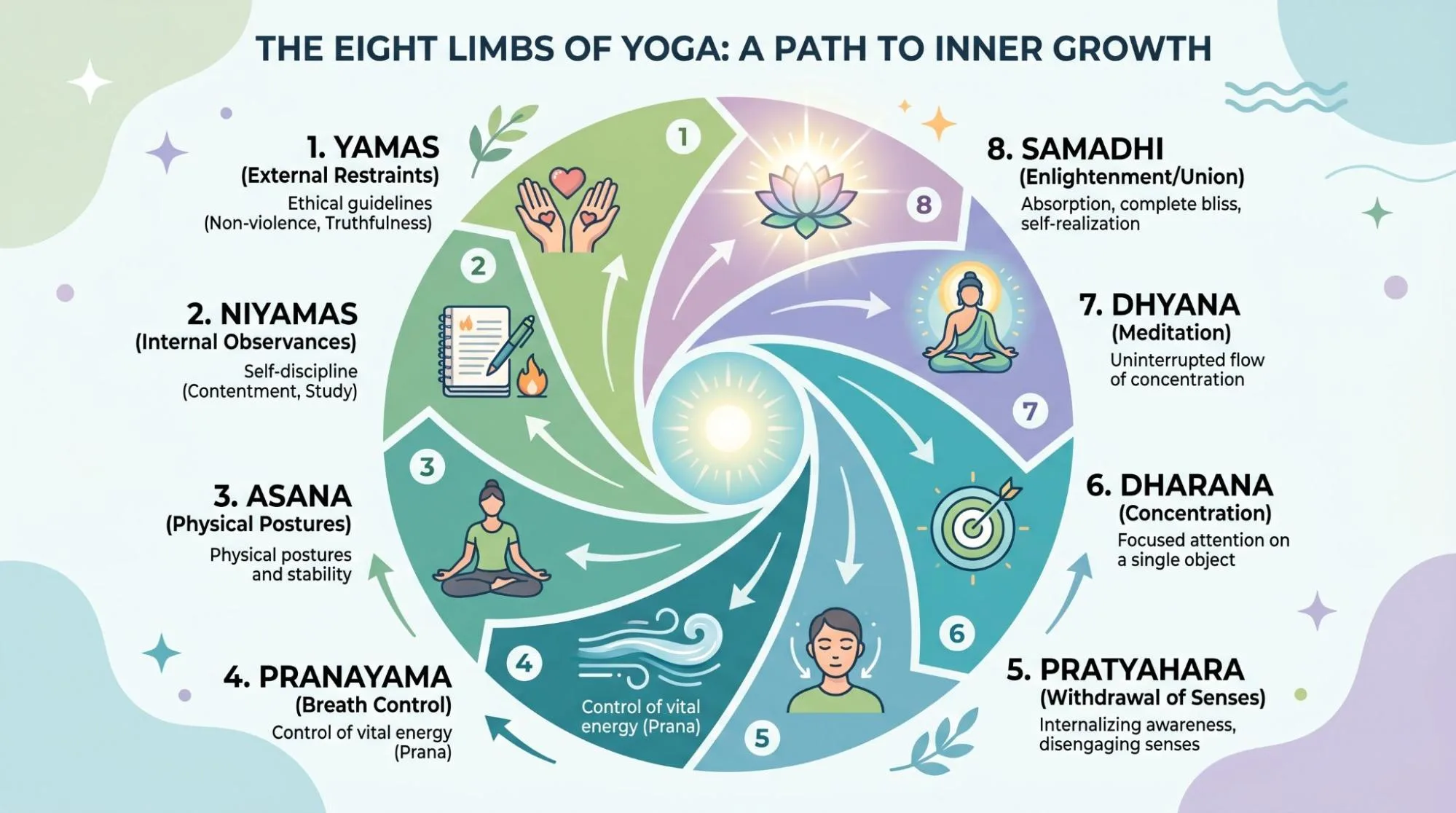
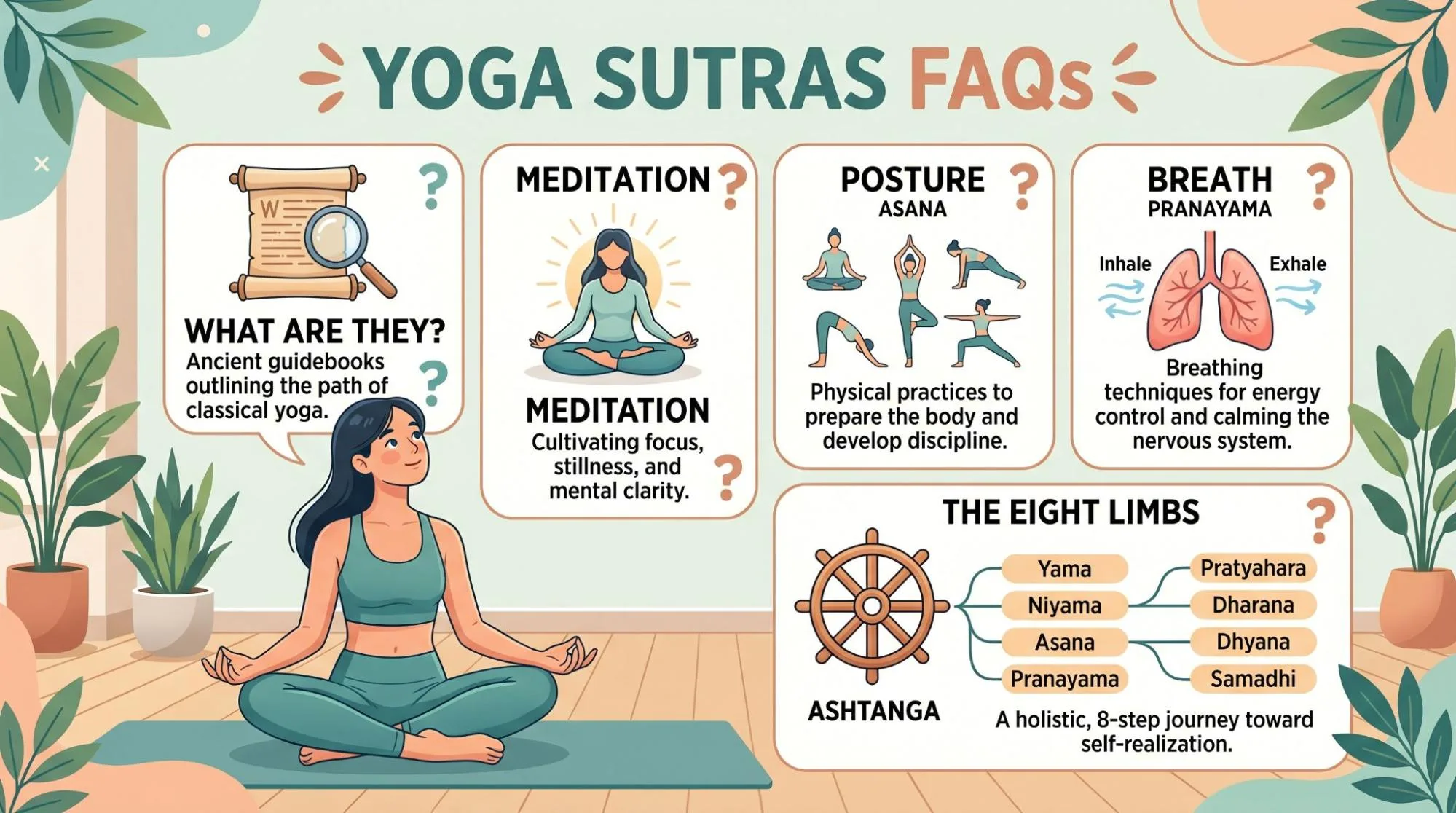
Here, Patanjali introduces the Eight Limbs of Yoga, also known as Ashtanga Yoga. These eight limbs include ethics, self-discipline, posture, breathing, sense control, concentration, meditation, and samadhi.
This chapter reminds us that yoga is not something we only do on a mat. It is a complete way of living.
Vibhuti Pada
Vibhuti Pada discusses the results that can come from deep concentration and meditation. It describes special abilities, insights, and powers that may arise through advanced practice.
For beginners, the key lesson is not to chase powers or unusual experiences. The real focus is steady awareness.
Patanjali seems to warn that even spiritual achievements can become distractions if the ego becomes attached to them.
Kaivalya Pada
Kaivalya Pada is the final chapter. It talks about liberation, freedom, and the separation of pure awareness from mental patterns.
This is the most advanced part of the Yoga Sutras. For a beginner, it can be understood as the state where a person is no longer trapped by fear, ego, attachment, or confusion.
It points toward complete inner freedom.
The Eight Limbs of Yoga
The Eight Limbs of Yoga are one of the most famous teachings in the Yoga Sutras of Patanjali. They show that yoga is much more than stretching or exercise.
These eight limbs work like a path. They guide the student from outer behavior to inner stillness.
Yamas
The Yamas are ethical restraints. They guide how we behave toward others and the world around us.
Ahimsa
Ahimsa means non-violence.
This does not only mean avoiding physical harm. It also includes kind speech, gentle thoughts, and not being harsh with yourself.
In daily life, ahimsa may look like speaking calmly during conflict, choosing compassion, or avoiding self-criticism after a mistake.
Satya
Satya means truthfulness.
It teaches us to be honest in words, actions, and intentions. But truth should be practiced with kindness. Being truthful does not mean being rude.
Satya asks us to live with honesty while still respecting others.
Asteya
Asteya means non-stealing.
This includes not taking what does not belong to us, but it can also mean not stealing time, attention, credit, or energy from others.
For example, respecting someone’s effort and giving proper credit is a simple practice of asteya.
Brahmacharya
Brahmacharya is often explained as moderation or wise use of energy.
For beginners, it does not need to be understood in a rigid way. It can simply mean using your physical, emotional, and mental energy carefully.
Instead of wasting energy on distractions, brahmacharya encourages balance and self-control.
Aparigraha
Aparigraha means non-possessiveness or non-greed.
It teaches us not to cling too tightly to things, people, results, or status. This does not mean we cannot enjoy life. It means we learn to enjoy without becoming trapped by attachment.
Niyamas
The Niyamas are personal observances. They guide how we care for our inner life and personal discipline.
Saucha
Saucha means cleanliness or purity.
This includes physical cleanliness, but also mental clarity. A clean space, simple routine, and healthy thoughts can all support saucha.
It is about creating an environment where the mind can feel lighter.
Santosha
Santosha means contentment.
It does not mean giving up ambition. It means learning to be peaceful with where you are while still growing.
A person practicing santosha can work hard without constantly feeling incomplete.
Tapas
Tapas means discipline, effort, or inner heat.
This is the part of yoga that helps us stay committed. It may be waking up for practice, choosing patience, or doing the right thing even when it is uncomfortable.
Tapas builds strength from the inside.
Svadhyaya
Svadhyaya means self-study.
This can include studying sacred texts, but it also means observing yourself honestly. You begin to notice your habits, reactions, fears, and patterns.
For beginners, journaling after practice can be a simple form of svadhyaya.
Ishvara Pranidhana
Ishvara Pranidhana means surrender to a higher reality, divine presence, or something greater than the ego.
Different people understand this in different ways. Some see it spiritually. Others see it as humility and trust.
The main idea is to stop trying to control everything.
Asana
Asana means posture.
In modern yoga, asana often gets the most attention. But in the Yoga Sutras, it is described very simply. The posture should be steady and comfortable.
The goal of asana is not to perform impressive shapes. It is to prepare the body and mind for deeper practice.
Pranayama
Pranayama means regulation of breath.
Breath and mind are closely connected. When the breath becomes calm, the mind often becomes calmer too.
A beginner can start with simple breath awareness, slow breathing, or gentle breathing practices under proper guidance.
Pratyahara
Pratyahara means withdrawal of the senses.
This does not mean ignoring the world. It means not being pulled constantly by every sound, screen, craving, or distraction.
In a very practical way, pratyahara can begin by sitting quietly without checking your phone for a few minutes.
Dharana
Dharana means concentration.
This is the practice of placing the mind on one point. It could be the breath, a mantra, a candle flame, or a simple inner focus.
At first, the mind will wander. That is normal. The practice is gently bringing it back.
Dhyana
Dhyana means meditation.
When concentration becomes steady and continuous, it turns into meditation. There is less effort and more natural awareness.
Dhyana is not about forcing the mind to be blank. It is about resting in steady attention.
Samadhi
Samadhi is deep meditative absorption.
In this state, the usual separation between the meditator, the meditation, and the object of meditation begins to dissolve.
For beginners, samadhi may sound far away. That is fine. The path begins with simple, honest practice.
Key Yoga Sutras Beginners Should Know
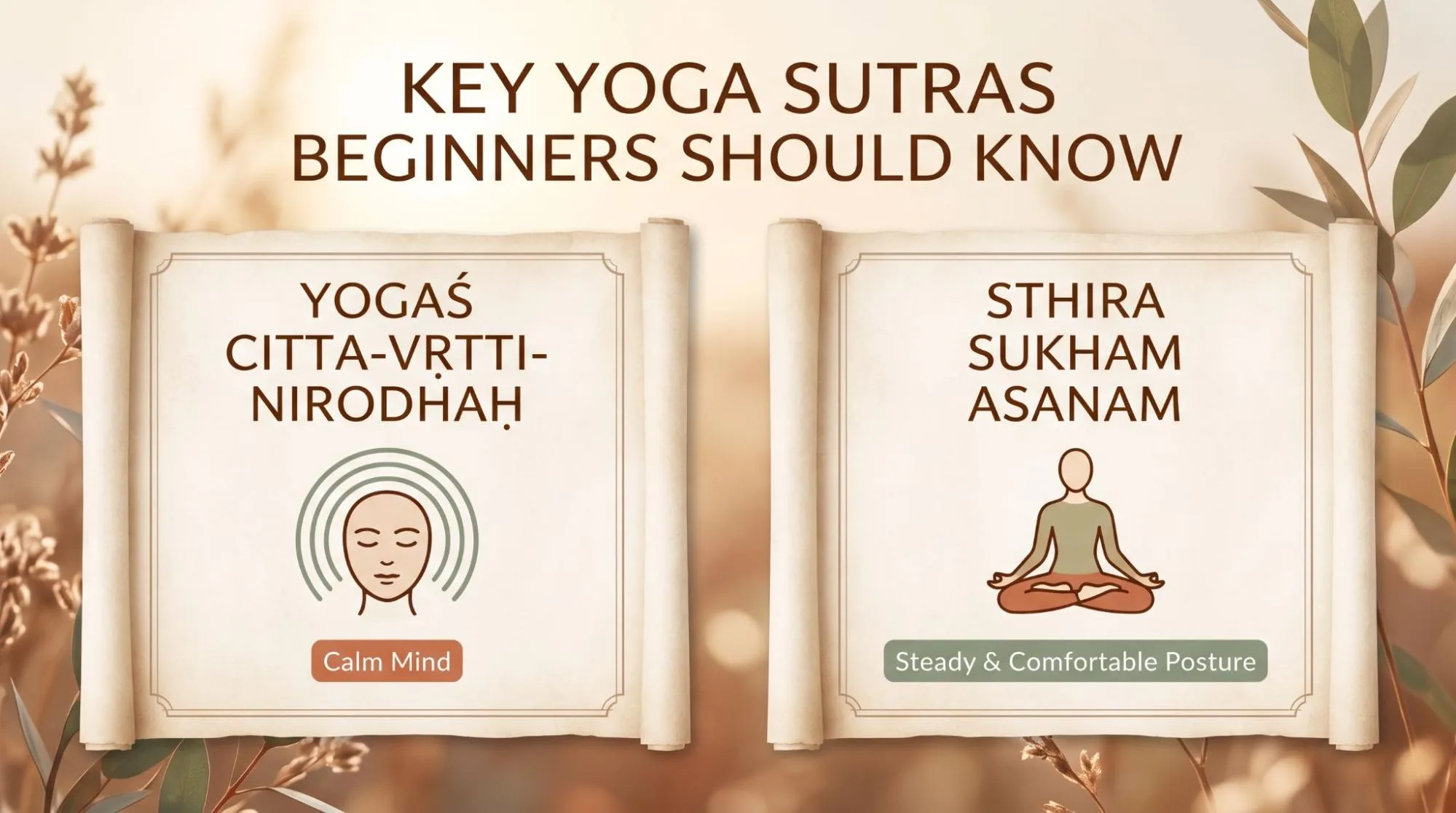
Beginners do not need to memorize many sutras at once. A few important ones can give a strong foundation.
Yogas Chitta Vritti Nirodha
This is one of the most famous sutras:
Yogaś citta-vṛtti-nirodhaḥ
A simple translation is:
Yoga is the stilling of the movements of the mind.
This sutra explains the whole purpose of yoga. The mind is often moving through thoughts, memories, worries, and judgments. Yoga helps quiet these movements so we can see clearly.
Sthiram Sukham Asanam
Another important sutra is:
Sthira sukham asanam
This means:
Posture should be steady and comfortable.
This is a helpful reminder for modern yoga students. A pose is not better just because it looks difficult. True asana should have stability, ease, and awareness.
Learn More : Tapas Yoga Meaning Self Discipline
Recommended Books for Studying the Yoga Sutras
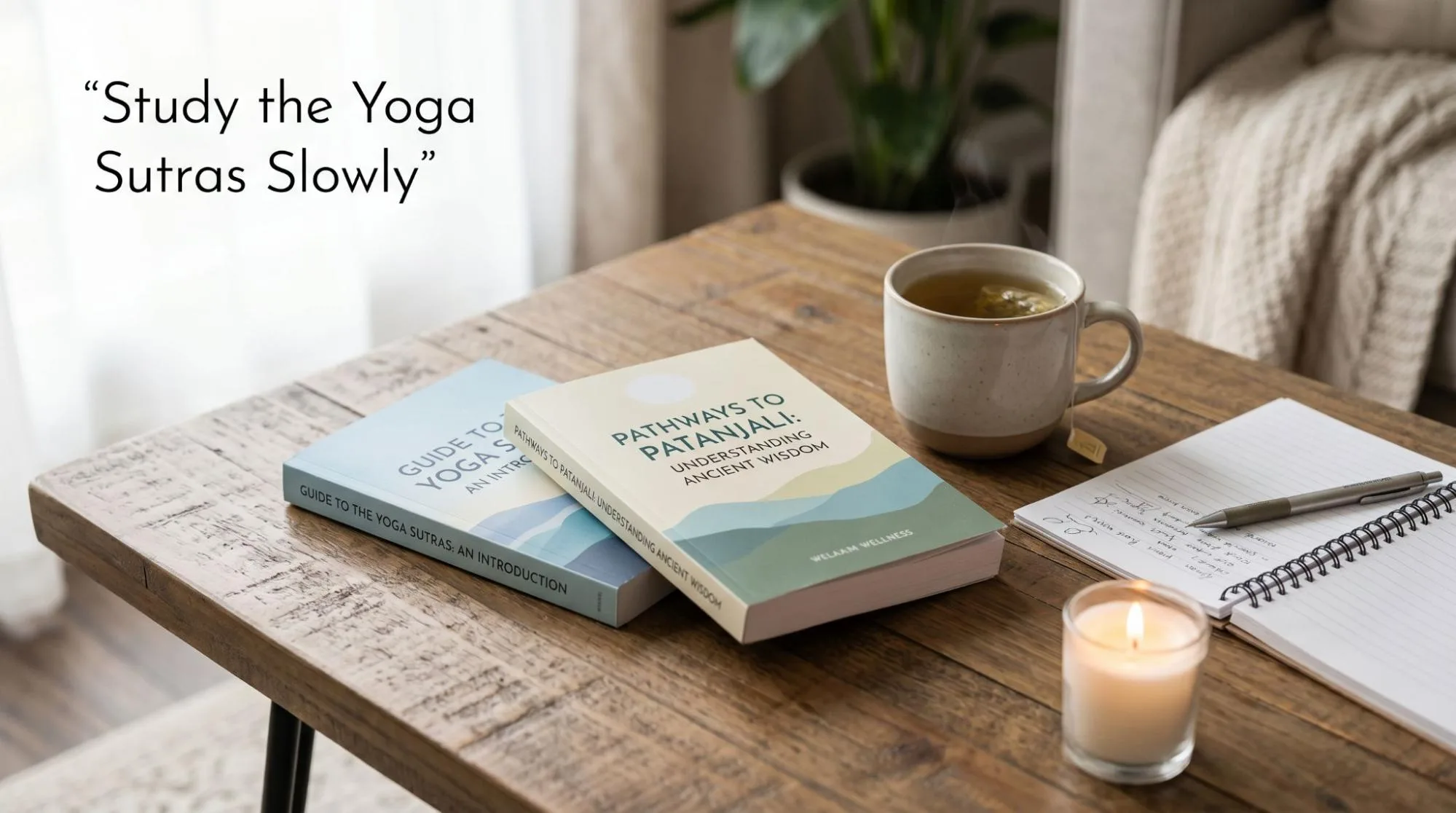
The Yoga Sutras are short, but they are not always easy to understand without commentary. These two books are helpful for deeper study.
The Heart of Yoga by T.K.V. Desikachar
The Heart of Yoga is one of the most beginner-friendly books for understanding yoga as a complete practice.
T.K.V. Desikachar explains yoga in a practical and personal way. The book also includes teachings connected to the Yoga Sutras, making it useful for students who want a gentle entry point.
It is a good choice if you want something clear, warm, and not overly academic.
Light on the Yoga Sutras of Patanjali by B.K.S. Iyengar
Light on the Yoga Sutras of Patanjali is more detailed and traditional in tone.
B.K.S. Iyengar explains each sutra with depth and seriousness. Beginners may find it slower to read, but it is valuable for those who want a fuller understanding.
This book is best studied little by little.
Why the Yoga Sutras Still Matter Today
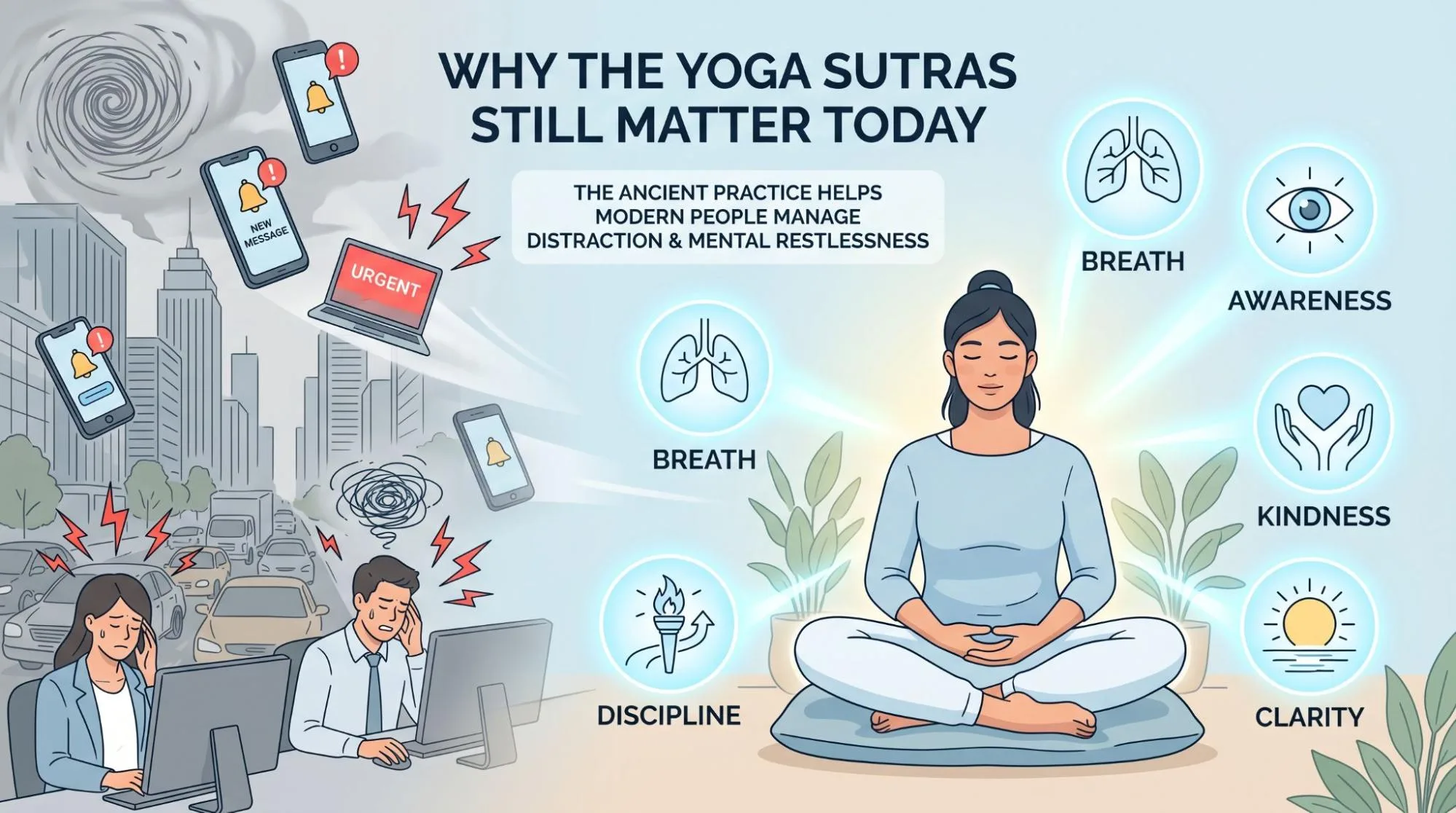
The Yoga Sutras still matter because the human mind has not changed that much.
We may have modern technology, busy schedules, and constant notifications, but the same inner struggles remain: fear, distraction, comparison, anger, craving, and restlessness.
The Yoga Sutras offer tools for these problems.
They teach us to pause. To notice. To breathe. To act with honesty. To stop chasing every thought. To live with more steadiness.
That is why the Yoga Sutras of Patanjali are still useful for modern beginners, yoga teachers, meditators, and anyone trying to live with more awareness.
How Beginners Can Start Practicing the Yoga Sutras
You do not need to understand every sutra before you begin. Start small.
Here are simple ways to practice:
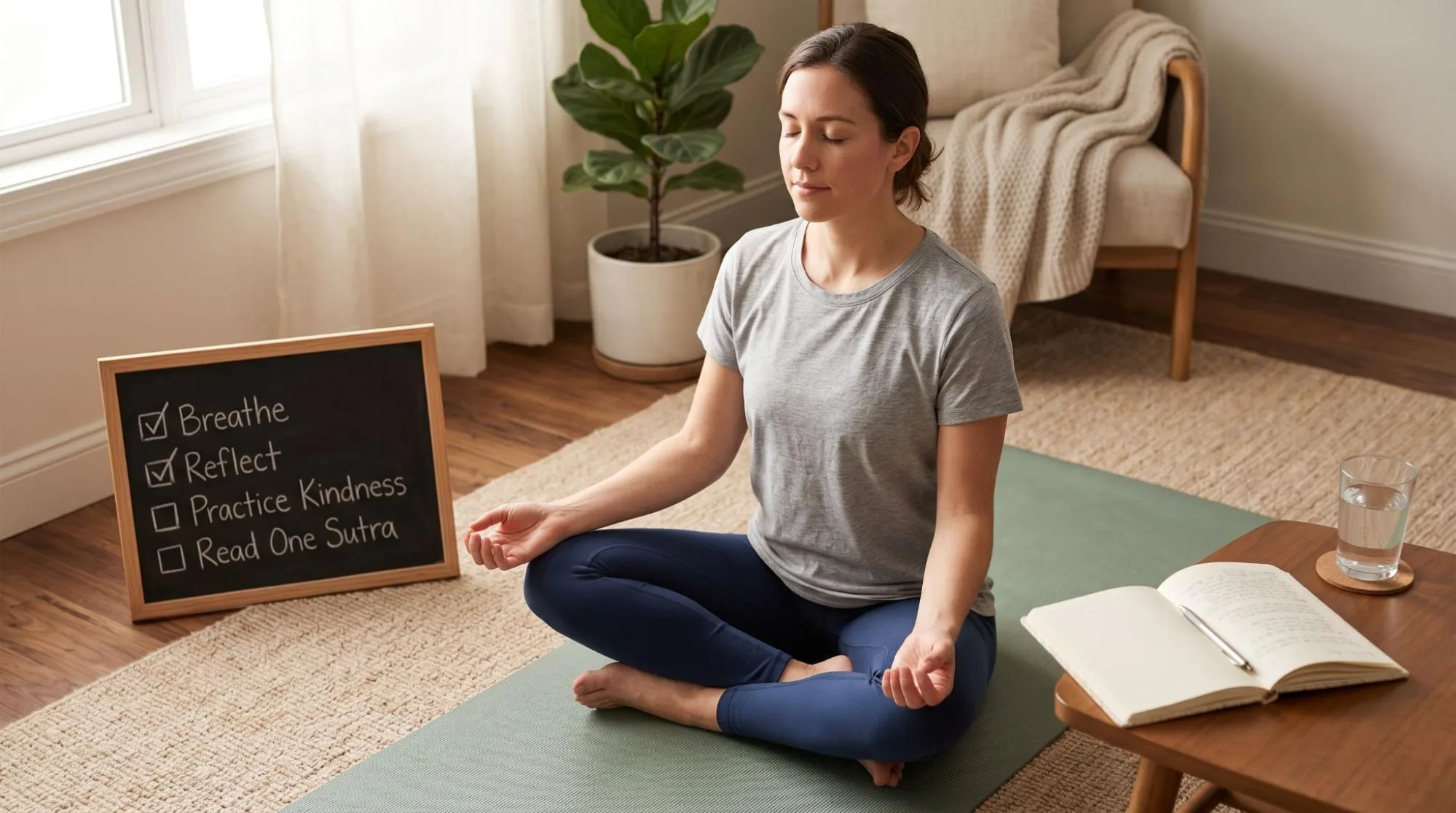
- Choose one Yama or Niyama each week
- Practice gentle asana with awareness, not force
- Spend five minutes watching your breath
- Read one sutra at a time
- Notice your reactions during daily life
- Journal about your habits and thoughts
- Practice kindness toward yourself and others
A beginner’s practice does not need to be perfect. In fact, it should not feel like pressure. The Yoga Sutras are best learned through steady, patient practice.
FAQs About Patanjali Yoga Sutras for Beginners
Are the Yoga Sutras good for beginners?
Yes, the Yoga Sutras are good for beginners, especially when studied slowly with simple explanations. Beginners should start with the main ideas, such as calming the mind, practicing the Eight Limbs, and living with awareness.
Do the Yoga Sutras teach yoga poses?
The Yoga Sutras mention asana, but they do not describe many physical poses. Patanjali focuses more on the mind, discipline, meditation, and spiritual growth.
What is the most important Yoga Sutra?
One of the most important sutras is Yogaś citta-vṛtti-nirodhaḥ, which means yoga is the stilling of the movements of the mind. It gives the central meaning of yoga.
How many chapters are in the Yoga Sutras?
The Yoga Sutras are divided into four chapters: Samadhi Pada, Sadhana Pada, Vibhuti Pada, and Kaivalya Pada.
What should beginners study first?
Beginners can start with the Eight Limbs of Yoga, especially the Yamas and Niyamas. These teachings are practical and easy to apply in daily life.
Do I need to be spiritual to study the Yoga Sutras?
No. The Yoga Sutras can be studied spiritually, philosophically, or practically. Even if you are simply interested in calming the mind and living more consciously, they can still be helpful.
Learn More : Brahmacharya: Conscious Energy Management Guide
Final Thoughts
The Patanjali Yoga Sutras for beginners are not about becoming perfect, flexible, or deeply spiritual overnight. They are about learning how the mind works and practicing small steps toward clarity.
Start with one idea. Practice it in real life. Notice what changes.
That is the quiet beauty of the Yoga Sutras. They do not rush you. They simply point you back to awareness, again and again.