
Virabhadrasana 1 (also referred to as warrior 1 pose) is one of the most fundamental and powerful standing yoga poses. It develops strength, stability and concentration and roots the body and relaxes the mind.
It is not merely a physical posture, but an inner strength, discipline and balance. Regardless of whether you are a beginner or an advanced practitioner, learning the proper execution of Warrior 1 Pose would change your yoga practice.
What is Warrior 1 Pose?
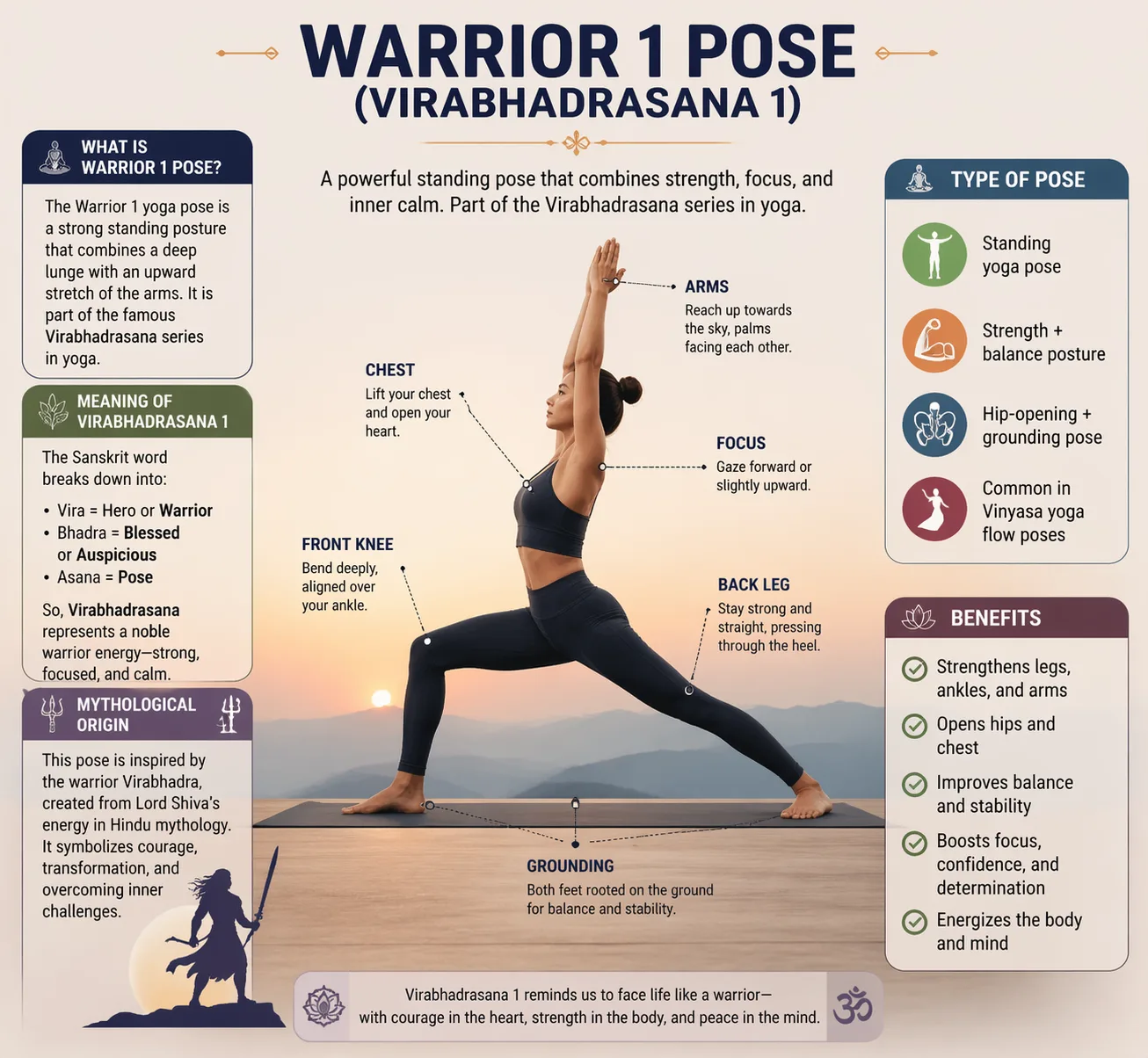
Warrior 1 Pose is a strong standing yoga pose that builds strength, balance, and focus. In Sanskrit, it is called Virabhadrasana 1. It is often practiced in Hatha, Vinyasa, and beginner yoga classes because it teaches grounding through the legs while opening the chest and upper body.
Meaning of Virabhadrasana 1
The word Virabhadrasana comes from “Virabhadra,” a powerful warrior figure in Hindu mythology. “Asana” means pose. So, Virabhadrasana 1 means Warrior Pose One.
Mythological Origin of Warrior 1 Pose
Warrior 1 Pose is inspired by the warrior Virabhadra, who represents courage, strength, and focused action. In yoga practice, the pose is not about aggression. It is about standing firm, breathing steadily, and staying present.
Type of Pose
Warrior 1 Pose is a standing strength pose. It also works as a chest opener, hip stretch, balance posture, and foundational pose for many yoga sequences.
How Many Warrior Poses Are There in Yoga?
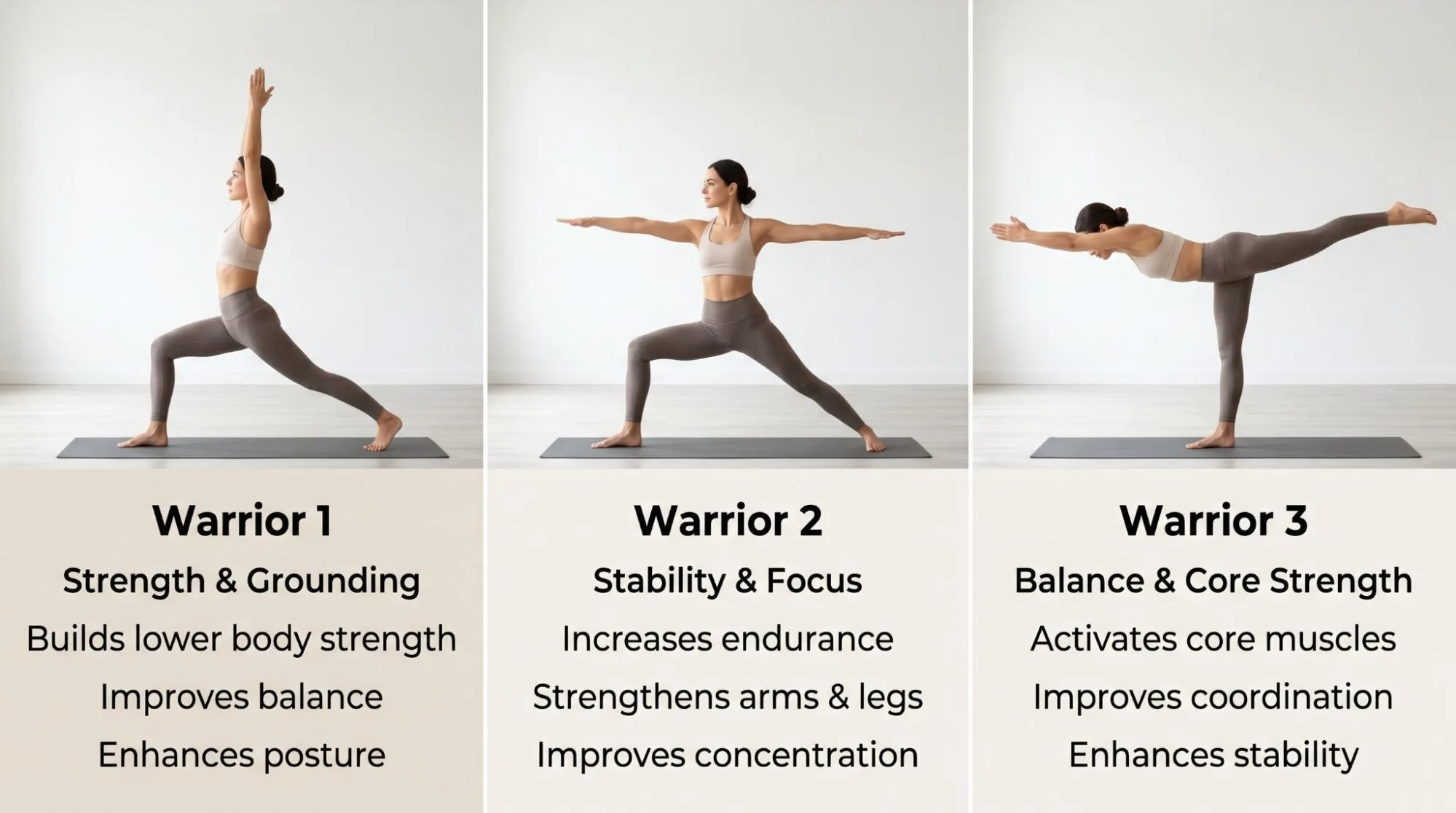
There are several warrior-style yoga poses. Each one trains the body in a slightly different way.
Warrior 1 Pose
Warrior 1 faces the front of the mat. The front knee bends, the back foot stays grounded, and the arms reach overhead.
Warrior 2 Pose
Warrior 2 opens the hips and chest to the side. The arms stretch in opposite directions, and the gaze stays over the front hand.
Warrior 3 Pose
Warrior 3 is a balancing pose. One leg supports the body while the other extends back.
Reverse Warrior Pose
Reverse Warrior adds a side stretch while keeping the legs strong in a Warrior 2 position.
Humble Warrior Pose
Humble Warrior folds the upper body forward while the hands are often clasped behind the back. It stretches the shoulders and hips deeply.
Learn More : Triangle Pose Yoga Common Mistakes and How to Fix Them
How to Do Warrior 1 Pose Step by Step
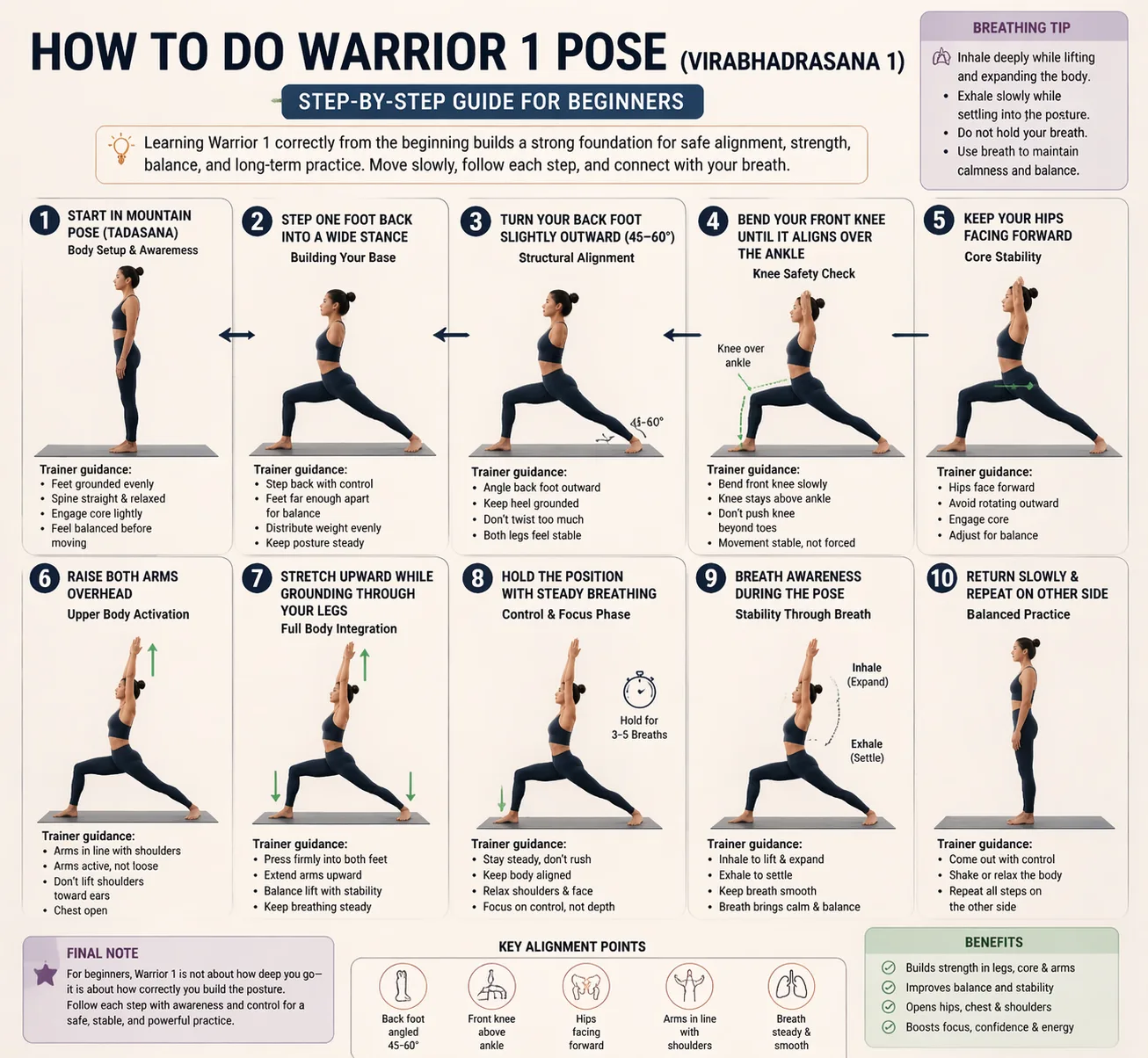
Move slowly into Warrior 1 Pose. Good setup matters more than how deep the pose looks.
Start in Mountain Pose
Stand tall at the front of the mat. Keep your feet grounded, spine long, and shoulders relaxed.
Step One Foot Back
Step your left foot back. Keep a little width between your feet so you can balance more easily.
Turn the Back Foot Slightly Outward
Turn the back foot out at about a 45-degree angle. Press the outer edge of the back foot and the left heel down into the mat.
Bend the Front Knee
Now bend your front knee over the ankle. The front leg may move toward 90 degrees, but only if your knee feels comfortable.
Keep the Hips Facing Forward
Gently turn both hips toward the front of the mat. Do not force them. A slight angle is normal, especially if your hips are tight.
Raise Both Arms Overhead
Lift both arms up. Keep your shoulders soft and let your shoulder blades settle down your back.
Hold the Pose with Steady Breathing
Hold for 3 to 5 breaths. Keep the front leg strong, back foot grounded, chest open, and breath smooth.
Proper Alignment for Warrior 1 Pose
Alignment helps you feel the pose safely and correctly.
Foot Position
Your front foot points forward. The back foot turns slightly outward. Keep the feet hip-width apart rather than on one straight line.
Knee Alignment
The front knee should point in the same direction as the front toes. Avoid letting it fall inward.
Hip Alignment
Try to face the hips forward, but keep the lower back comfortable. If the hips feel stuck, shorten your stance.
Arm Position
Arms can reach overhead with palms facing each other. If your shoulders feel tight, keep your hands on your hips or at heart center.
Spine and Neck Alignment
Keep your spine long. Avoid pushing the ribs forward. Look straight ahead or slightly upward if your neck feels relaxed.
Benefits of Warrior 1 Pose
Warrior 1 Pose gives both physical and mental benefits when practiced with care.
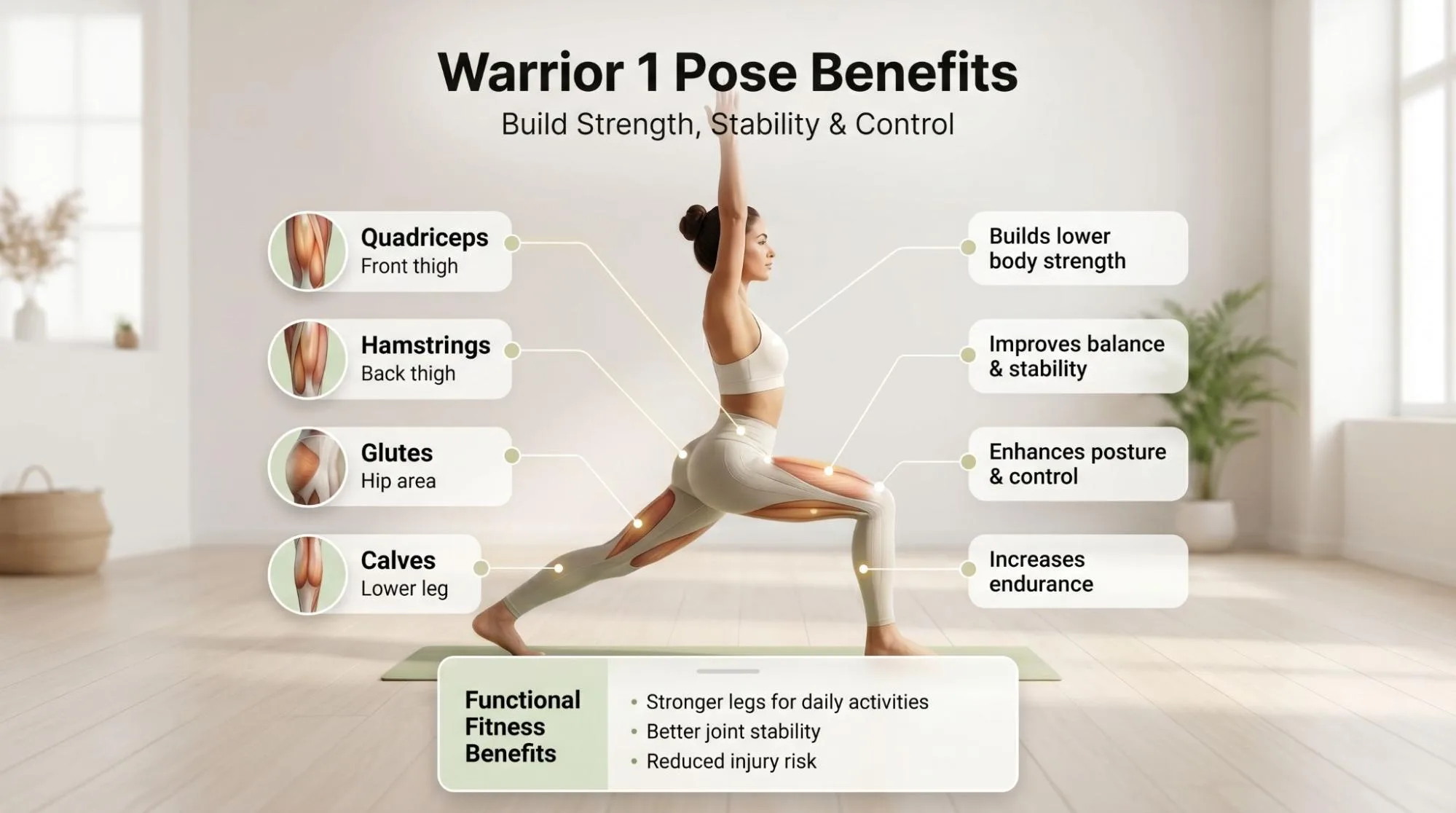
Builds Lower Body Strength
The pose strengthens the quadriceps, glutes, calves, ankles, and hips. The front leg works strongly while the back leg stays firm
Learn More : Extended Side Angle Pose Benefits
Improves Balance and Stability
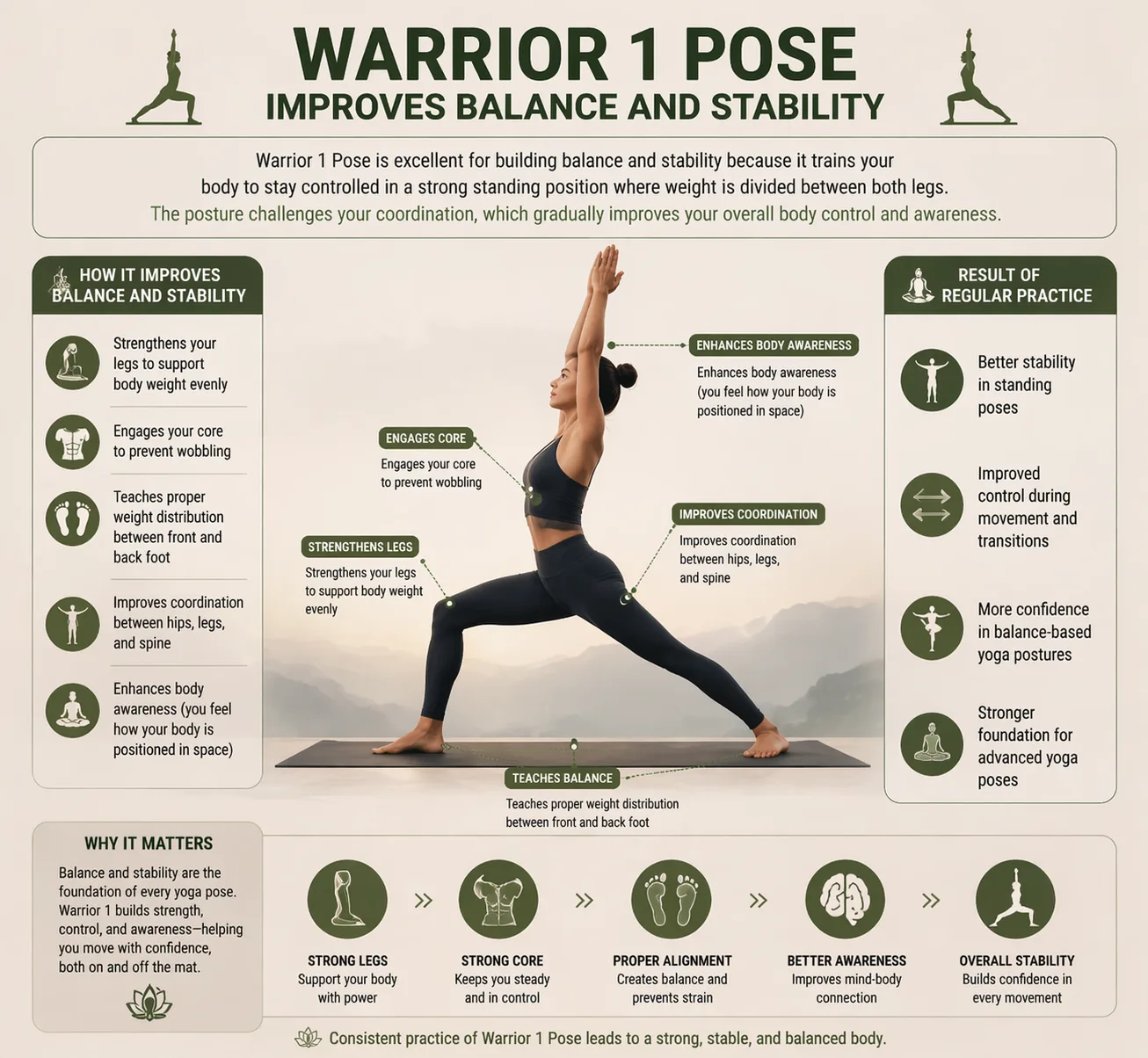
Warrior 1 Pose is excellent for building balance and stability because it trains your body to stay controlled in a strong standing position where weight is divided between both legs. The posture challenges your coordination, which gradually improves your overall body control and awareness.
👉 How it improves balance and stability:
- Makes your legs stronger to uphold body weight.
- Uses your middle to avoid wobbling.
- Learns correct weight bearing in front and back foot.
- Enhances the coordination of hips, legs and spine.
- Improves body awareness (you are aware of the position of the body in space)
👉 Result of regular practice:
- Better stability in standing poses
- Improved control during movement and transitions
- More confidence in balance-based yoga postures
- Stronger foundation for advanced yoga poses
Opens Chest and Lungs
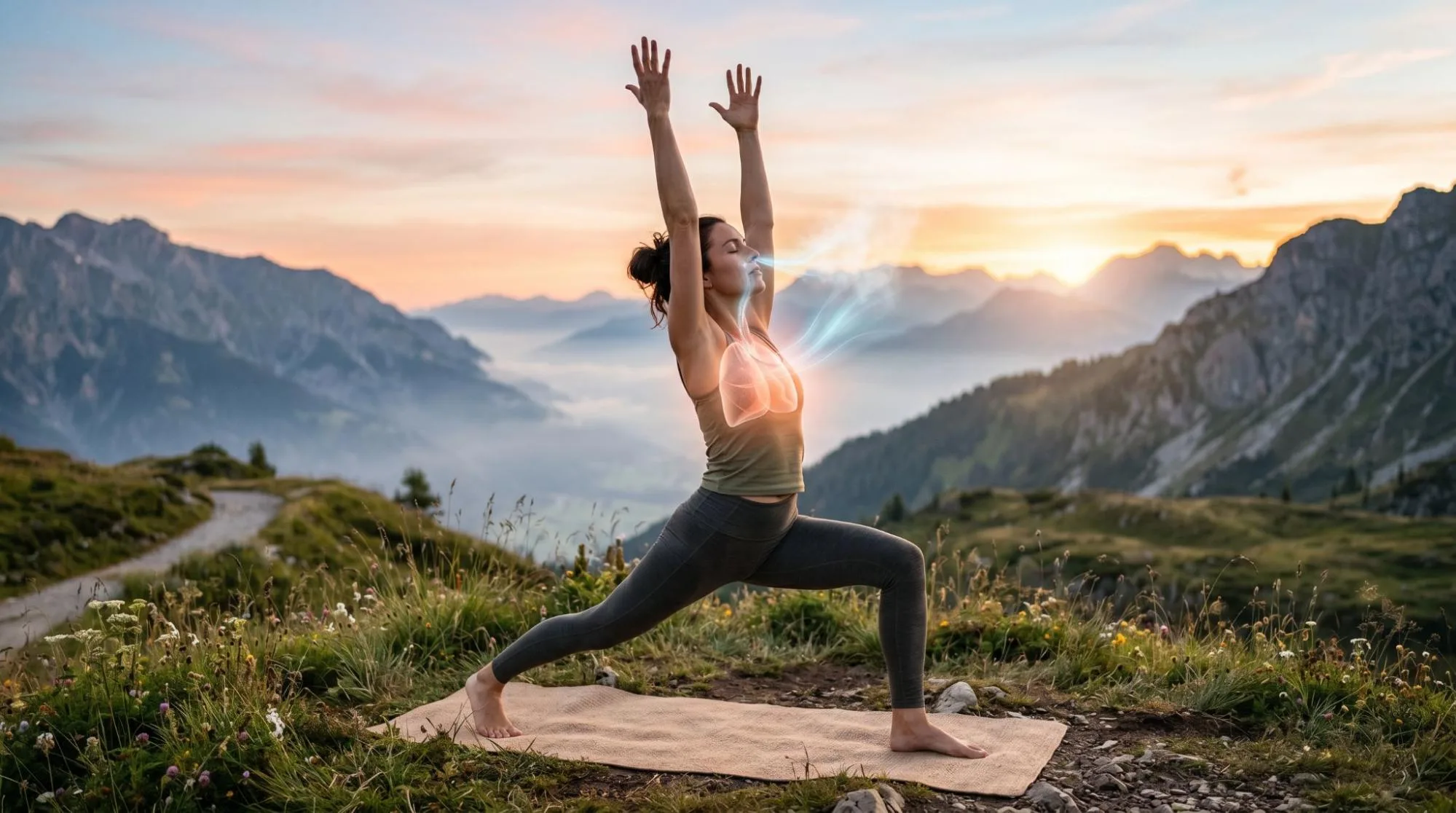
Warrior 1 Pose is useful to open the chest and stimulate the lungs due to the high extension of the arms upwards along with the raised torso. This growth leaves more room in the upper body which has a direct effect of enhancing the breathing patterns and posture as time goes by.
👉 How it opens the chest and lungs:
- Lifting the arms stretches the chest muscles upward
- Expands the rib cage for deeper breathing
- Improves oxygen intake by allowing fuller lung expansion
- Releases tightness in the shoulders and upper back
- Encourages upright spinal alignment for better posture
👉 Result of regular practice:
- Easier and deeper breathing
- Reduced chest and shoulder stiffness
- Improved posture in daily life
- Better lung capacity and breathing control
Improves Mental Focus
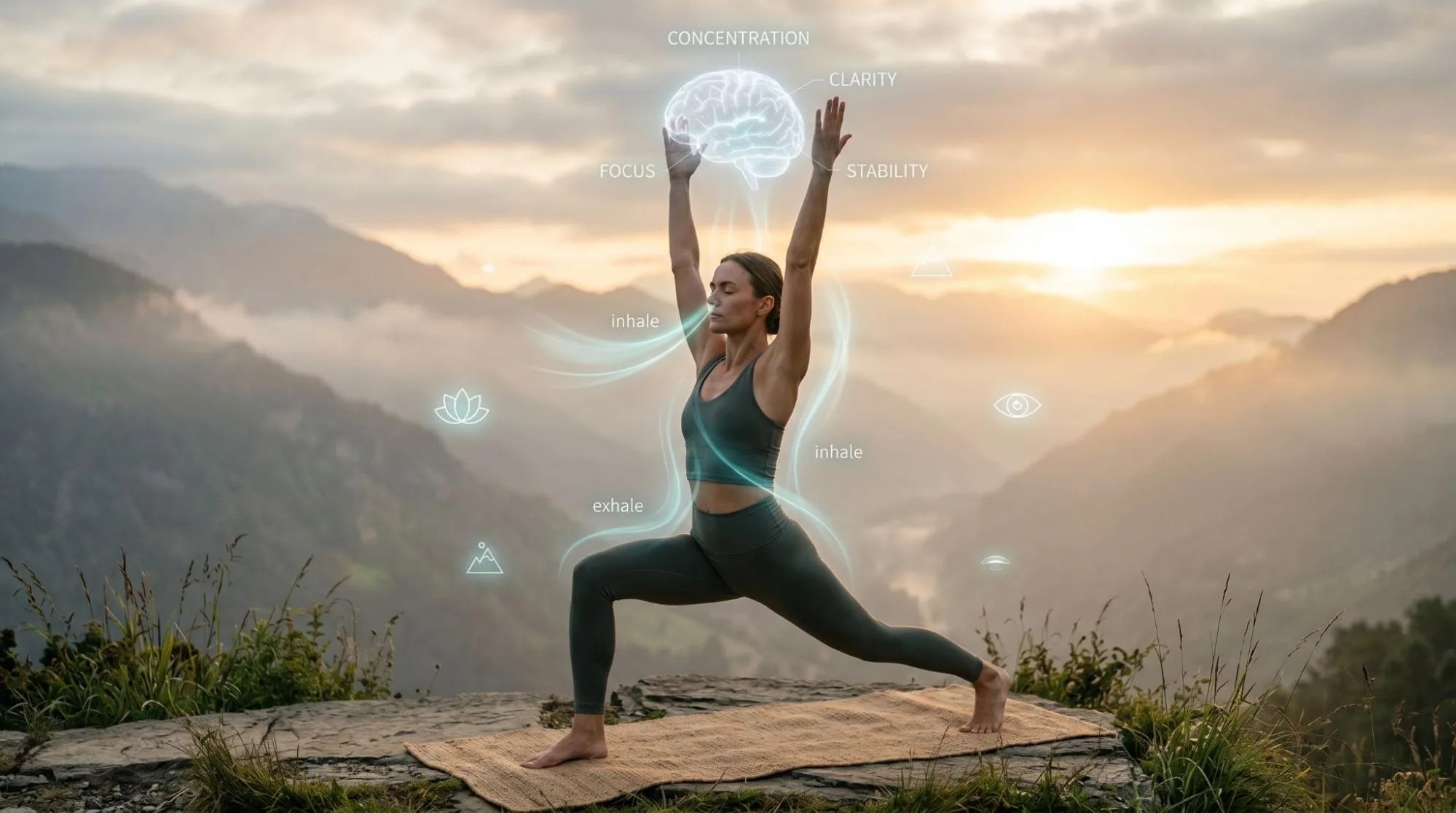
The Warrior 1 Pose is both a physical and a good mental training pose. Since you have to occupy the position in the right alignment and balance, your mind is inclined to be more attentive and in the present. This constant focus assists in minimizing the distractions and develop inner discipline with time.
👉 How it improves mental focus:
- Requires attention to body alignment while holding the pose
- Encourages steady breathing, which calms the mind
- Reduces mental distractions by keeping focus on posture
- Builds patience by holding the pose for a period of time
- Trains the mind to stay present and aware
👉 Result of regular practice:
- Increased focus on activities.
- Better mental acuity and decision-making.
- High discipline and self-control.
- A more relaxed and concentrated attitude in general.
Activates Root Chakra
In yoga philosophy, Warrior 1 is linked with the root chakra because it creates a grounded and stable feeling.
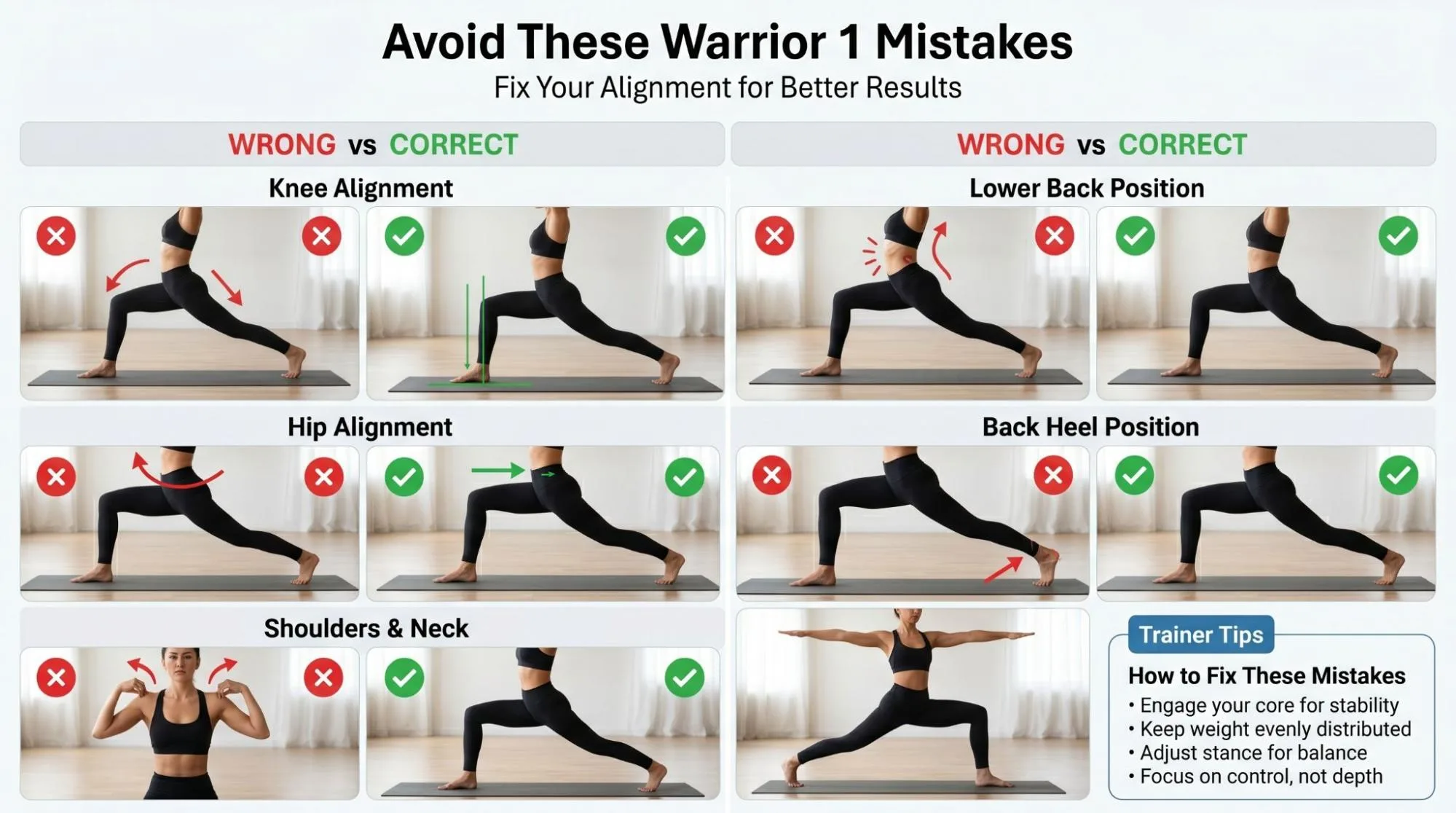
Common Mistakes in Warrior 1 Pose
Small mistakes can make Warrior 1 Pose feel harder than it should.
Front Knee Collapsing Inward
Keep the front knee aligned with the toes. If it moves inward, reduce the bend.
Overarching the Lower Back
Do not push the ribs forward. Lightly engage your core and lengthen the tailbone down.
Hips Not Squared Properly
Many people twist the hips too much. Face them forward gently, but do not strain the knees or back.
Lifting the Back Heel
The back heel should stay down in traditional Warrior 1. If it lifts, shorten your stance.
Tight Shoulders and Neck
Do not squeeze the shoulders near the ears. Relax the neck and soften the jaw.
Warrior 1 Pose for Beginners
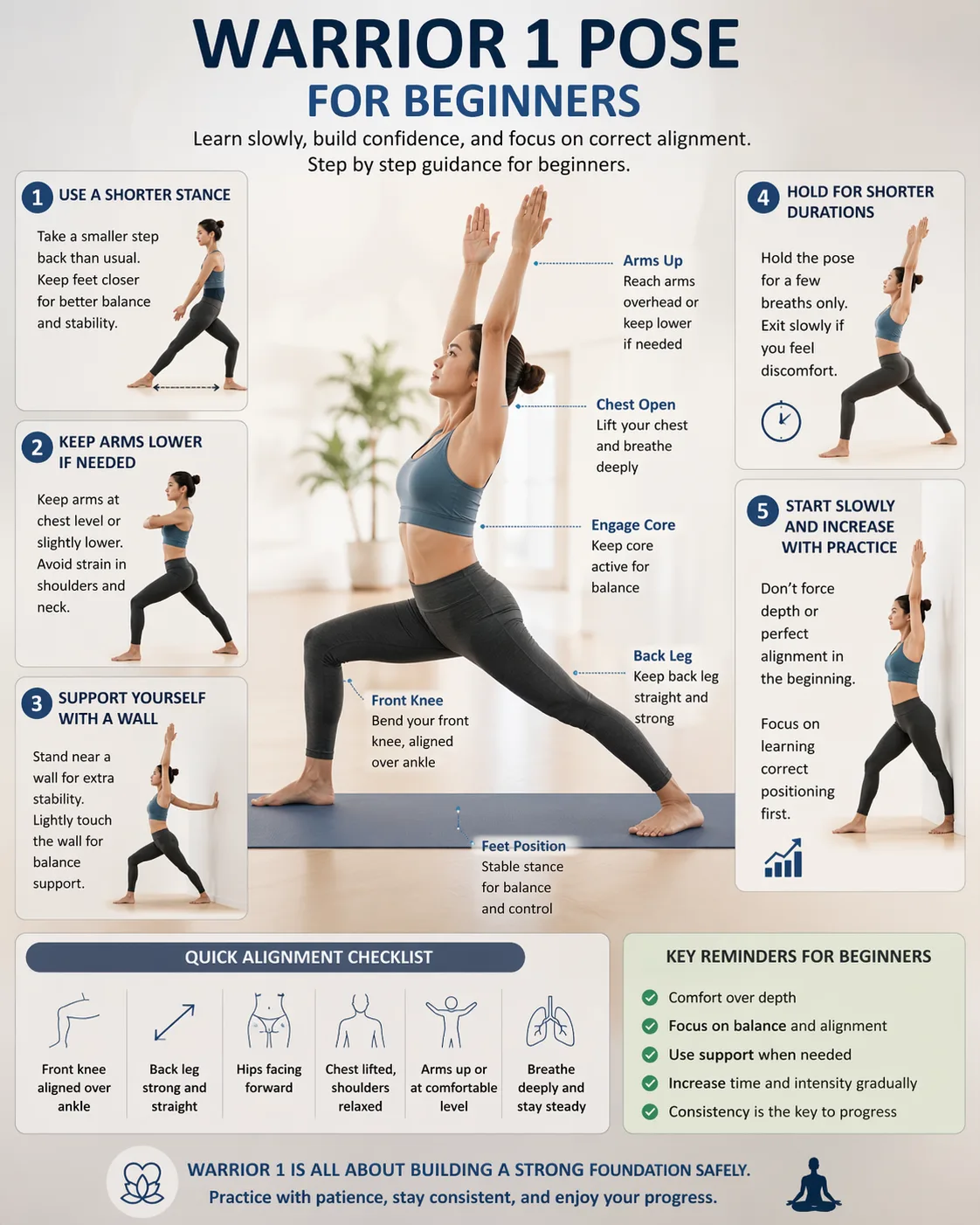
In case you are a beginner in the field of yoga, you should learn the Warrior 1 in a straightforward and moderate manner. Here, depth and intensity are not the aim, but rather the confidence, balance and proper alignment, achieved in steps.
Use a shorter stance for balance
Beginners are usually not that stable and thus the less distance between the feet, the easier the pose is to manage.
👉 Trainer guidance:
- Make a smaller step backwards than normal.
- To maintain balance, keep feet near.
- Get a feel of being stable first and then proceed.
Keep arms lower if needed
Holding arms fully overhead can feel difficult at the start, especially if shoulders are tight.
👉 Trainer guidance:
- Hands close to the chest or below where necessary.
- Do not strain shoulders or neck.
- Height should be increased gradually with increasing strength.
Support yourself with a wall
Using support is a smart beginner modification to prevent falling or losing alignment.
👉 Trainer guidance:
- Stand near a wall for extra stability
- Lightly touch the wall for balance support
- Use it only as a guide, not full support
Hold for shorter durations
Beginners should focus on comfort and control rather than long holds.
👉 Trainer guidance:
- Only hold the pose during a couple of breaths.
- Get out gradual in case you are feeling uncomfortable.
- Gradually, increase holding time by practicing.
Start slowly and increase intensity with practice
Warrior 1 improves over time, so patience is key.
👉 Trainer guidance:
- In the early stages, do not strain and squeeze the depth or impeccability.
- Master good positioning, first.
- Gradually get more challenging as you get stronger and more stable.
To the novices, Warrior 1 consists of establishing a good grounding in a safe manner. It helps to warm up your body to more challenging yoga positions without causing any harm or pain when done slowly and properly.
Warrior 1 Pose Variations
Variations help you adjust the pose to your body and practice level.
Beginner Variation
Use a short stance, keep the back foot slightly turned out, and place hands on hips.
Advanced Variation
To deepen the pose, lengthen the stance and bend the front knee more. Keep the back foot grounded and the chest lifted.
Flow Integration
Warrior 1 can be used in Vinyasa flows, Sun Salutations, and standing yoga sequences.
Warrior 1 vs Warrior 2
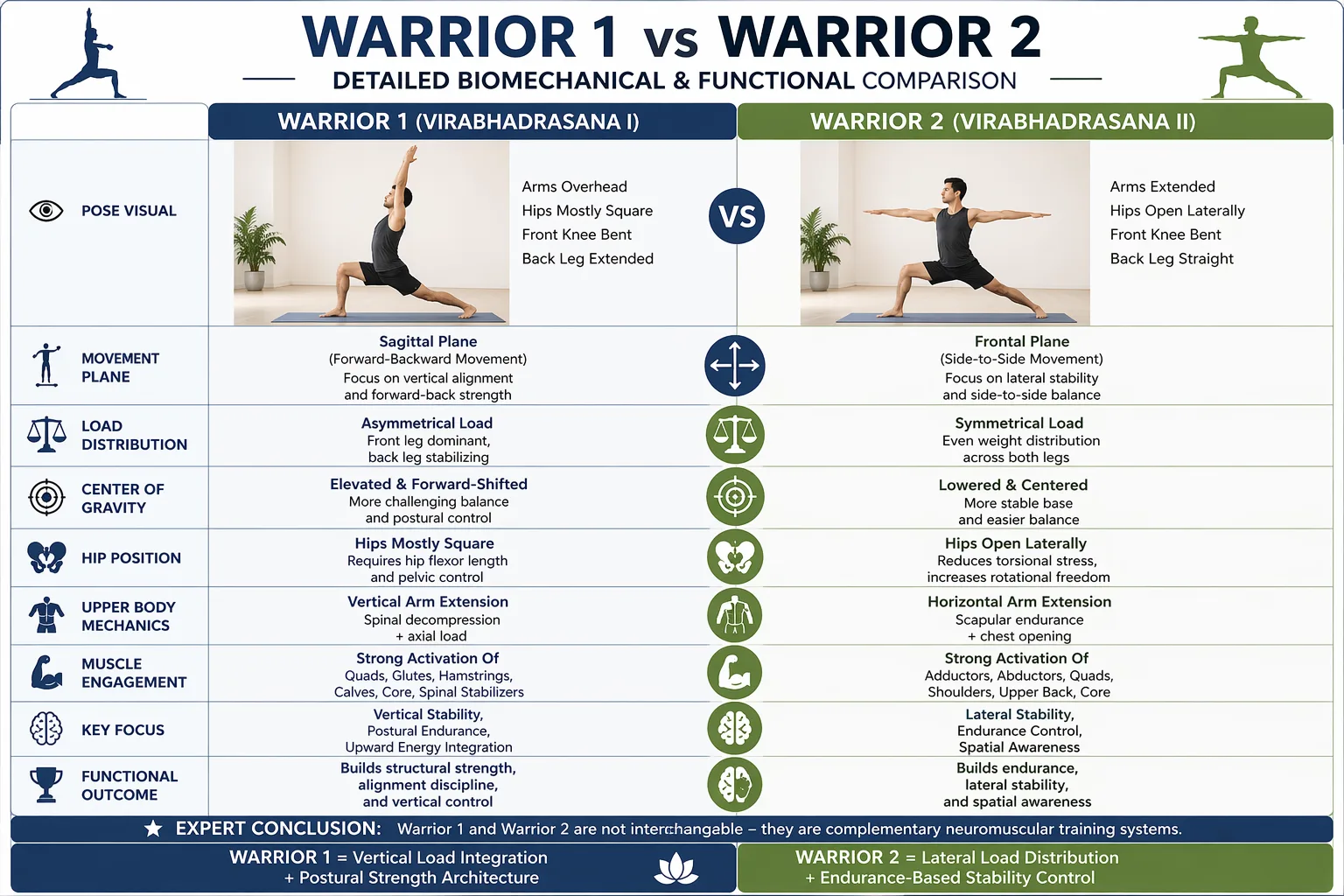
Both are powerful standing yoga poses, but they are not the same.
Warrior 1 Pose
Warrior 1 faces forward. The hips turn toward the front of the mat, and the arms reach overhead.
Warrior 2 Pose
Warrior 2 opens sideways. The hips face the long edge of the mat, and the arms stretch out wide.
Key Differences Between Warrior 1 and Warrior 2
Warrior 1 focuses more on hip flexor stretch, forward-facing stability, and chest opening. Warrior 2 focuses more on hip opening, leg endurance, and side-body awareness.
Muscles Worked in Warrior 1 Pose
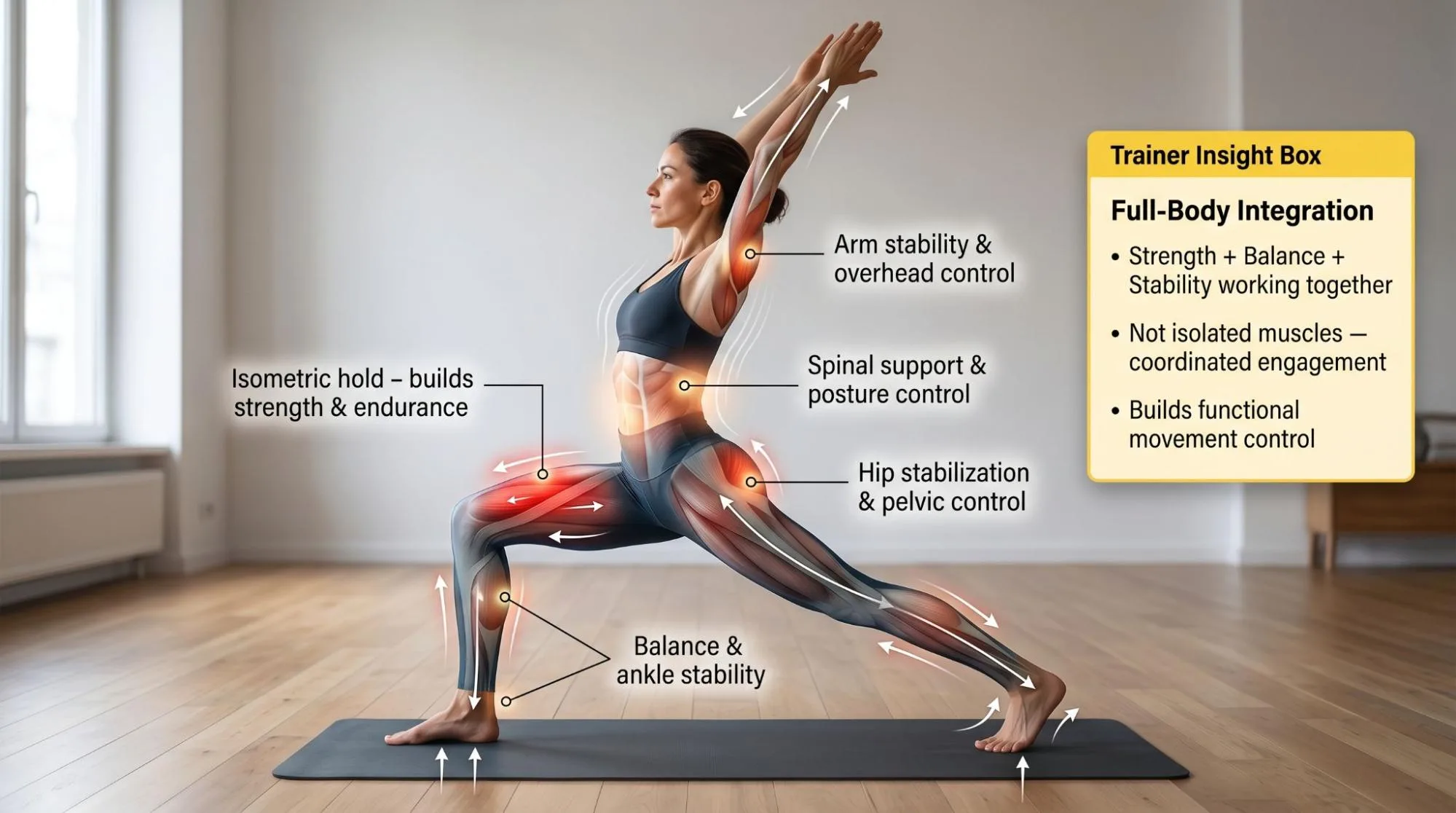
Warrior 1 Pose works many muscles at the same time.
Quadriceps
The quadriceps support the bent front knee and help stabilize the front leg.
Glutes
The glutes support the hips and pelvis, especially when the stance is strong.
Calves
The calves help keep the feet grounded and stable.
Core Muscles
The core supports the spine and prevents the lower back from over-arching.
Shoulder Stabilizers
The shoulders and upper back work gently when the arms are lifted overhead.
Warrior 1 Pose in Yoga Sequences
Warrior 1 fits well into many styles of yoga practice.
Sun Salutation Variations
It is often added after stepping forward from Downward-Facing Dog.
Vinyasa Flow Transitions
In Vinyasa, Warrior 1 may flow into Warrior 2, High Lunge, or Plank.
Hatha Yoga Standing Sequences
In Hatha yoga, Warrior 1 is usually held longer to build strength and awareness.
Preparation for Advanced Poses
It prepares the body for deeper lunges, backbends, standing balances, and stronger yoga poses.
Who Should Avoid Warrior 1 Pose?
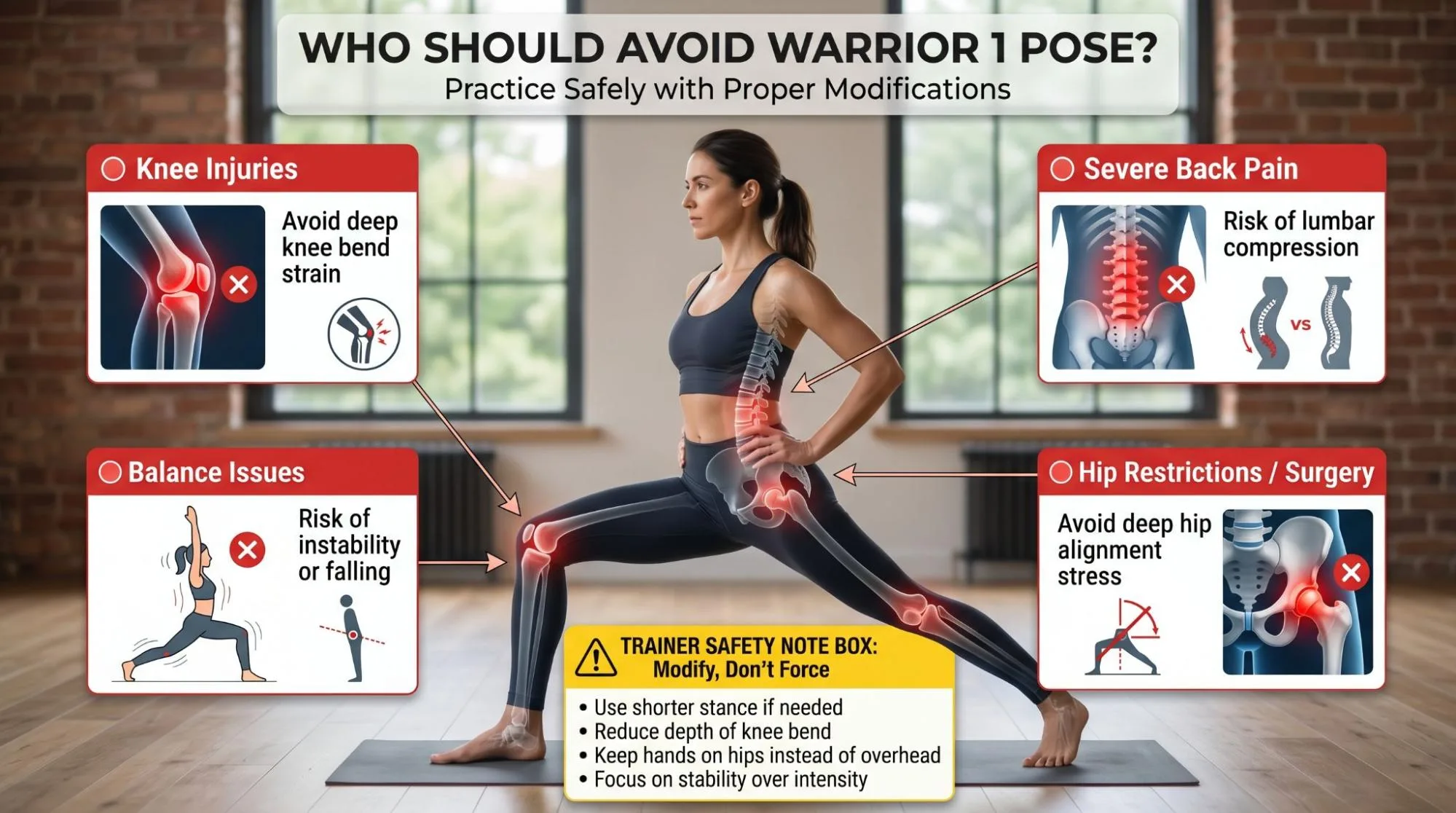
Some people should modify or avoid Warrior 1 Pose depending on their condition.
People with Knee Injuries
Avoid deep bending if you have knee pain. Keep the stance short and the knee soft.
People with Severe Back Pain
Keep the spine neutral and avoid backbending. Hands on hips may feel safer.
People with Balance Issues
Use a wall or chair for support. Widen the stance for more stability.
People with Recent Hip Surgery or Tight Hips
Avoid forcing the hips forward. Practice only with medical or teacher guidance if you recently had surgery.
Learn More : Half Moon Pose Yoga: Benefits, Steps, Alignment Tips, and Beginner Guide