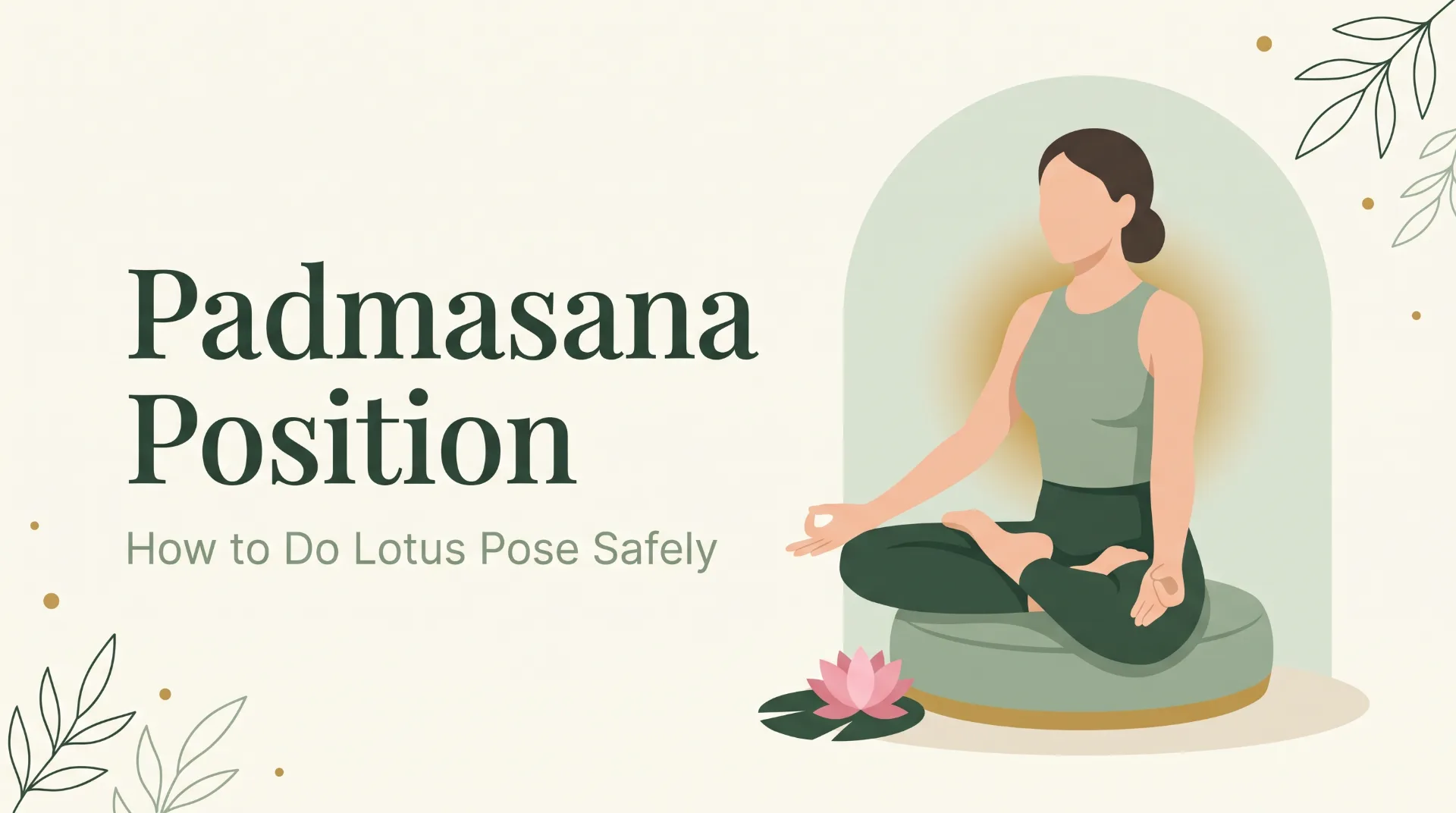
The padmasana position is the seated posture most people picture when they hear the word yoga: legs folded, feet resting high on the thighs, spine tall, hands calm on the knees. It looks effortless. For most bodies, it isn’t.
Here’s how to approach it without hurting the knees.
This guide covers what the pose is, how to move into it step by step, safer versions for stiff hips, who should skip it, which poses prepare the body, which ones undo the shape afterward, and how the pose fits into meditation.
What Is Padmasana?
Padmasana, usually translated as lotus pose, joins two Sanskrit words: padma, lotus, and asana, seat.
It belongs to hatha yoga and was traditionally a seat for meditation and breathing practice rather than an exercise. The lotus flower, which rises clean out of muddy water, became the symbol attached to it, which is why paintings of meditating figures so often show this very shape.
Classes list it as lotus pose padmasana; translated sources sometimes write position lotus.
Quick Facts
| Detail | Padmasana |
|---|---|
| Sanskrit name | Padmasana (padma = lotus, asana = seat) |
| Other names | Lotus pose, lotus position, lotus asana |
| Type | Seated, hip-opening |
| Level | Full version: intermediate to advanced. Half lotus: beginner to intermediate |
| Typical hold | 30 to 60 seconds to start, alternating which leg goes first |
| Skip or modify if | Knee, ankle or hip injury, sciatica, recent surgery |
How to Do the Padmasana Position, Step by Step
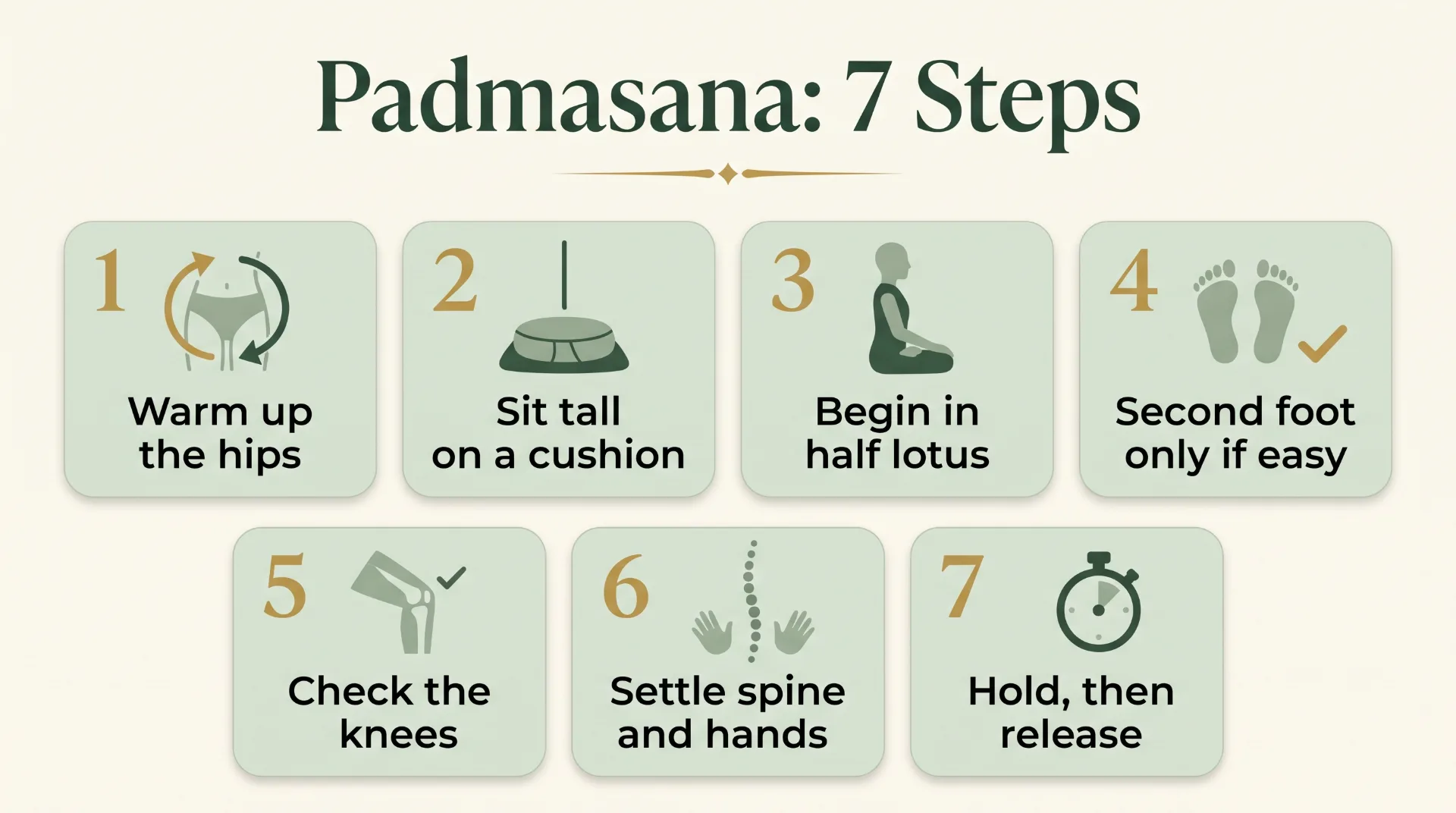
Treat this as a sequence to practice over weeks, not a shape to reach in one session. Half lotus comes first, and plenty of people stop there for good, which is a perfectly respectable place to stop.
Step 1: Warm Up the Hips
Five minutes of gentle hip work first: cat-cow, slow hip circles, a relaxed seated butterfly.
Step 2: Sit Tall on a Cushion
Sit with legs extended and the hips raised on a folded blanket. Raised hips let the knees drop below the pelvis, which takes pressure off the knee joint.
Step 3: Begin in Half Lotus
Bend the right knee and set the right foot on top of the left thigh, near the hip crease, sole turned up. The left leg stays folded underneath, shin resting in front of the pelvis, so everything feels stable before anything else is added.
Step 4: Add the Second Foot Only If the First Is Easy
If that feels easy, bend the left knee and lift the left foot onto the right thigh, again high with the sole facing up.
Step 5: Check the Knees
In the padmasana pose, the knees should feel nothing sharp or twisting. Knee pain means backing out immediately.
Step 6: Settle the Spine and Hands
Lengthen up through the crown of the head. Hands rest on the knees, palms up or down, shoulders loose, jaw soft. Breathe slowly through the nose and let the belly move freely, since gripping the abs makes the whole pose harder to hold.
Step 7: Hold, Then Release With Care
Hold for 30 to 60 seconds. Unfold the second foot first, shake out the legs, and start with the other leg next time.
Lotus Pose Variations
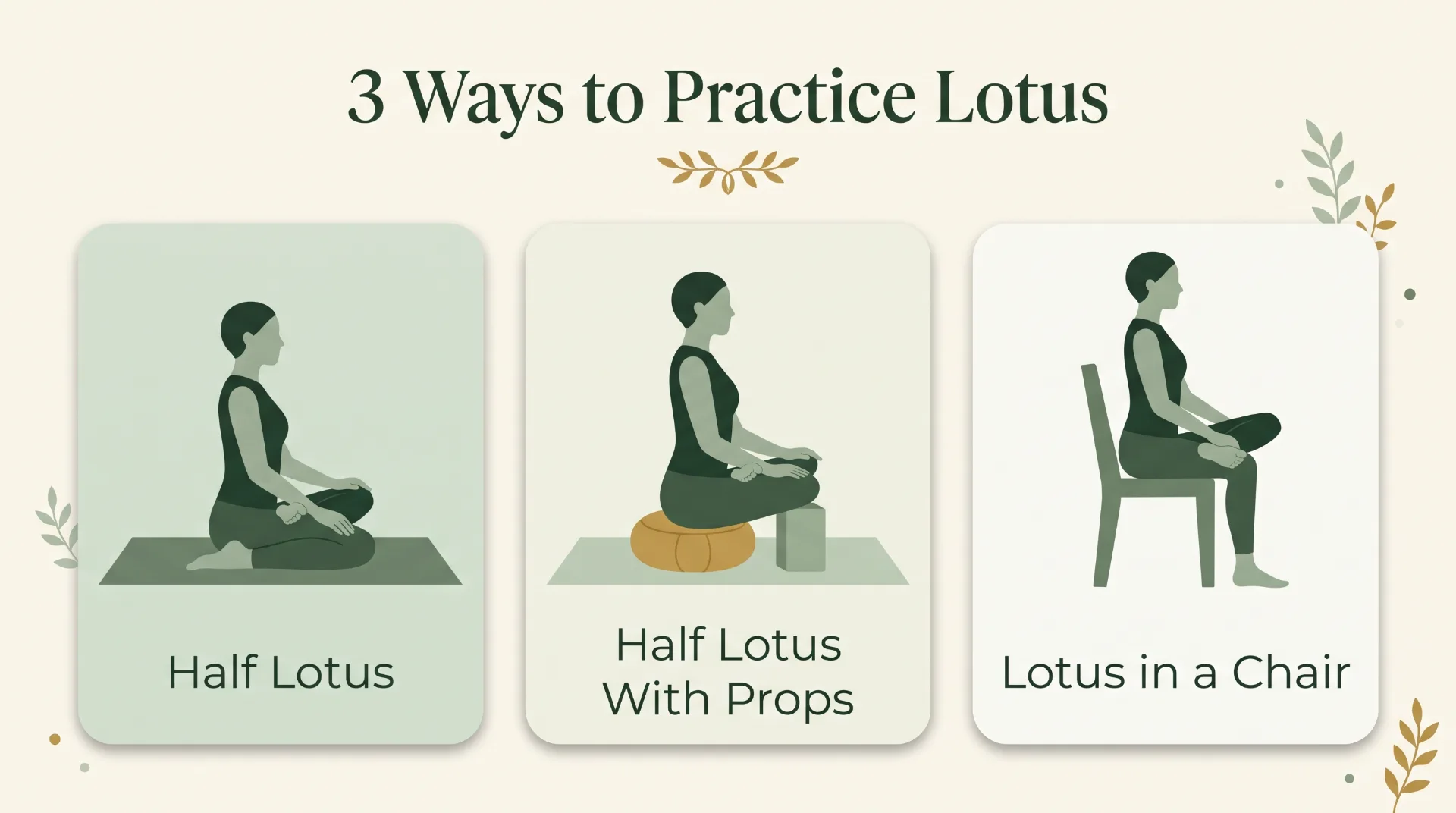
Several lotus poses exist. Beginners mostly use three of them.
Half Lotus (Ardha Padmasana)
One foot rests on the opposite thigh while the other leg stays folded underneath. It gives much of the same upright seat with far less demand on the knees.
Half Lotus With Props
A cushion under the hips is the main prop. A block or rolled towel under the raised knee gives it somewhere to land, so the hip can release instead of dangling the knee in mid-air, which is hard on the joint and tends to tire the thigh.
Lotus in a Chair
Sit near the front edge of a sturdy chair with both feet flat. Rest one ankle across the opposite thigh and lean forward from the hips. It isn’t true lotus, but it opens the same area.
Beginner Tips
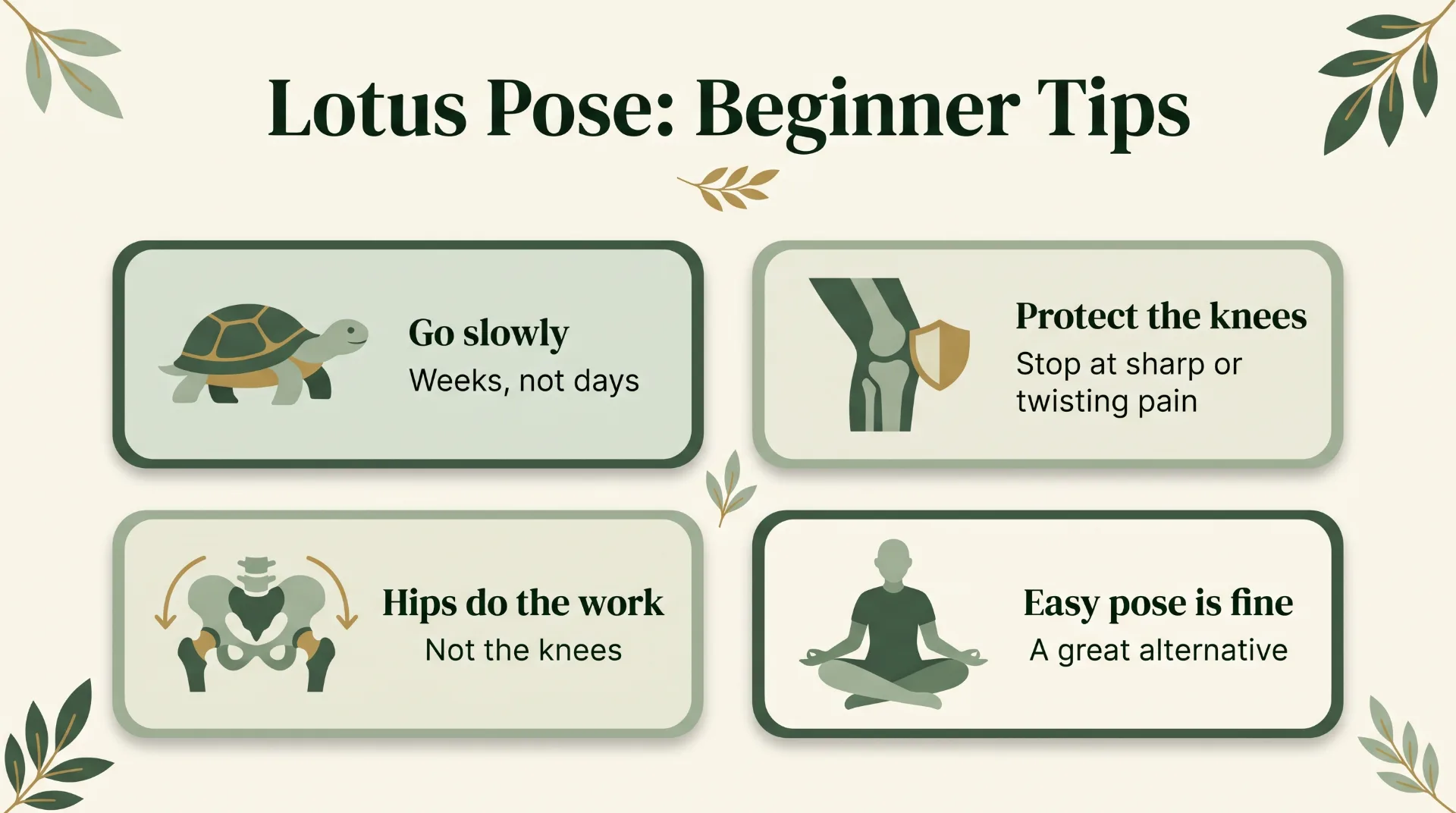
Go Slowly and Skip the Shortcuts
Be fine with never reaching full lotus. Bone shape in the hip decides a lot.
Be Mindful of the Knees
The knee works like a hinge. It isn’t built to twist, and in lotus the twisting load can slide from the hip into the knee when the hip runs out of range. That’s the moment to stop, ease off, and come back to a gentler version.
Easy pose (sukhasana), with shins simply crossed, is a perfectly good alternative. So is sitting on a chair.
Benefits of Lotus Pose
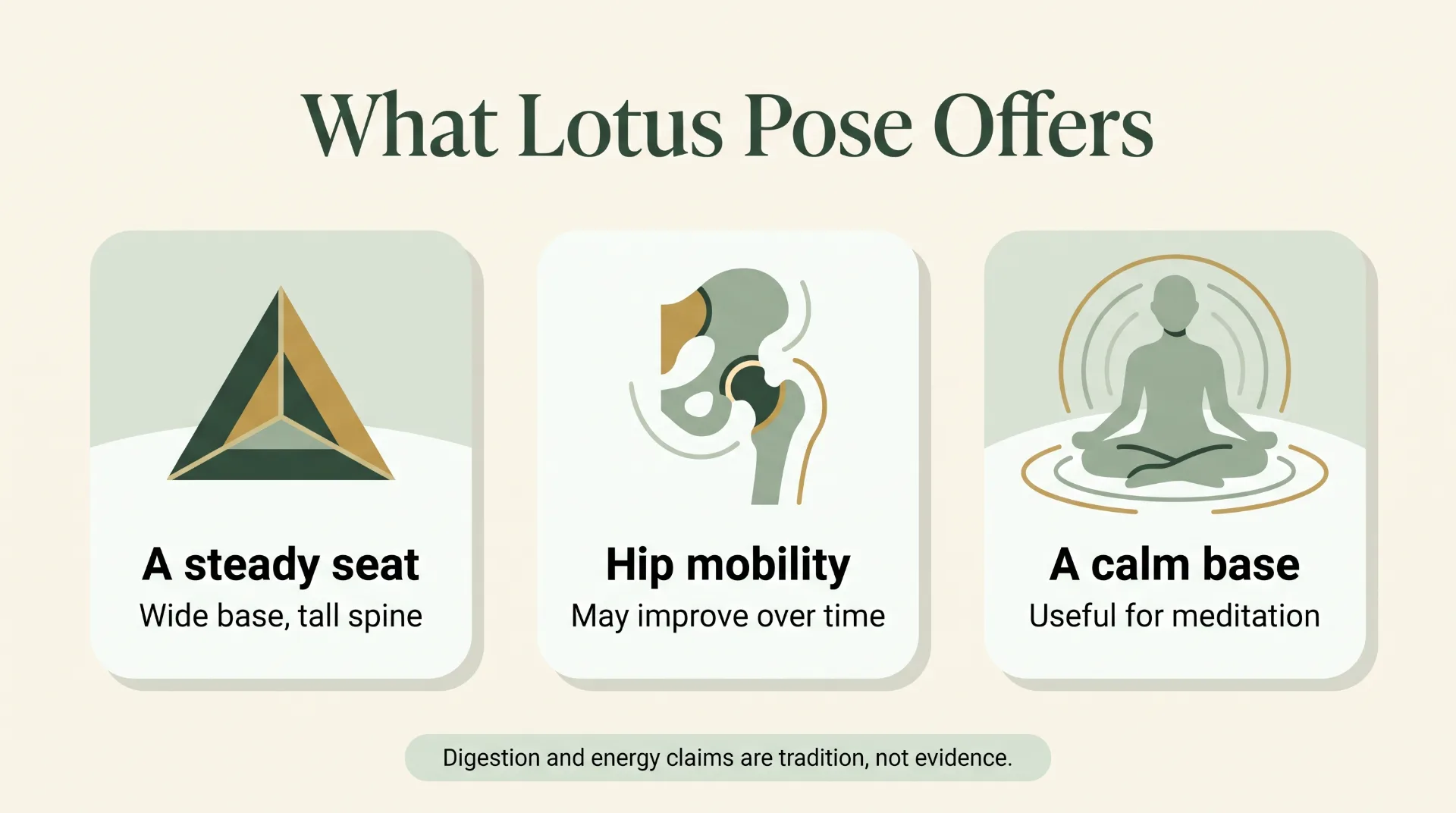
What the lotus stance offers is modest and mostly practical. It’s a stable, symmetrical seat that keeps the spine upright, which is why meditators like it, and working toward it can improve hip mobility over time.
Claims that it aids digestion, boosts lymph flow, or balances energy are common in yoga writing, but solid evidence is thin. Read them as tradition, not medical fact.
Full lotus isn’t a badge of progress, and for many people it isn’t wise.
Who Should Skip or Modify Padmasana
Anyone with a knee injury, a meniscus or ligament problem, hip or ankle pain, or sciatica should skip the full pose and ask a doctor or physiotherapist what’s safe. Arthritis and recent surgery call for the same care.
Pregnancy changes things too. The hips are often looser than usual, so deep stretches can feel easy and still be unwise.
The US National Center for Complementary and Integrative Health notes that yoga is generally safe when practiced appropriately, but that injuries happen, and that learning without supervision has been linked to higher risk. A qualified teacher can check the knees in person.
Anatomy: What the Body Needs for Lotus
Lotus is a hip pose first. In lotus padmasana the hips bend, open outward, and rotate while the knees fold.
Two things decide how far the legs go: how flexible the muscles around the hips are, and how the thigh bone sits in the socket. The second is just how a person is built, which explains why some sit in full lotus on day one.
The spine’s job is to hold upright without gripping.
Preparatory and Counter Poses
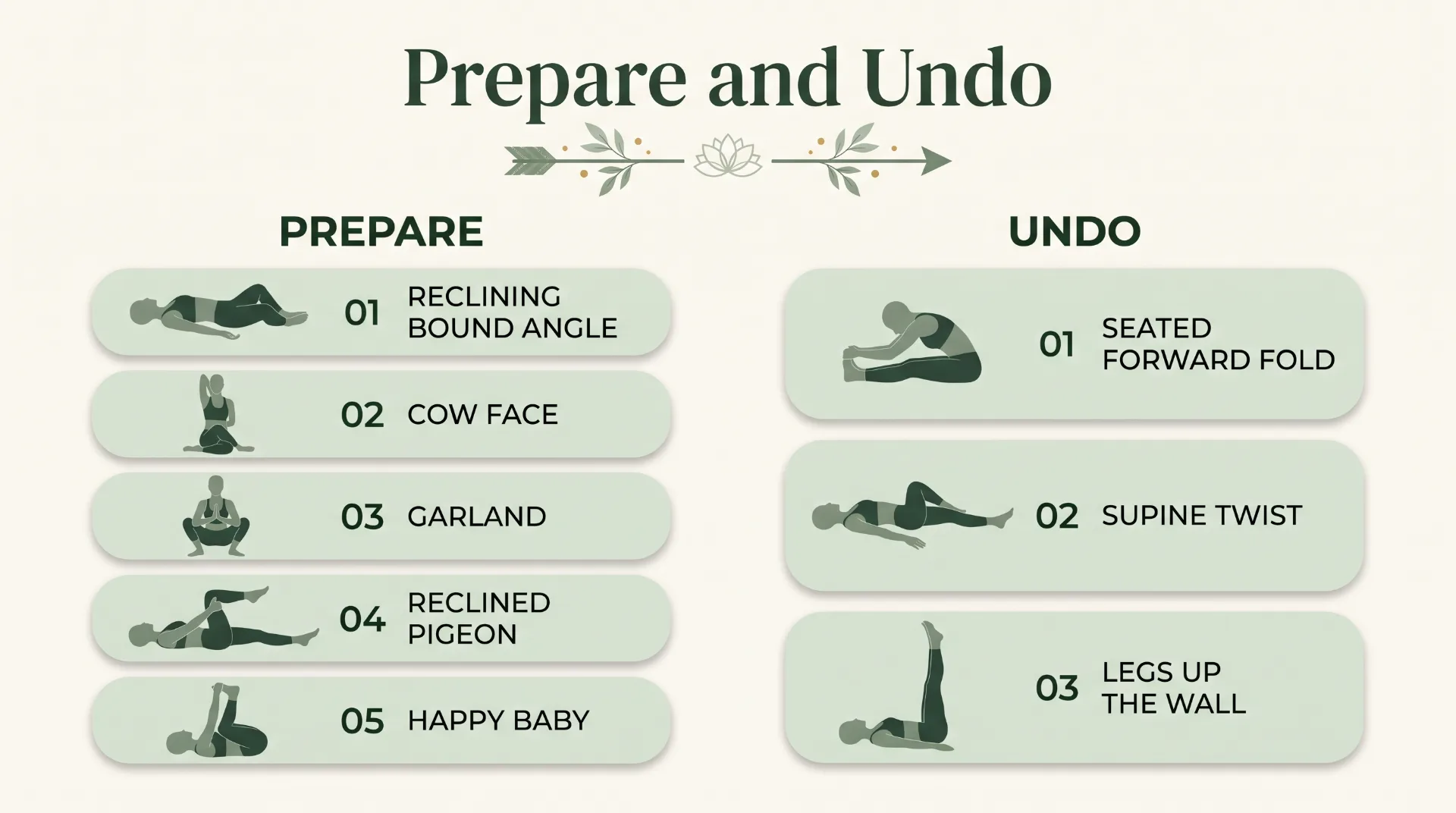
Preparatory Poses
These open the hips gradually before lotus. Reclining bound angle and cow face pose ease the outer hips, garland pose opens the groin and ankles, and reclined pigeon stretches the glutes with the back supported, so nothing has to be forced.
A happy baby on the back makes a gentle finish, knees wide, nothing forced.
Counter Poses
Afterward, a seated forward fold lets the hips and lower back unwind, and a supine spinal twist releases the spine. Legs up the wall is a good last stop for tired legs, especially after a long sit.
Using the Lotus Position for Meditation
Lotus became the classic meditation seat because it’s steady, but steadiness doesn’t require the full pose.
Any seat that stays comfortable for ten minutes will do. The meditation timer can mark the session, box breathing or alternate nostril breathing can fill it, and the guided meditation for healing guide offers a short script to follow, which helps if the mind wanders.
Frequently Asked Questions
What is the padmasana position?
A seated posture in which each foot rests on the opposite thigh while the spine stays upright. A half version, with only one foot up, is the usual starting point.
Is the padmasana lotus pose safe for beginners?
Not usually in its full form. Beginners are better off with half lotus, easy pose, or a chair, ideally learned with a qualified teacher. Any knee pain is a signal to stop, whatever the pose looks like in photos.
How long should the lotus position be held?
Thirty to sixty seconds is a sensible start, then a little longer over weeks. Alternate which leg goes first, and shorter holds are always fine.
Can lotus pose damage the knees?
Yes, if the legs are forced. The knee isn’t built to twist, so the stretch belongs in the hips. Sharp or twisting knee pain means stop.
Do all lotus asana yoga classes expect full lotus?
No. Good teachers offer half lotus, easy pose, and props.
What other lotus poses are there?
Beyond half and full lotus, there’s bound lotus, where the hands reach behind to hold the feet, and lotus variations inside other poses. Most of these are advanced and best learned in person with a teacher who can watch the knees.
Can lotus be done in a chair?
A chair version, with one ankle across the opposite thigh, opens the same hip area. It isn’t true lotus, but it’s a safe relative.
A Final Note on the Padmasana Position
The padmasana position rewards patience and punishes hurry. Half lotus and a good cushion give most people everything it has to offer.
Prepare the hips, protect the knees, and treat full lotus as a possible destination, never a requirement. A comfortable seat is the one worth keeping, whatever shape it takes, and whatever the person on the next mat is doing.
Further reading: NCCIH: 5 Things You Should Know About Yoga.